TOMS RIVER – Toms River officials have taken steps to advance an affordable housing plan required by the courts, but discussions during recent meetings show continued disagreement, and an evolving path forward as the township prepares to return to court later this month.
Several ordinances tied to the plan are still awaiting final adoption, and a full replacement strategy for the Hope’s Crossing project has yet to be finalized.
Mayor Daniel Rodrick has warned that the township risks losing control over development, with compliance still developing and ultimately subject to judicial review.
Affordable Housing Requirements Explained
Affordable housing under New Jersey law refers to deed-restricted units required under the state’s Fair Housing Act and Mount Laurel doctrine.
These units are not the same as Section 8 housing. They are typically integrated into developments or built as dedicated affordable communities and are regulated to ensure long-term affordability. There are income levels based on family size used to determine if someone is eligible for low- or middle-income housing.
Municipalities are required to provide zoning that creates a realistic opportunity for those units, not necessarily build them directly.
What Was Approved, And What Is Pending
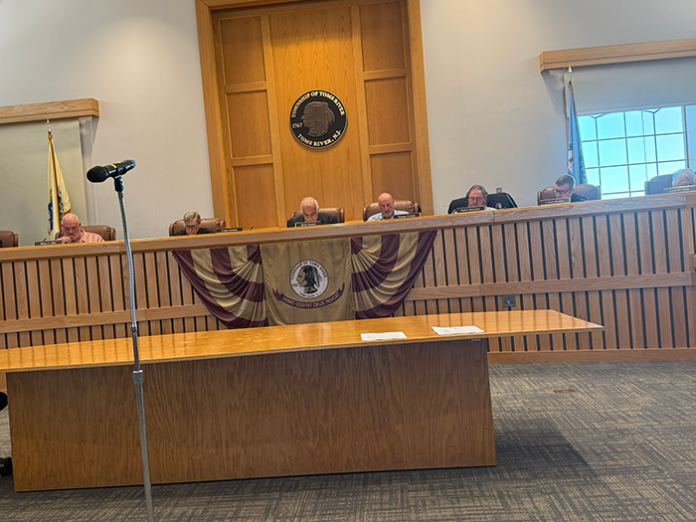
At the April 8 Township Council meeting, the council approved a second reading of an ordinance incorporating two township-owned parcels along Route 9 into a revised affordable housing plan that is still being finalized.
Three additional ordinances tied to the plan received first readings and were approved to move forward. Those measures still require second readings before they can take effect.
Council also adopted a resolution committing to implement the plan, a step required under a court order issued by Superior Court Judge Sean D. Gertner.
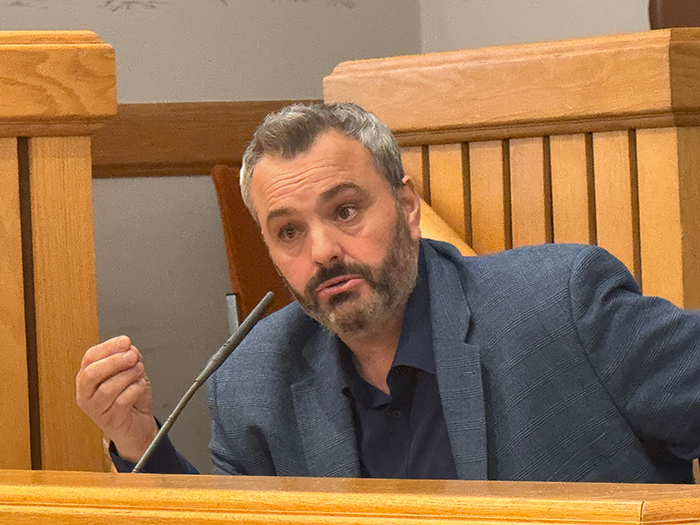
“Is this what the judge asked for,” questioned Rodrick at the meeting, who received confirmation that it would fulfill part of Gertner’s mandate. However, it will ultimately be up to the judge to determine if all of the conditions of his court order have been met.
Rodrick has continued to argue that the plan remains incomplete and leaves the township exposed. He said the collapse of the Hope’s Crossing project created a major gap that has not been fully addressed.
“When that went away, we had to replace it,” Rodrick said, explaining that the township first looked for private developers but did not receive proposals of comparable size.
With no private projects available, he said the administration turned to township-owned land, including the Route 9 parcel, as a potential replacement. That land included the use of eminent domain to purchase property with public funds and is located in the area between Riverwood Drive and Cox Cro Road. The purchase was the subject of extensive litigation that only concluded recently, and has been described by some officials and residents as promised to be designated as open space.
A review of the Recreation and Open Space Inventory (ROSI) for Toms River Township does not list the property. Rodrick said he relied on that list in adding the town owned property to replace the numbers lost by Hopes Crossing.
Even so, Rodrick maintains the township remains short. “We’re still down over 100 units,” he said, pointing to both the loss of Hope’s Crossing and a Route 70 project that he said has not been fully approved.
“If we don’t replace that, it’ll be builder’s remedy,” he added.
Route 9 Site Raises Broader Questions
The Route 9 parcels approved for inclusion in the plan are part of a larger tract acquired by the township in 2016 through a $10.3 million bond. Because the township owns the land, it may appear at first glance that local officials would retain full control over what happens there.
That assumption, however, was called into question during council discussion.
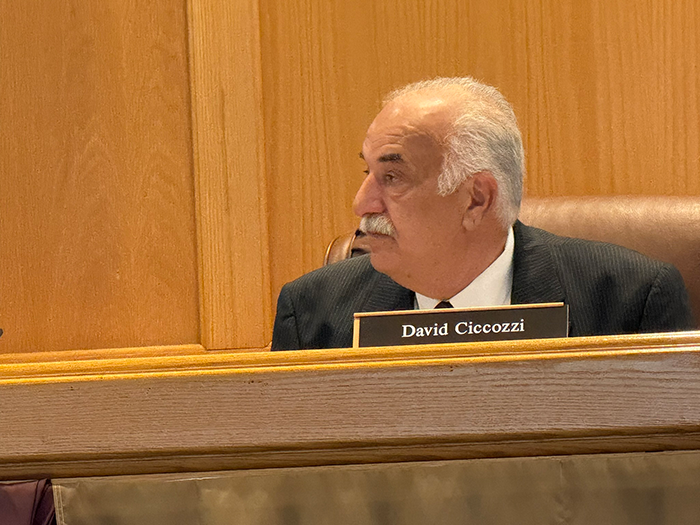
Council President David Ciccozzi, who has generally aligned with the council majority including his allies Vice President Thomas Nivison, and Councilmen Robert Bianchini and Clinton Bradley, broke from that pattern in part by voting in favor of advancing the Route 9 site while also expressing uncertainty about its long-term future.
“I voted on this 10 acres and I believe in my heart that two years from now a new council, new mayor is going to take care of that,” Ciccozzi said.
He added that his decisions are being made with an eye toward broader consequences.
“I’m going to vote my conscience every which way,” Ciccozzi said, describing the process as difficult and emphasizing the long-term implications of the current plan.
The comments highlight a deeper uncertainty over what control the township would actually retain if the property is used to satisfy affordable housing obligations.
Rodrick has argued that failing to act decisively could ultimately shift that control away from local officials altogether.
“If we don’t maintain the immunity, it’ll be a free-for-all,” Rodrick said, warning that developers could gain the ability to bypass local zoning through builder’s remedy litigation.
Meanwhile, even with township ownership of the Route 9 land, key questions remain unresolved. Would the township sell the property to a private developer? Would it retain ownership while allowing construction through an agreement? And if officials ultimately reject proposals tied to the site after presenting it to the court, could control shift away from the township entirely?
Next Court Date Will Be Key
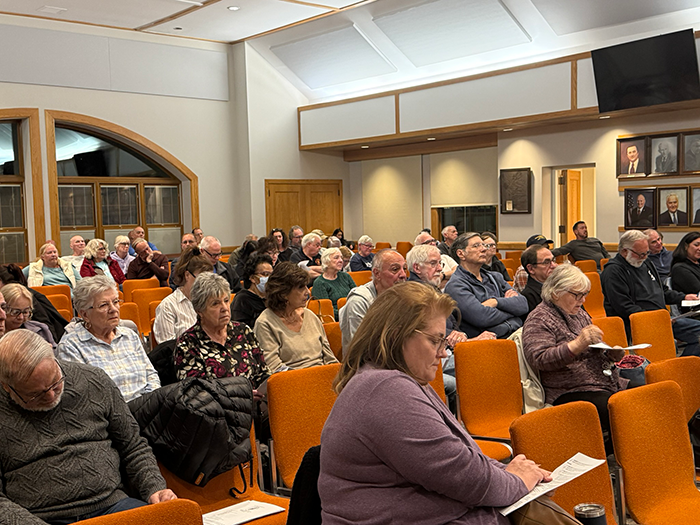
Toms River is scheduled to return to court on April 23, where a judge will evaluate whether the township has taken sufficient steps toward compliance. The court has already determined that the township is not currently compliant but granted temporary immunity based on its commitment to adopt certain ordinances.
That protection could continue if the judge finds the township is acting in good faith. If not, developers could seek approval for projects that exceed local zoning limits.
A builder’s remedy lawsuit has already been filed by Meridia, a developer seeking approval to construct a large-scale residential project in the township’s downtown waterfront area near West Water Street and Irons Street. The lawsuit asks the court to allow development that would bypass local zoning restrictions on density and height, arguing that the township has failed to meet its affordable housing obligations.
Rodrick has pointed to that lawsuit as evidence that the township is already vulnerable, and he has placed responsibility on the council majority for what he describes as a failure to act in time.
“They purposely left us vulnerable,” Rodrick said, arguing that the majority bloc declined to adopt key zoning measures, including an overlay tied to the Route 70 corridor, that he believes could have strengthened the township’s position.
Rodrick stated that those same council members have taken positions that align with development interests, warning that the current approach could open the door to significantly larger projects than those proposed through the township’s own planning process.
Ciccozzi and the rest of the council majority said they had no advance notice of the failure of the plan approved in December and were left with no time to suggest alternative solutions.
Council members have emphasized that their actions were aimed at satisfying the court’s directive to adopt implementing ordinances, which they believe positions the township to maintain temporary immunity.