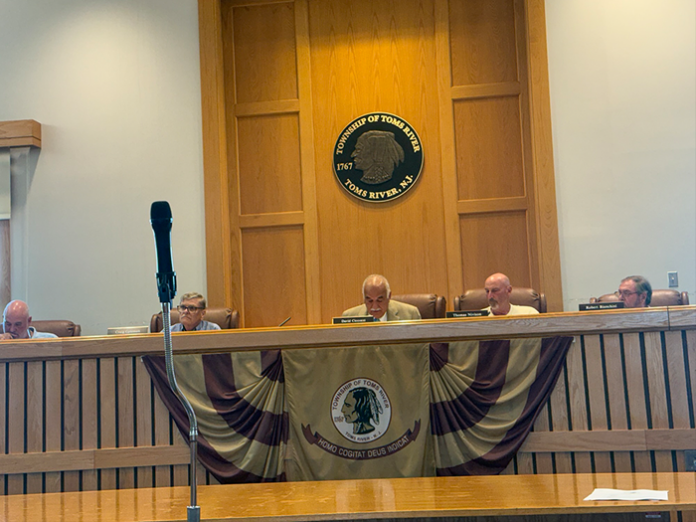
TOMS RIVER – Residents watching Township Council meetings on YouTube have learned to recognize the moment public comment is about to begin. The livestream abruptly ends and resets to the beginning of the meeting just as Mayor Daniel Rodrick leaves the dais with a ceremonial bow. While the meeting continues inside council chambers, viewers at home miss the portion where residents comment and question elected officials on municipal issues ranging from taxes and development to staffing and public spending.
During the most recent council meeting, a resident said he came to Town Hall after discovering the livestream had once again ended before public comment. “This is my fourth consecutive time coming here from my house because the live feed has been cut,” he told council members.
Referring to discussions involving dune issues and asbestos remediation, the same man added, “I can see why the live feed would be cut now… You wouldn’t want a lot of people to know about that, which is pretty disappointing.”
When Council Rules Become The Issue
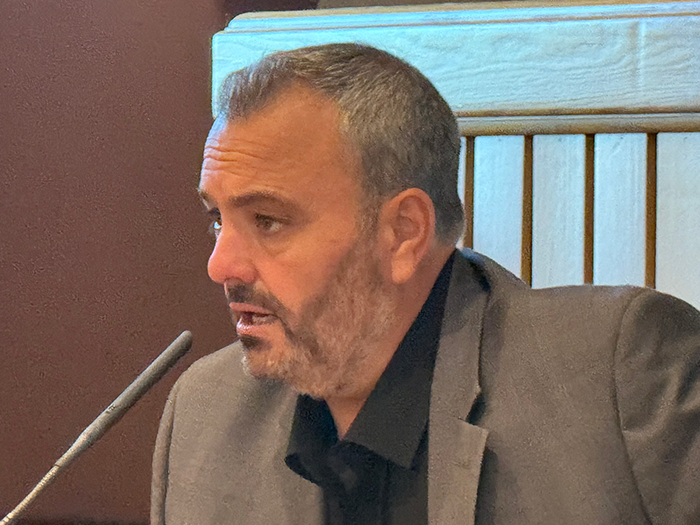
Several residents have expressed concern about the public portion of the meeting being cut. Phil Brilliant, a frequent critic of the mayor, has taken the issue to Superior Court, alleging the township violated its own procedural rules by ending the broadcast before residents have an opportunity to address elected officials.
What began as a dispute over a YouTube livestream has since evolved into a broader legal battle over who controls Township Council meetings, whether the mayor is bound by procedural rules adopted by the council, and where the balance of power lies under Toms River’s Faulkner Act form of government.
New Jersey’s Open Public Meetings Act requires governing bodies to conduct meetings in public but does not require municipalities to livestream or otherwise broadcast them remotely. However, at its annual reorganization meeting, the Township Council voted 4-3 to adopt rules of procedure by resolution. Rule 14 requires all council meetings to be recorded, livestreamed on the township’s YouTube channel and remain available online for public viewing.
Brilliant’s lawsuit alleges township officials violated that rule by ending the livestream before public comments. The initial filing names the Township of Toms River, the Township Council, Mayor Daniel Rodrick, Acting Business Administrator Drew Chabot and Township Clerk Stephen Hensel as defendants.
When the case first came before the court, Assistant Township Attorney Jonathan Penney appeared on behalf of all the defendants. However, council majority members later argued the executive and legislative branches have conflicting legal positions requiring separate counsel. The council majority is often at odds with the mayor.
The differing legal positions became more apparent during the June 4 hearing before Superior Court Judge Francis R. Hodgson, Jr. Penney argued that the Township Council’s January resolution adopting its rules of procedure, including Rule 14, was not legally binding because it had not been enacted by ordinance. “They’re just council rules,” he said.
Penney further argued that “the mayor has full control of administrative employees in our form of government,” including the township’s information technology staff. He said that extending the livestream after the business portion of the meeting concluded would increase overtime and compensatory costs that ultimately fall on taxpayers.
Judge Hodgson declined to resolve the issues during the preliminary injunction hearing. He explained that Brilliant had not satisfied the legal standard for emergent relief and denied the request for a preliminary injunction. He relisted the matter for July 2, while making clear the underlying legal issues would be addressed as the case moved forward.
Who Speaks For The Council?
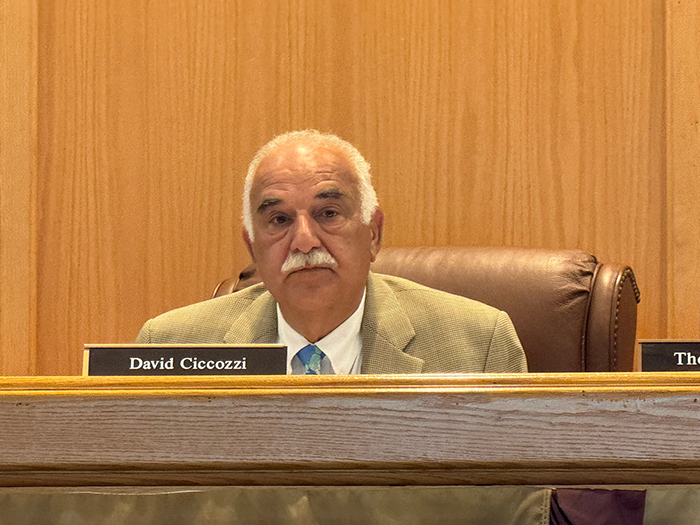
On July 1, Council President David Ciccozzi asked the court for time to retain independent counsel, arguing New Jersey’s conflict-of-interest rules prevented one attorney from representing both the council and the mayor’s administration.
The dispute moved from the courtroom to the council dais during the Township Council’s July 8 meeting. Before taking public action, the council majority entered executive session to meet with Archer & Greiner attorney Jason Sena regarding his potential representation in the litigation. Because Mayor Rodrick and Township Clerk Stephen Hensel are named defendants whose legal interests had become adverse to those of the council majority, they were excluded from the closed-door discussion. A council member present at the meeting took the executive session minutes.
When the council returned to open session, members voted to appoint Sena as special counsel. Penney objected, arguing that under Toms River’s Faulkner Act form of government, only the mayor has authority to direct litigation and retain outside counsel on behalf of the township. Rodrick agreed, calling the appointment unauthorized.
Penney also questioned the executive session itself, including the exclusion of the mayor and clerk and the procedure used to record the meeting.
Sena maintained that the Open Public Meetings Act expressly permits executive sessions to discuss pending litigation and attorney-client privileged matters. Because the mayor and clerk were defendants whose interests had become adverse to those of the council majority, Sena said they could not participate in privileged discussions concerning the council’s legal strategy.
Sena said the appointment was far more limited than Penney suggested. “The council retained us for a specific limited purpose of representing them in their dispute with the mayor over who has the power to do what in the town,” Sena said in an interview. He described the matter as a separation-of-powers dispute between the township’s legislative and executive branches rather than simply a disagreement over livestreaming council meetings.
Penney also relied on a New Jersey appellate precedent case that he argued supported the mayor’s position. Sena disagreed, saying the opinion “also says when it’s applicable,” and argued the language Penney omitted distinguishes the Toms River dispute.
The Mayor’s Position
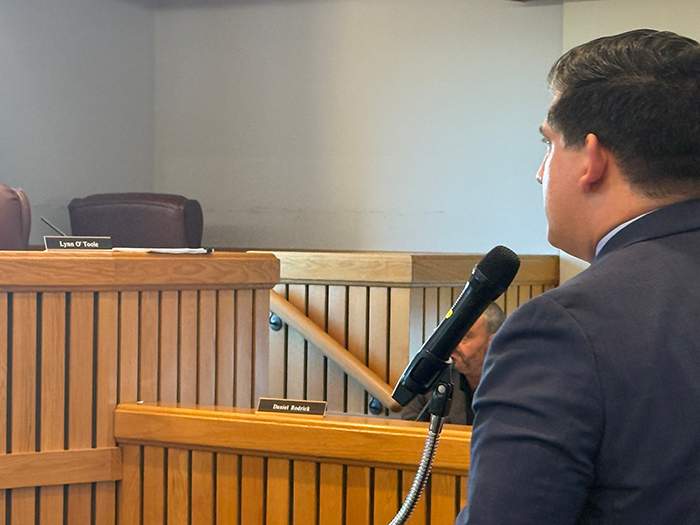
Rodrick maintains that his decision to end the livestream before public comment was driven by both legal authority and fiscal responsibility. He further argued litigation decisions belong exclusively to the mayor under the Faulkner Act and said extending the livestream forces police officers, department heads and other employees to remain at meetings, increasing overtime and compensatory time.
He called the lengthy public comment sessions “a very costly staged political stunt” and said “there is no legal requirement to broadcast the video.”
“I have four police officers who are getting overtime and then every single division manager and department head getting time and a half in comp time,” Rodrick said, adding, “They are forcing me to give an extra 2 1/2 weeks vacation to people who are already entitled to five weeks.”
Rodrick’s assertions regarding staffing have been disputed. Multiple sources familiar with township operations told this publication that officers assigned to council meetings generally work their regular shifts and are not brought in solely because meetings continue into public comment. Those sources also said police officers were not routinely assigned to council meetings before the current administration. This publication has not independently reviewed staffing records to verify either position.
What began with an abruptly ending YouTube livestream has become a court battle that could define the balance of power between Toms River’s two governing bodies. The matter is scheduled for a remote hearing before Judge Hodgson on August 14.