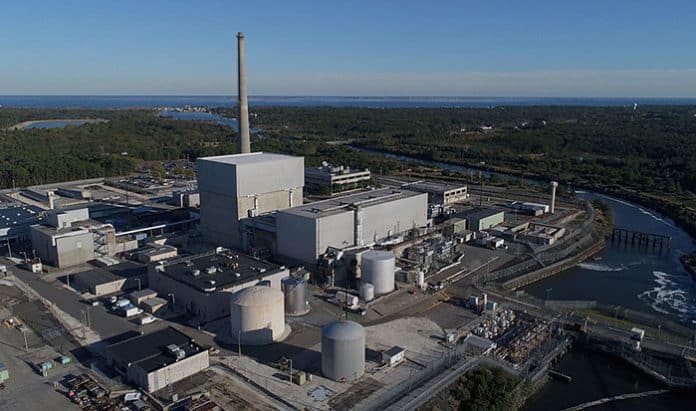
LACEY TOWNSHIP — The U.S. Nuclear Regulatory Commission has approved the License Termination Plan (LTP) for the Oyster Creek Generating Station, marking a major milestone in the decommissioning of the former nuclear power plant.
Holtec International announced the approval, saying the project is now more than halfway through the decommissioning and dismantlement process. The company said the NRC’s decision reflects the work of multiple departments involved in engineering, radiation protection, environmental services, licensing, security and project management.
“The approved LTP provides the roadmap for the final phase of decommissioning and site restoration,” Oyster Creek Site Vice President Jeff Dostal said. “We will continue to execute the remaining work with the same discipline, professionalism, and focus on safety that have guided the project to date.”
The License Termination Plan outlines the remaining steps required before the NRC can release the property from its nuclear operating license, including final site surveys and environmental cleanup.
Oyster Creek began producing electricity in December 1969 and operated for nearly 49 years before permanently shutting down in September 2018. At the time of its closure, it was the nation’s oldest operating commercial nuclear power plant. During its lifetime, the facility generated more than 192 terawatt-hours of carbon-free electricity.
Holtec also reaffirmed its long-term vision for the Lacey Township site, which includes plans to construct four SMR-300 small modular nuclear reactors. The proposed project would have a combined generating capacity of approximately 1,360 megawatts and, according to the company, could create about 4,000 construction jobs, more than 400 permanent positions and additional employment through the regional supply chain.
The company said the project could also generate new tax revenue, infrastructure investment and potentially support future artificial intelligence data centers. However, Holtec noted those plans remain forward-looking and are subject to regulatory approvals, market conditions and other uncertainties.