JERSEY SHORE – Rachel had a seven-week-old baby with her when she stopped at Judaica Plaza in Lakewood in the days before Rosh Hashanah. There were holiday meals to prepare and the spiritual preparations that came with the Jewish New Year.
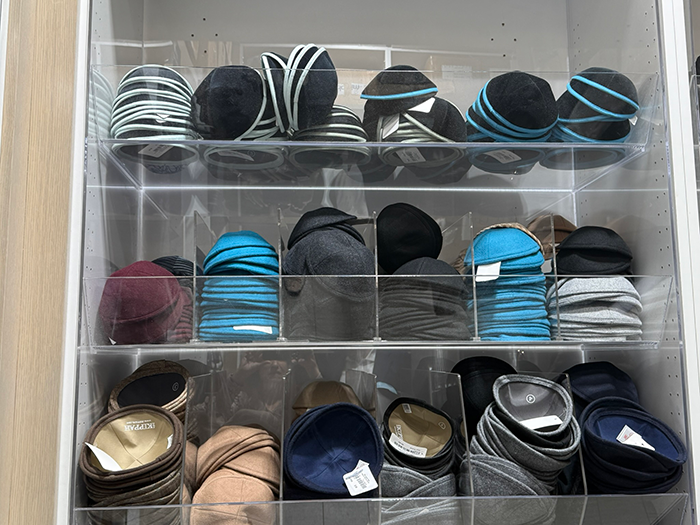
Nearby, Rikki was choosing yarmulkes for her 3-year-old son. Asked how she decided among them, she gave the kind of answer any parent coordinating a child’s clothes might understand. “Match it to the clothes,” she said. Both women declined to be photographed, and Rikki asked that her last name not be published. Both are identified here by first name only.
Rosh Hashanah has since passed, but the holiday provided an opportunity for conversations that went beyond its observance. What traditions matter inside Orthodox Jewish homes? What might people outside the community misunderstand about them? And as Orthodox families increasingly settle beyond Lakewood, how well do people living only a few doors apart actually know one another?
The numbers help explain why those questions matter locally. A 2024 study by the Berman Jewish DataBank estimated that New Jersey’s 4th Congressional District, which includes Lakewood and portions of Ocean and Monmouth counties, was home to approximately 111,600 Jewish residents, representing 14.4 percent of the district’s population. The figures include Jews of all denominations and levels of observance, not only those who are Orthodox.
Traditions Through The Generations
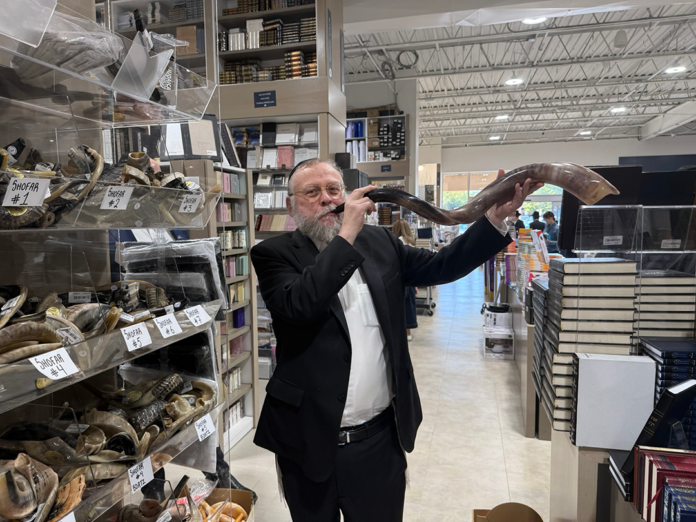
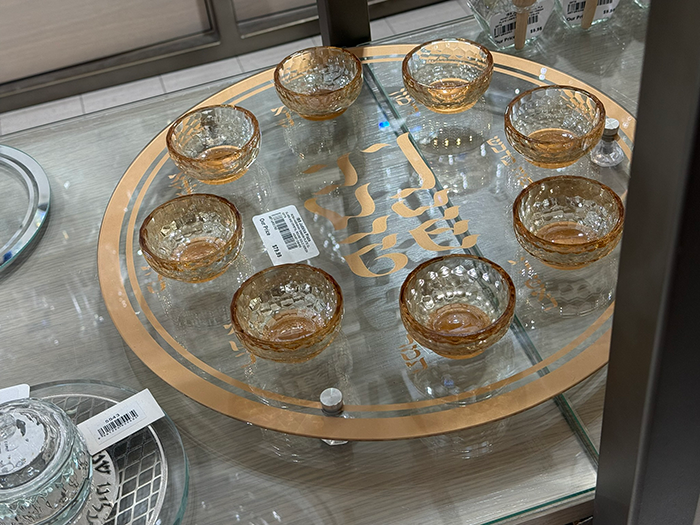
In the days before Rosh Hashanah, the approaching holiday was visible inside Judaica Plaza. Only weeks earlier, displays had been filled with religious study books for the beginning of the school year. By September, attention had shifted to the High Holy Days. Decorative dishes designed to include apples and honey, traditionally eaten with a wish for a sweet new year, were among the seasonal items on display.
For Avrohom Levine, preparing for a new year was less about what was on the table and more about what was happening within. “We want to make ourselves better people,” Levine said, describing the period as one of “soul searching.” That could mean doing a kind deed for someone, studying more Torah or spending more time in prayer.
Rabbi Moshe Rotberg, leader of the Toms River Learning Center, described the High Holy Days in much the same way. Rotberg said one of their most meaningful aspects is the opportunity to acknowledge personal shortcomings rather than assume everything we have done is right. “The more we can acknowledge that we’re imperfect, the more perfect we are,” Rotberg said. For him, the process is less about a traditional New Year’s resolution to go to the gym and more about deciding, “I want to be more patient. I want to get angrier less.”
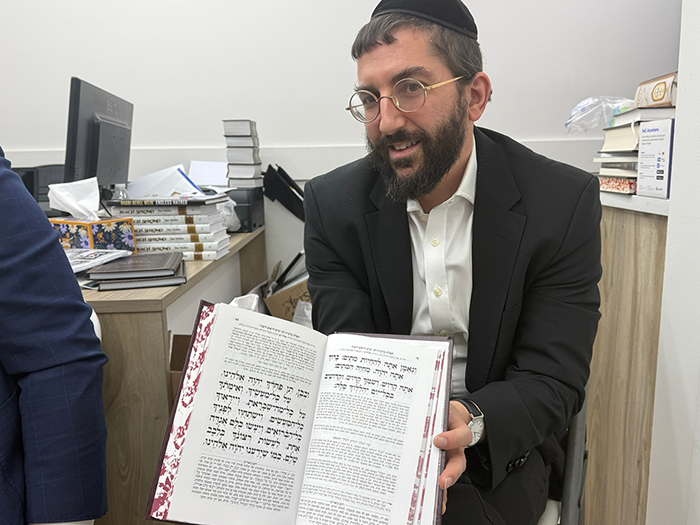
That reflection is also tied to traditions passed through families. Avrohom spoke about people who continue using the same High Holy Day prayer book for years and children who eventually inherit one used by a parent. After a father dies, he said, someone may treasure “that prayer book that his father prayed with for 50 years.”
His son Meir, 42, could still remember standing beside his parents in synagogue as a little boy. What stayed with him most was the silence before the sound that suddenly filled the room. “The most important thing was the sound of the shofar,” Meir recalled. He remembered the person preparing to sound the ram’s horn with a prayer shawl over his head as everyone waited.
When A Custom Is Unfamiliar
Some Orthodox customs are obvious to people outside the faith. Others may only become apparent when two people actually meet. One is something as routine as a handshake. An Orthodox man who strictly follows Jewish law concerning physical contact between unrelated men and women may politely decline a woman’s extended hand.
Rotberg said the practice sometimes causes confusion. He has even written a guide for professionals, including police departments, prisons and hospitals, to help explain Orthodox practices that can otherwise be misinterpreted. “It has nothing to do with someone being less than or other or anything like that,” Rotberg said.
The distance between Orthodox and non-Orthodox residents has sometimes involved more serious issues than misunderstood customs. As previously reported by The Jackson Times, Jackson Township reached a $575,000 settlement with the state in 2023 resolving a civil rights lawsuit alleging the township used zoning and land-use powers to discriminate against Orthodox Jewish residents. The settlement also required creation of a multicultural committee aimed at promoting diversity and religious sensitivity.
Growth has also produced legitimate public-policy debates involving development, traffic, schools, taxes and land use. Rotberg’s own recent experience in Toms River offered an example of what can happen when people with questions have an opportunity to ask them. His congregation recently went through the approval process to build a synagogue. Rotberg said some non-Jewish residents expressed skepticism and asked questions about how it would operate, including why there would not be the vehicle traffic they anticipated on the Sabbath and High Holy Days.
Instead of dismissing the concerns, Rotberg said he explained the religious practices involved. When he first came to Toms River about a decade ago, Rotberg said suspicion of the growing Orthodox community was readily apparent. Over time, familiarity changed some of those relationships. “As we got to know them, slowly those signs came down, and we became good friends.”
The Neighbor Who Comes When You Need Him
Perhaps one of Rotberg’s simplest examples of neighbors finding common ground happened when something went wrong. Orthodox Jewish law places restrictions on certain activities during the Sabbath, including operating electrical equipment. Under certain circumstances, Rotberg explained, an observant Jew may ask a non-Jew to perform a task the Jewish person cannot do. The person who helps is sometimes colloquially known as a “Shabbos goy.”
Rotberg’s non-Jewish neighbors have filled that role, but the relationship he described sounded less like a religious accommodation and more like what neighbors have always done for one another. “We look out for each other,” he said.
Once, during High Holy Day prayers, the air conditioning stopped working. Because of the religious restrictions, members of the congregation could not simply make the necessary adjustments themselves. They turned to a non-Jewish neighbor, who came over in the middle of the holiday and helped get the air conditioning running again. Rotberg described the relationships he has developed with his non-Jewish neighbors during the decade he has lived in Toms River simply as “really nice relationships.”
The people interviewed for this story do not speak for every Orthodox Jew or every Jewish person in Ocean County. Judaism encompasses different denominations, traditions and levels of observance, while individual Orthodox families and congregations differ from one another. But many of the things they talked about required little knowledge of religion to recognize. A father hopes his children carry something meaningful from their childhood into adulthood. Parents have meals to prepare and children to dress. People look back at their mistakes and hope to do a little better in the year ahead.