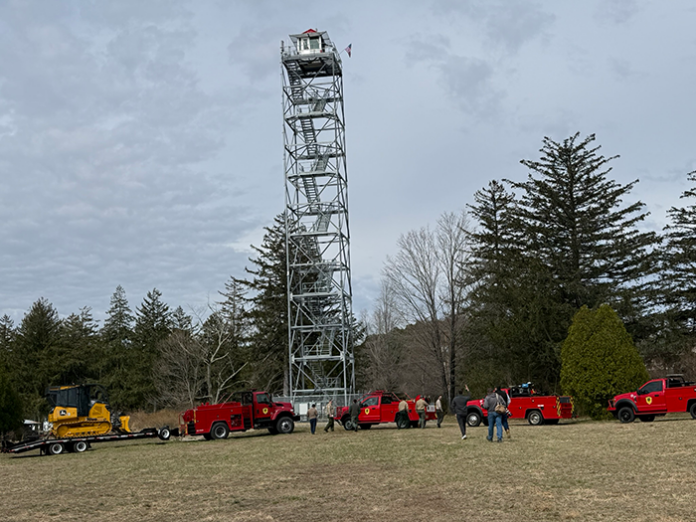
JACKSON – A new fire tower now rises above the pines in Ocean County, marking the first addition to New Jersey’s wildfire detection system in nearly eight decades and reinforcing efforts to protect residents as fire risks remain elevated.
The 133-foot Veterans Fire Tower, dedicated at the Forest Resource Education Center on East Veterans Highway, is designed to provide early detection of wildfires and faster response across Ocean and Monmouth counties. The tower is named for its location in Jackson and honors New Jersey veterans as part of the nation’s 250th anniversary this year.
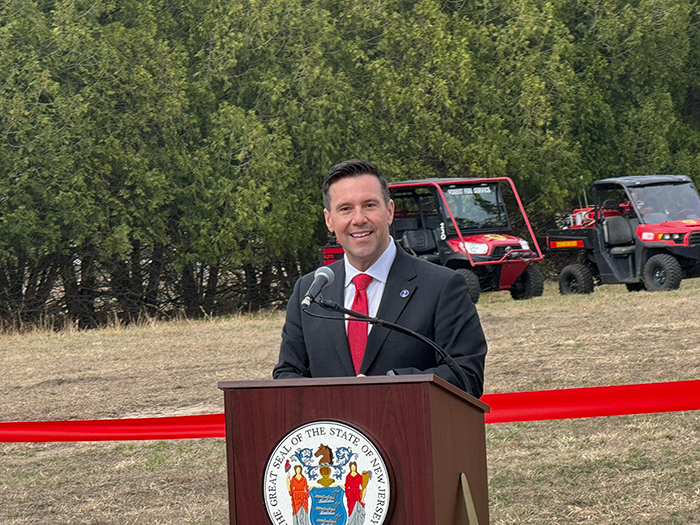
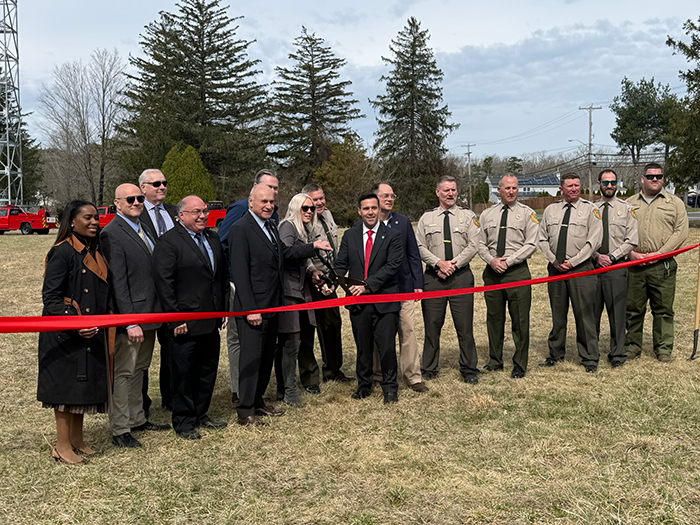
“This is really an exceptional day because we’re here on a positive note to ensure that we have adequate resources and protections so we can prevent the worst from happening,” said Ed Potosnak, Acting Commissioner of the New Jersey Department of Environmental Protection, at the tower’s ribbon cutting ceremony. “At the heart of the Forest Fire Service mission is early detection and rapid response.”
The new structure replaces a Lakewood fire tower that dated back to 1944. Built by five employees of Jersey Central Power & Light, the original tower served the region for decades. It was relocated in 1974 following a property dispute and remained operational until it was decommissioned in July 2024 and later demolished.
Chris Hoenig, a spokesperson for JCP&L who was present for the ribbon cutting ceremony, said the project reflects a long-standing partnership. “It’s another example of the long-standing partnership we’ve had with the Forest Fire Service and with our communities going back generations.”
A Statewide System
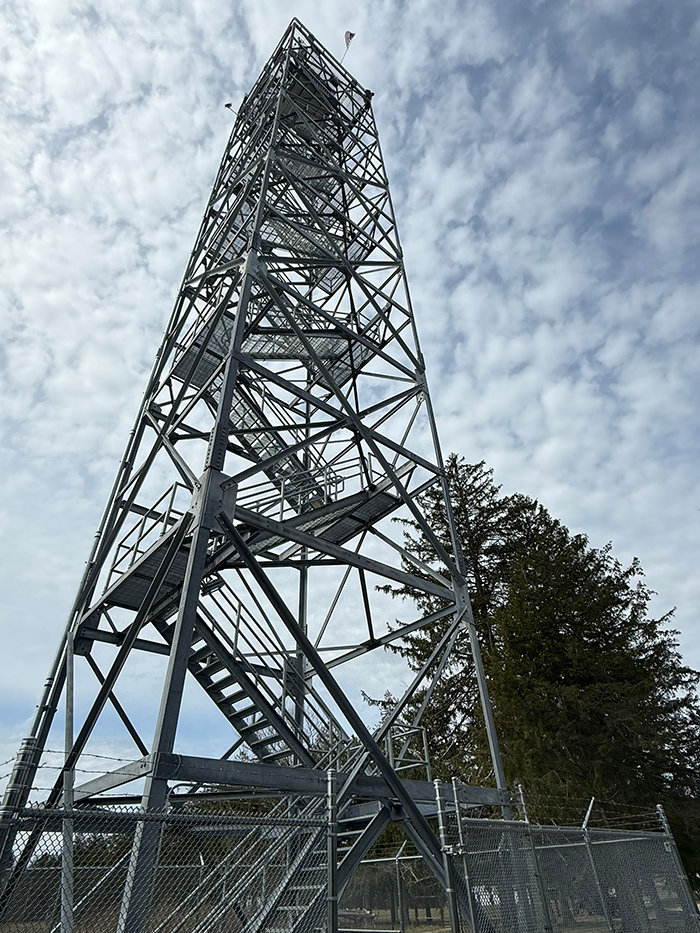
The Veterans Fire Tower was constructed over a six-month period in 2025 and is now part of a network of 21 fire towers across New Jersey. Approximately $2 million was devoted to the project.
From tower vantage points, trained observers scan for smoke, determine a fire’s location, and relay information to crews on the ground. “They’re triangulating smoke, pinpointing potential wildfire locations, and dispatching resources very quickly,” Potosnak said.
The tower is expected to help protect more than 516,000 residents and approximately 200,000 homes across the region.
“As we enter the spring wildfire season, the busiest time of year for the firefighter service, New Jersey residents can take comfort in knowing that the firefighter service has its eyes in the sky, and they are ready to respond to the first signs of smoke,” assured Potosnak.
State Fire Warden and Forest Fire Service Chief Bill Donnelly described the new tower as a modern upgrade built on long-standing practices that remain central to wildfire response. He emphasized that early detection still depends on trained personnel reading smoke and relaying information quickly.
Donnelly pointed to one feature that sets the Jackson tower apart. “None of the other fire towers here in New Jersey have a catwalk. This is the first one,” Donnelly said, noting it allows observers to step outside and improve visibility.
Even with those upgrades, he emphasized the fundamentals have not changed. “The human element is still essential,” he said.
A Visible Climb
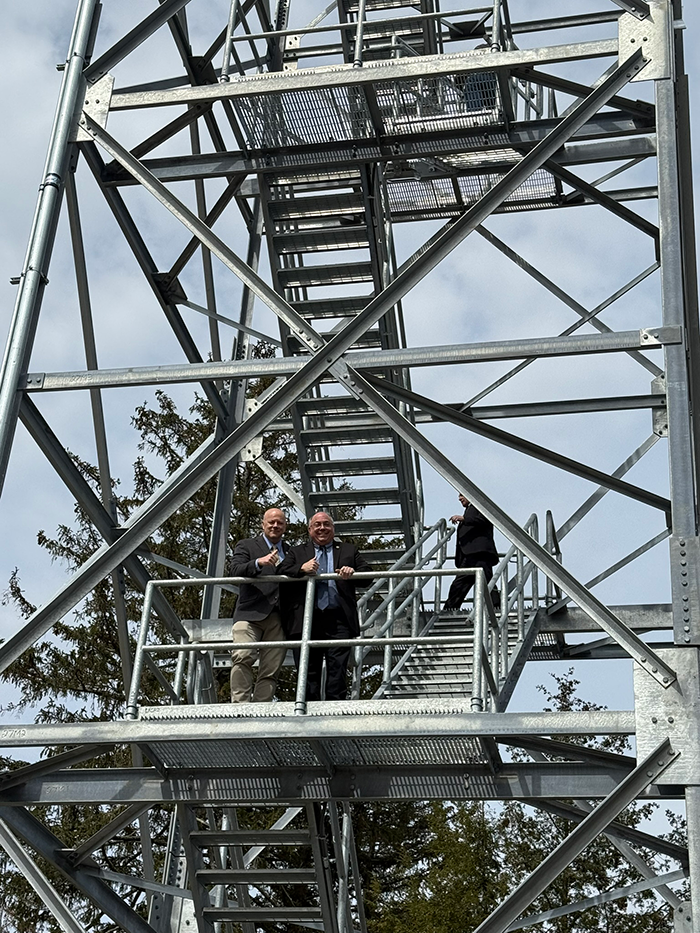
The tower’s role became tangible shortly after the ceremony concluded and the crowd was invited to climb the steep, zigzagging metal staircases that wind upward in narrow flights to the observation cab.
Among those who took part in the initial climb were Senator Carmen Amato (R-9), Senator Owen Henry (R-12) and Assemblyman Greg Myhre (R-9).
From the ground, the ascent appeared manageable. That perception shifted as climbers moved above the tree line. “That’s when everybody begins to realize how high they are,” one observer said. “When they get above the tree line and look around.”
Unlike enclosed climbs such as Barnegat Lighthouse, where the height feels contained, the open structure leaves little doubt about the distance from the ground.
Amato said the tower represents more than a new structure. “This tower will serve as a critical early detection tool, helping safeguard hundreds of thousands of residents across Ocean and Monmouth Counties,” he said.
“Recent events, including the Jones Road Wildfire, remind us just how real and immediate the threat of wildfire is here in the Pinelands region. That wildfire demonstrated the importance of rapid detection, coordinated response, and having the right infrastructure in place to protect lives and property.
“Investments like this fire tower ensure that our first responders have the tools they need to act quickly and effectively. We must continue working together at the state and local level to strengthen wildfire prevention, mitigation, and public awareness efforts,” he said.
Dry Conditions Keep Risk High
The tower’s debut comes as New Jersey continues to experience below-average rainfall. Officials said the state has received roughly 76 percent of its typical precipitation over the past 22 months, leaving forests vulnerable despite recent rain.
The spring wildfire season, which runs from mid-March through mid-May, is historically the busiest period. Residents were urged to take precautions, including clearing debris and avoiding activities that could spark fires. “Only you can prevent wildfires,” Donnelly said.
Following the ceremony and invitation to climb the tower, officials conducted a prescribed burn demonstration, highlighting one of the state’s key wildfire prevention strategies.
Assistant Commissioner John Cecil said controlled burns reduce excess vegetation that can fuel wildfires. Crews aim to treat about 25,000 acres annually, though weather conditions can affect progress.
All Along The Watchtower
The dedication drew a range of state and local officials, along with service personnel from across the region. Assemblywoman Tenille McCoy (D-14), Assemblyman Robert Clifton (R-12), Jackson Mayor Jennifer Kuhn, and Manchester Mayor Joseph Hankins were present for the ceremony. Notably, Hankins serves as the Vice President of the New Jersey State Fireman’s Association.
“This tower is important to the residents of Manchester,” Hankins said. “The water department built a water tower in front of the Lakewood tower that was higher than the observation tower. It blocked out the view of big sections of Manchester.”
The tower will be staffed during fire-threat days, particularly before trees fully leaf out, when visibility is highest and wildfire risk increases.
From its elevated perch, observers will scan the horizon for the first signs of smoke. For those gathered at the base, watching the first climb, the purpose of the tower was clear. It is not just about height. It is about seeing danger early enough to stop it.