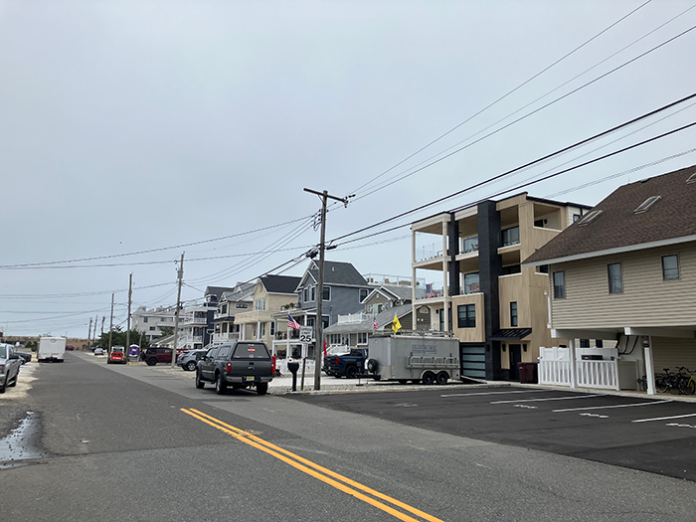
BERKELEY – Half a century of fighting came to a close when the Borough Council of Seaside Park voted to annex 168 acres of Berkeley Township.
This section, South Seaside Park, is between Seaside Park and Island Beach State Park. About 15 years ago, SSP resident Don Whiteman began the fight in earnest to leave Berkeley. This was the same fight his father led in the 1970s.
More than 100 years ago, Berkeley, Toms River, Seaside Park and their neighbors were all part of the same town. They all eventually split, leaving weird borders, such as a section of Berkeley on the barrier island.
Residents said they were Berkeley residents only in where they sent their taxes, feeling more akin to their neighbors. They said they didn’t want to travel miles and miles to get township business done, and felt that the town didn’t provide the resources to their distant stepchildren despite the amount of taxes that the shore homeowners pay.
Whiteman and other petitioners made their case before the Berkeley Planning Board over the course of years, which ultimately recommended that SSP not leave. This went to the courts, which said they could leave.
Now, they just needed Seaside Park to take them in.
When Whiteman’s father successfully de-annexed from Berkeley during his struggle that started in the 1970s, Seaside Park turned them down.
There was still a chance that could happen. There were a lot of unknowns. Very few de-annexations or annexations have happened in the modern era. And while the state law on de-annexation is very clear, there were more gray areas about what happened next, said Jean Cipriani, who was brought on as an attorney for Seaside Park specifically for this issue.
She had warned the governing body not to discuss their opinions about whether to annex SSP because anything they said could be held against them in a court of law.
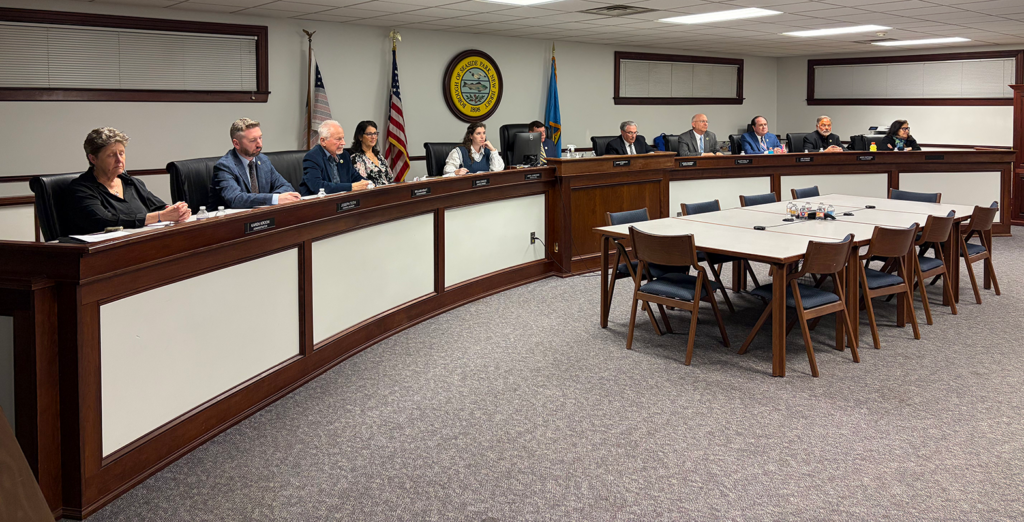
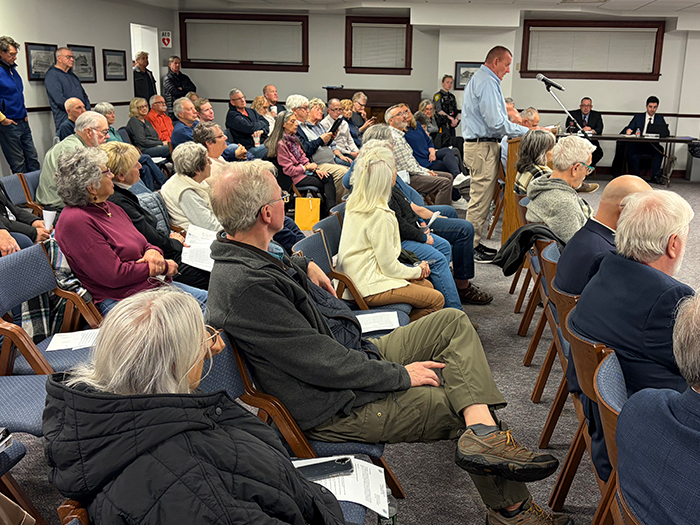
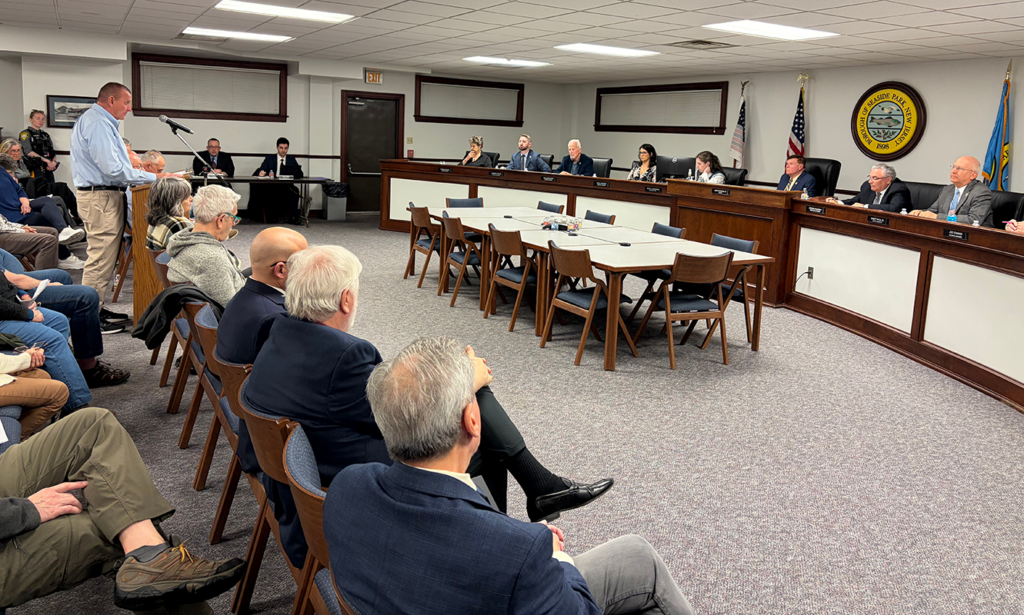
The borough held informational sessions and hired a company to study the issue. During the meeting where the vote finally took place, the meeting room was almost full, but it was mentioned that there were 154 people watching from home.
The council members all voted to annex SSP except Joseph Toth who abstained. Although Cipriani said each council member was vetted for any conflicts they may have, Toth said he felt he should abstain because he works for the Central Regional School District, of which Seaside Park and Berkeley are a part.
The council then voted on a number of measures to address the zoning and other issues of their new property.
The Unknown
Since there are very few instances of towns leaving or joining each other, there were many blanks left to be filled.
State law says that Seaside Park wasn’t allowed to know what money it would owe Berkeley. For example, if Berkeley took out a loan for a project in SSP, a portion of that debt would then belong to Seaside Park.
While Seaside Park wasn’t buying the homes of SSP residents, they would have to acquire land owned by Berkeley, such as the beach.
As one resident asked “Would any of you go to a car dealership and sign for a car that you don’t know what it costs?”
Some residents wanted the vote to be held in the summer, since some people are only here during those months.
A petition circulated online in an attempt to push back the vote or get the council to vote ‘no.’ It said “We are being rushed into a multi-million dollar, irreversible municipal merger based on a mathematically broken financial study and the emotional appeals of a 12-year legal battle that Seaside Park taxpayers did not ask for.
“While South Seaside Park residents understandably want to escape Berkeley Township, Seaside Park taxpayers cannot afford to blindly absorb their neglected infrastructure and hidden municipal debt.”
Councilwoman Gina Condos addressed the public before the vote, stating that a lot of research went into this. While some people are asking for the vote to be postponed, “I don’t think there’s going to be any new information.”
She noted the math errors in the study that was performed for the borough, and how most of the items in the study are assumptions based on the most recent data available.
When addressing the unknown, she said that quite a number of things would have to go wrong for the borough to end up at a loss. The best way to defend against this is to have a strong implementation strategy.
Mayor John Peterson Jr. said that they asked the courts if they could give a predetermination about how the next steps will go but the courts declined. So, the only thing they can do is negotiate in good faith with Berkeley Township and advocate for their residents.
Bill McGrath, a surveyor and chairman of the Berkeley Zoning Board, said that the language in the annexation needs to be cleaned up, because it’s not clear exactly what property was being acquired.
Berkeley Councilman James Byrnes said they would continue to support Sgt. Lyons Park in SSP. He commented on the challenges as well: “It seems like we’re putting a puzzle together without all the pieces.”
Cipriani said the governing body was educated on the zoning changes that would have to happen with this. “I’m sure there are issues we haven’t thought of.”
A Seaside Park resident called into the meeting with a different point of view about the unknown. Mike Juliano said “we know how to run a beach,” and how to do everything else that SSP currently has.
“We have the opportunity to control land use on an entire southern border,” he said.
South Seaside Park resident Bob Ring supported joining Seaside Park. He noted that most SSP residents are summer-only as well, so it would not be the same drain on resources as year-round residents.
He said that the petitioners against annexation had encouraged non-residents to sign, which calls the entire thing into question.
“In her decision, Superior Court Judge Marlene Lynch Ford, who is also a Seaside Park resident, concluded that annexation was logical and consistent with the state of New Jersey’s policy of encouraging the consolidation of smaller municipalities,” he said.
Former Seaside Park Councilwoman Gail Coleman said “I was for the annexation decades ago and I’m still for it.”
When SSP joins, then expensive capitol purchases like fire trucks get spread more evenly, she said.
Jay Delaney said he was speaking as a resident and former elected official and appointed official of Seaside Park, not as the business administrator of Berkeley, which is his current job.
He said the study had said SSP included “diverse zoning” which is the polite way of saying bungalows and trailer parks. SSP has more dense housing which costs more in resources.
What’s Next?
There would be 60 days for Berkeley and Seaside Park to work out the details, Cipriani said. Three representatives from Seaside Park and three from Berkeley will meet. Berkeley will tell Seaside Park how much is owed for capital projects and property.
These six would have to hammer out an agreement that four of them approve within 60 days. If they can’t, the court gets involved. It chooses three people who have 30 days to come up with a solution. This decision would be final. The court costs would be split between the two towns.
All of Berkeley Township’s zoning is deleted upon annexation, and new zoning is put into place immediately. These measures were on the same agenda as the vote to annex SSP.
Conclusion
Berkeley Mayor John Bacchione, interviewed after the vote, said that he also wished Seaside Park had waited longer before making a decision. They were required to wait at least 10 days between the introduction and final passage of the ordinance that acquired SSP, and it was 11 days.
He cited another piece of information that was missing: the will of the people. Seaside Park could have held a non-binding referendum to learn if their residents even wanted to annex SSP.
One reason that Berkeley wanted to keep SSP is that the small neighborhood pays approximately 10% of the entire town’s taxes. Now that they are going, the remaining residents might have to brace for an increase.
Bacchione said that Berkeley residents won’t feel it right away. The tax tables are already set until August.
Once the two towns meet and Seaside Park makes a payment to Berkeley, some or all of that increase might be absorbed, he said. It’s hard to make a prediction considering how everything gets more expensive every year. 2027 might be a tougher year.
“I congratulate them. I wish them luck,” he said. “We’re going to cooperate as best as we can for a smooth transition for the people.”
Senator Carmen Amato was mayor when the latest annexation movement started.
“I am extremely disappointed in the Court’s ruling on the de-annexation of South Seaside Park from Berkeley Township,” he said.
“During my tenure as Mayor, Berkeley Township was consistently responsive to the residents of South Seaside Park. We made significant investments in the area, including infrastructure upgrades, road paving, improvements to public spaces, enhanced beach walkway access, and the opening of a municipal annex to bring township services directly to residents.
“Any suggestions or concerns raised by area residents were always followed up on. I also have serious concerns that the report commissioned by the Seaside Park governing body, which was relied upon in making this decision, contained numerous errors,” he said. “The process now moves into the negotiation phase, and I will continue to advocate to ensure Berkeley Township and its taxpayers are treated fairly every step of the way.”
The vote for Seaside Park to annex SSP brought to an end more than 50 years of a group of residents hoping to leave a town far away for their closer neighbors.
When Whiteman spoke before the council, he explained how his mother was born in Seaside Park, and his father was born in Seaside Heights. They moved to South Seaside Park in the mid-1950s. He chronicled his father’s attempt to leave, which started in 1972.
“He took ten years of his life,” he said. “He did it for me, my sisters, and he did it for South Seaside Park residents.”
Ultimately, it cost him his standing in the community, as many people told him to stop. He didn’t because he thought it was the right thing to do and it is still the right thing to do.
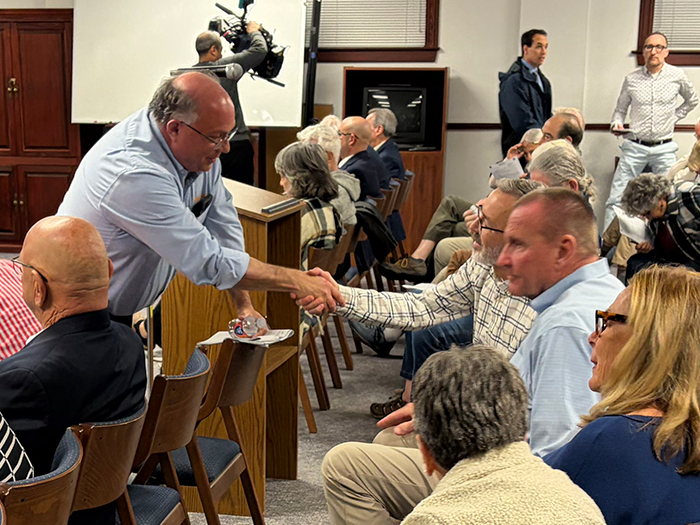
Interviewed after the vote, he said “It was a long, hard-fought battle.” But he was thrilled to see the outcome of what amounted to 15 years of his life.
Berkeley tried to give them more services, especially during the fight, but it was too little, too late. He described a big snowstorm where three streets were not plowed out for four days. Berkeley apologized and said they’d change this but the same basic thing happened the following year.
“What my father taught me is you start something, you finish it,” he said. “I can hear him saying ‘You did good, kid.’”