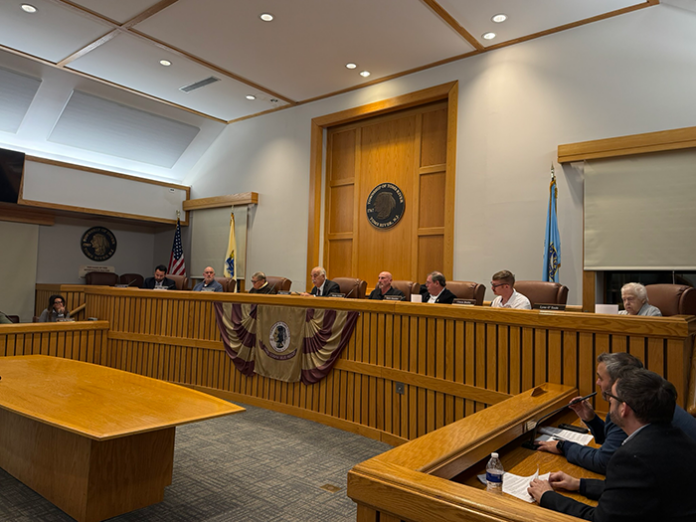

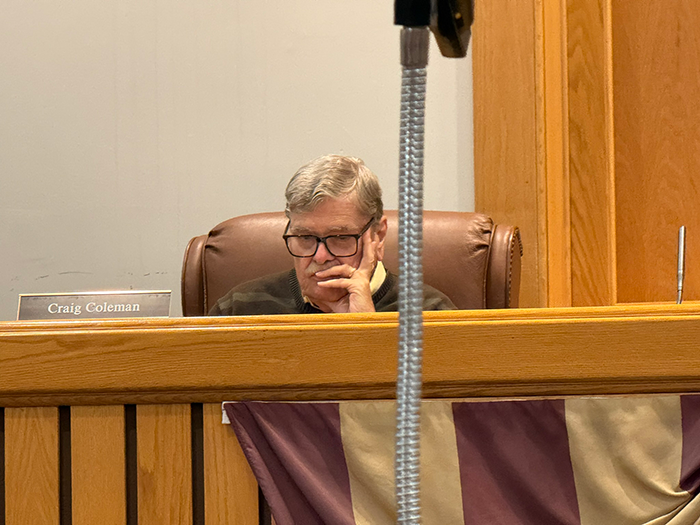
TOMS RIVER – Heated exchanges at Township Council meetings have attracted national attention, but the October 28 meeting introduced another controversy before the governing body even convened. While those inside Town Hall were told technical difficulties were delaying the livestream, viewers at home watched Councilman Craig Coleman deliver a prerecorded statement accusing fellow Councilman Thomas Nivison of misconduct.
The approximately seven-minute recording outlined accusations of harassment and intimidation, which have not been independently established. Nivison said he received a text message alerting him to the broadcast, prompting another confrontation between Mayor Daniel Rodrick and council members.
“So, there’s nothing wrong with the feed. It’s just a ploy by the scammers over here,” Nivison said.
“If you don’t allow folks to speak, then we’ll speak on our own,” Rodrick responded.
When Nivison accused the mayor of misleading those in attendance, Rodrick insisted, “No, I told you the feed wasn’t ready.”
Even after Council President David Ciccozzi began calling the meeting to order, Coleman remained on the video feed as the Pledge of Allegiance began in Town Hall.
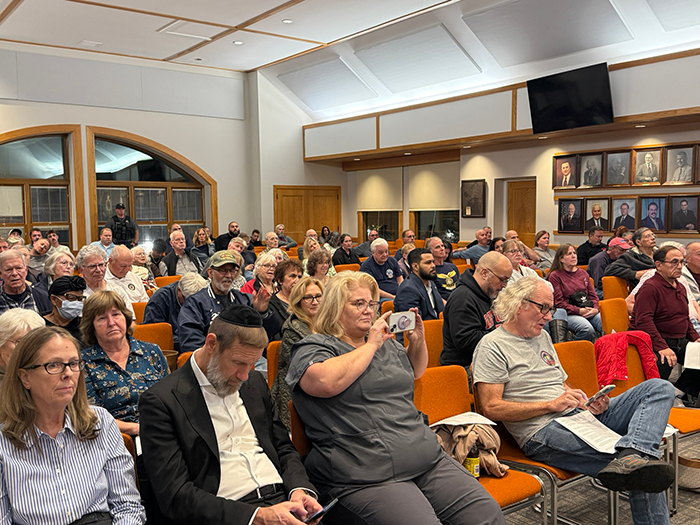
There are two groups of Republicans frequently at odds with each other. Rodrick, Coleman, and two other council members are in one camp and Nivison, Ciccozzi and two other council members are in the other.
The dispute followed an October 19 meeting during which Rodrick told resident Dana Tormollan to “get a job” and questioned whether she still lived in her parents’ basement. Rodrick and Tormollan have been sparring in meetings for years. Video of the exchange spread online, drawing coverage from national outlets including People Magazine, the New York Post and TMZ.
Rodrick disputes what he considers one-sided coverage of the confrontations. During an interview with The Toms River Times, he said that reporters had overlooked vulgar remarks and what he described as threats from audience members before his responses. He alleged that some comments involved his wife and that others suggested he should be shot. Those allegations have not been independently verified.
Asked about his conduct during recent council confrontations, Rodrick defended his approach. “I acted very dignified. I asked very nicely multiple times to be allowed to speak,” he said.
The mayor maintains that his interruptions are frequently attempts to correct information or explain administration proposals before council members vote. He questioned the usefulness of waiting until the designated officials’ comment period, after decisions have already been made.
“And wouldn’t you want to know about the vote you’re going to take before the vote?” Rodrick asked.
Disagreement Over Authority
Under Toms River’s mayor-council form of government, Rodrick heads the executive branch while Ciccozzi presides over council meetings. Their disagreement extends beyond speaking opportunities to who controls the agenda.
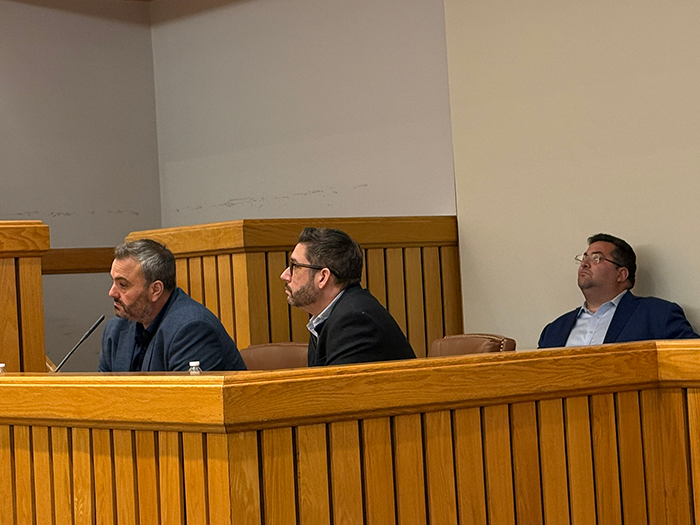
Rodrick maintains that his administration can submit resolutions for council consideration, citing a township code provision permitting the mayor to call special meetings. “If I can call a meeting, that means I can obviously have an agenda for my meeting, and it means I can add things to the council agenda,” Rodrick said.
The township code separately addresses those responsibilities. Section 5-7(B) permits the mayor to call special meetings, while Section 5-8(A) requires agendas to be prepared by the municipal clerk and approved by the council president or four council members.
Rodrick said his administration obtained a legal opinion supporting its interpretation, but that opinion was not available for review. He also maintains that, as mayor, he has authority to direct township employees.
Ciccozzi explained that the customary preparation process had broken down, leaving council members without a completed agenda. “So, for the very first time, I had to scramble. I don’t have the expertise to type up an agenda, but we were forced to, and we got it done,” Ciccozzi said.
The mayor questioned Ciccozzi’s account, pointing to the council president’s acknowledgment that this was the first time he had prepared an agenda himself.
Ciccozzi also questioned whether council members critical of Rodrick would receive the same opportunity Coleman had been given to address viewers before a meeting. He maintains that established procedures are necessary to preserve order and allow council business to proceed without repeated interruptions.
Censures Divide Council
Coleman’s proposed censure included allegations that have not been independently verified. It also criticized Nivison for calling Business Administrator Jonathan Salonis “Johnny Cakes,” at the October 19 meeting, suggesting a reference to a gay subplot from The Sopranos.
Nivison disputed that interpretation. “I thought Johnny Cakes was his DJ name,” he said.
The censure would have to be voted on by the council in the form of a resolution. Ciccozzi objected to the resolution being placed on the agenda, saying he had directed its removal. Township Attorney Jonathan Penney maintained that the administration had submitted the measure and council members could table it.
The council voted 4-3 to table Nivison’s censure. This means that the council decided to take the censure off the agenda. A Facebook page entitled Toms River Township Government and purportedly run by the administration incorrectly states that Nivison was censured.
Two other resolutions passed by 4-3 votes, with Ciccozzi, Nivison, Robert Bianchini and Clinton Bradley supporting them. Coleman, Lynn O’Toole and Harry Aber opposed both.
One censured O’Toole, citing concerns about her remote participation and allegations that another person influenced her votes. Rodrick defended her, citing physical limitations and the need for reasonable accommodation.
The other expressed no confidence in Rodrick, citing his conduct during the October 19 meeting. The resolution was a formal expression of disapproval rather than an action removing him from office.
Residents And Mayor’s Departure
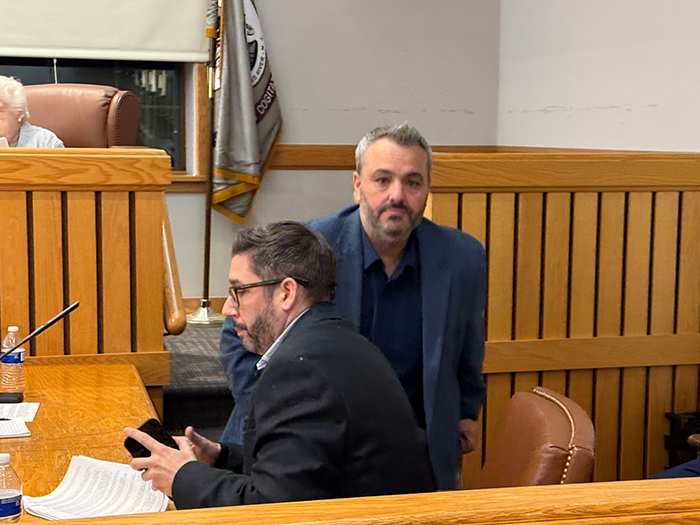
“I came for the content of the meeting,” said Joe Vigna, a Lake Ridge senior development resident. Calling the arguments “Mickey Mouse garbage,” he urged officials to focus on township business. “We want to learn. We’re interested in what are you going to do for us as a community,” he said.
Rodrick left the October 28 meeting after the part of the meeting set aside for public comment, but before the time for officials to comment. In a subsequent telephone interview, he criticized the order of the speaking periods, saying it required him to remain at meetings until as late as 11 p.m.
“They ignored me,” Rodrick said of his requests to address the council. He also indicated that he did not intend to remain at future meetings when he considered the agenda unproductive.
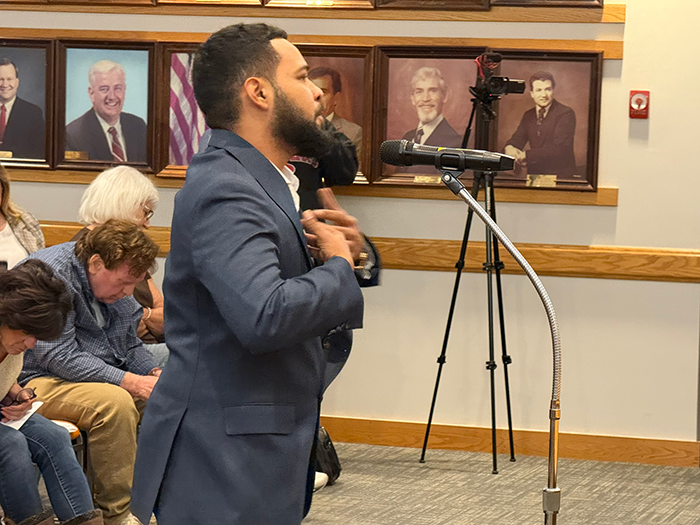
Tensions continued when resident Carlos Almanzar challenged the administration’s approach to affordable housing negotiations. Penney, the town’s attorney, disputed Almanzar’s understanding before their exchange became personal. “I’m embarrassed to be Latino and have you be Latino as well,” Penney told Almanzar.
The affordable housing dispute remains a central source of friction between the administration and council majority. Fair Share Housing Center has filed a motion seeking enforcement of an earlier settlement, while officials remain divided over development sites and township-owned land.
For a closer look at the affordable housing developments discussed at the October 28 meeting, see our separate article, which includes an interview with Mayor Daniel Rodrick and information from court filings and other legal documents.