
OCEAN COUNTY – Leaving an abusive relationship rarely looks like a carefully packed moving truck. More often, it looks like a few bags thrown together in a hurry. Sometimes it is just the clothes on someone’s back and children in tow.
Then comes the question that keeps many survivors from leaving at all. Where do they go? Emergency shelters and transitional housing offer options, with their locations kept confidential for residents’ safety.
Domestic violence often extends far beyond visible wounds. Abuse is often about control, and control frequently includes money. A survivor may have no bank account in their own name, damaged credit, or a work history that was cut short by a partner who wanted them home. Rent, security deposits and utility bills can feel impossible.
“So often, the abuse is not just physical,” said Liz Graham, CEO of 180 Turning Lives Around, a nonprofit that has provided services for domestic and sexual violence survivors in Monmouth County for 50 years and recently expanded into Ocean County. “It is a whole cycle of control.”
This latest installment in our domestic violence series follows a vigil that remembered victims who lost their lives and an informative article about restraining orders.

Providence House Offers Shelter And Counseling
Providence House began serving Ocean County in 1986, after first opening in Burlington County. Both programs are part of Catholic Charities, Diocese of Trenton, and Providence House provides free, confidential domestic violence services, including a 24-hour hotline, emergency safe houses, counseling and legal advocacy.
Anyone seeking emergency shelter can call Providence House’s hotline at 732-244-8259. Staff conduct a screening to learn about the caller’s circumstances and determine whether the safe house is an appropriate option. Depending on the situation, the person may make their own way there or receive a police escort.
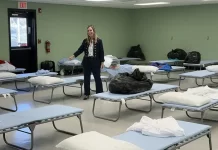
The safe house operated by Providence House can accommodate up to 27 survivors and children. Women and children are housed at the facility, while men needing emergency shelter may be placed in a hotel. If the safe house has no available room, the organization may also advocate out of county, and in some cases, arrange a hotel placement.
The program is designed for stays of about 30-60 days, though some people stay only one night and others remain longer. Injuries or the need to relocate to another county can affect how long someone stays. Staff work with residents on next steps, including referrals to transitional housing when appropriate.
Residents spend time at the safe house in the same way as they would at home, and children can play in the yard. Children continue attending school within their own district, unless safety concerns are present. Providence House may work with the school to arrange transportation, which could involve a school vehicle instead of the regular bus. Arrangements depend on each family’s circumstances.
Not everyone seeking help needs emergency shelter. Providence House also offers individual and group counseling through its counseling center in Whiting for people affected by abuse who are not seeking safe shelter. Groups give participants a chance to connect with others who have had similar experiences, and some are organized for particular age groups, including women 55 and older.
Safety plans are tailored to each survivor and may change as circumstances evolve. Some steps can be simple. “Lock your doors, be aware of your surroundings,” Laura McCoy, Legal Program Supervisor said. Community Affairs and Education Manager Laurie Toole added that a plan may need to change because “the safety plan we made yesterday may not work today.” The risk of harm can increase when a survivor leaves an abusive relationship, making ongoing planning important.
A Monmouth Mainstay Comes To Ocean
180 Turning Lives Around has served as the lead agency for domestic and sexual violence services in Monmouth County for 50 years. “We were actually the first federally funded safe house in the nation,” Graham said, adding that the program began in 1976 with funding to rent a two-bedroom apartment.
Survivors do not need a restraining order or a police report to qualify for 180’s housing. “We believe survivors,” Graham said. Staff work with each person on a safety plan, and restraining orders can be part of it, but they are never a requirement.
Graham said there is currently no waiting list, and staff can often help a survivor move from emergency shelter into transitional housing as a unit becomes available.
An emergency stay buys time. It does not always buy a future. 180 also operates a safe house in Monmouth County, but its move into Ocean County came through transitional housing, including Harbour Light, the Brick complex formerly known as Dottie’s House.
Harbour Light Carries Dottie’s Legacy Forward
Carol Wolfe founded Dottie’s House in 2000, naming it for her mother, Dottie, a domestic violence survivor. After Wolfe died in 2019, funding dwindled, and the Dottie’s House board voted to dissolve the organization in October 2025.
“We believed that the closing of one nonprofit organization should not mean the end of the work so many people had dedicated themselves to building,” said Christine Hofmann, Executive Director of Homes Now, Inc., the nonprofit that owns the property.
Homes Now entered into a partnership with 180, providing the housing while 180 offers case management, counseling and other support. “A safe apartment is incredibly important, but housing alone does not necessarily address the trauma, financial challenges, safety concerns, and other barriers a survivor may be facing,” Hofmann said.
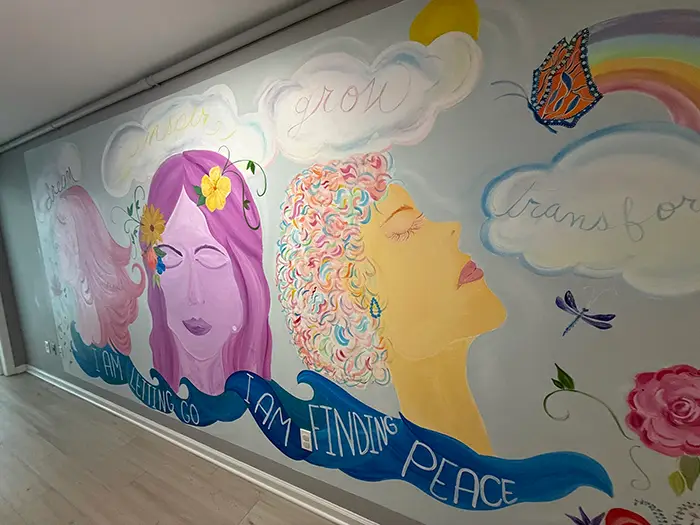
Inside the front door, soft music plays and a screen shows calming ocean scenes. A bronze plaque bearing Dottie’s smiling face hangs nearby. A mural of women, flowers and butterflies carries words like “dream,” “grow” and “I am finding peace.”
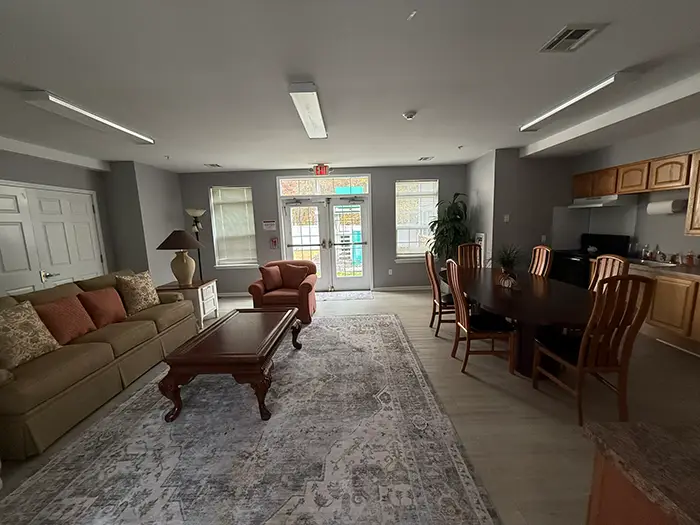
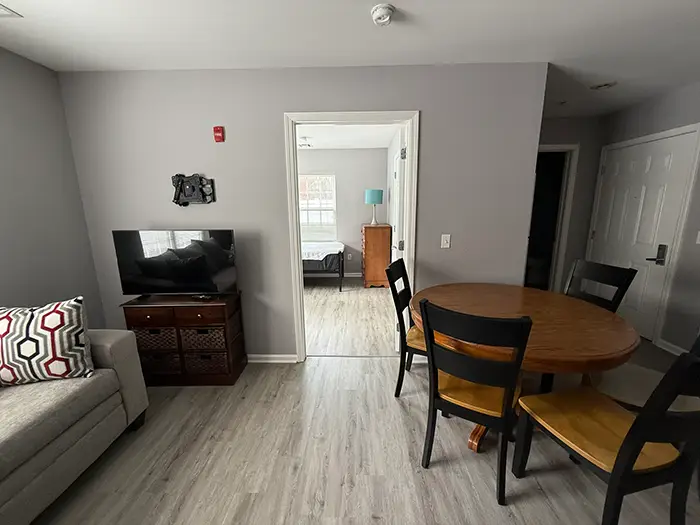
Harbour Light has 17 furnished apartments with one, two or three bedrooms. Each has a full kitchen, a washer and dryer, and ADA-compliant bathrooms. Outside are a playground, a garden and a patio, with locked and alarmed gates. A longtime staff member from the Dottie’s House days still works evenings, offering a familiar face.
The apartments are stocked with household items for residents who may arrive with few belongings. “They’re usually just leaving the situation and that’s it,” Hofmann said. Residents can stay for one year, with rent covered. Staff provide case management, counseling and art therapy for children. Harbour Light also serves families headed by fathers.
HABcore Haven Opens Its Doors To Single Women
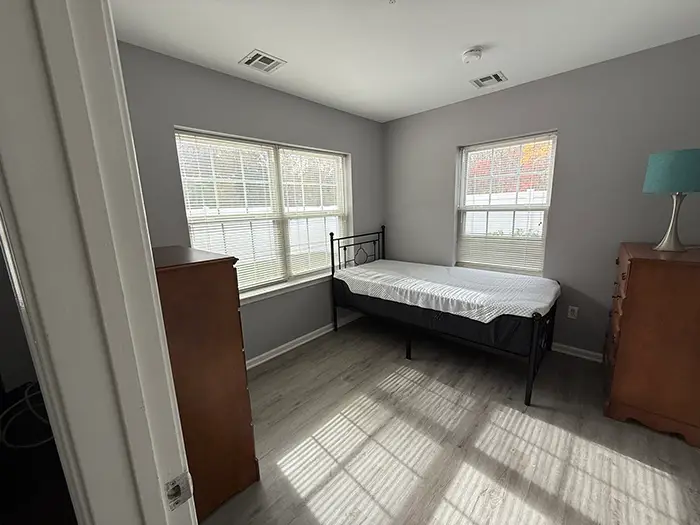
At about the same time 180 was stepping into Harbour Light, Graham heard from HABcore President and CEO Steve Heisman. HABcore had acquired two neighboring Brick homes with a grant from Ocean County funded through the federal American Rescue Plan Act (ARPA). The homes, with 10 bedrooms combined, had previously been operated by Saltbox, an organization founded by two men honoring their mothers’ struggles with homelessness.
Heisman asked Graham how HABcore could use the homes to serve survivors. “Let’s work together,” she recalled telling him. The conversation led to HABcore Haven, with HABcore providing the housing, and 180 running the program. Each bedroom has its own bathroom, while residents share a kitchen and living space.
Together, Harbour Light and HABcore Haven currently serve 39 adults and children.
If You Need Help
Anyone in immediate danger should call 911.
Providence House’s free, confidential 24-hour hotline is 732-244-8259.
180 Turning Lives Around’s 24/7 confidential hotline is 1-888-843-9262 or 732-264-4111, and survivors who are deaf or hard of hearing can text 732-977-2832.