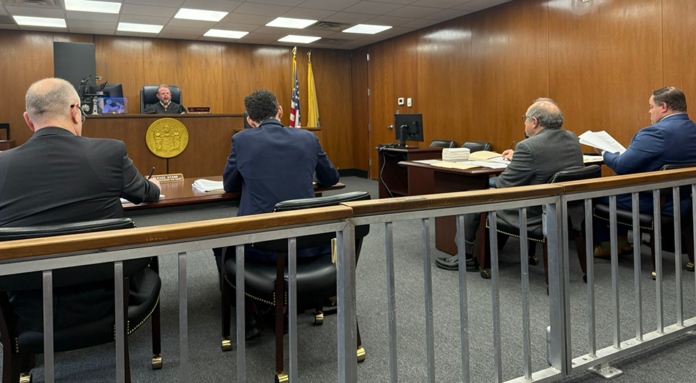
TOMS RIVER – A 6-year-old boy sat beside his father at a counsel table in an Ocean County courtroom as four attorneys prepared to argue a case that could determine how Toms River meets its affordable housing obligations and how much control it retains over future development.
It was “Take Our Daughters and Sons to Work Day,” and the child had come to observe his father at work. The attorneys who entered their appearances before Judge Sean D. Gertner included Christopher D. Zingaro representing the township and Joshua D. Bauers appearing on behalf of the Fair Share Housing Center.
Two of the lawyers represent developers; Kenneth A. Porro serves as counsel for JD Jamestown, and Steven Firkser represents Meridia, all engaged in a dispute over the township’s fourth-round housing plan. Outside the courtroom before the hearing began, those attorneys were overheard saying that they had watched the Township Council meeting the night before and found it calmer than most, a subtle reflection of the tension that has defined the issue.
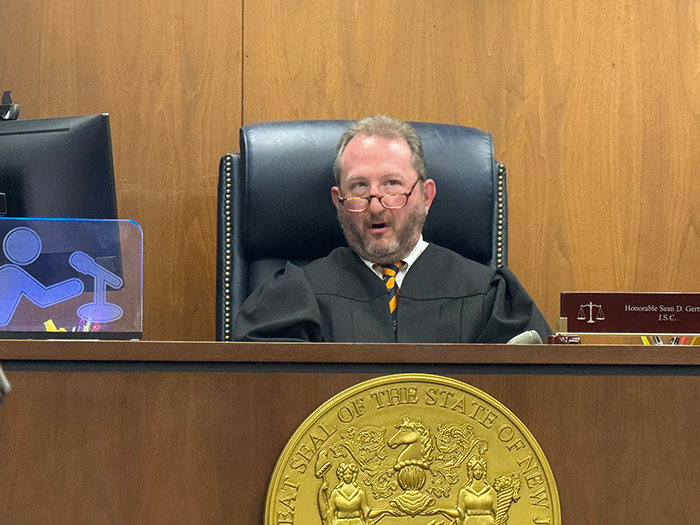
As the proceedings began, Judge Gertner acknowledged the child’s presence. Whether it was an intentional or subliminal message to the governing body, he praised the attorney for bringing him and said it demonstrated that people should learn early on to air grievances through a structured process.
Missed Deadline And Court’s Framework
All towns in New Jersey must allow a certain number of affordable housing units every round (10 years). If they don’t, developers can sue them for excluding poor people. These are called “builder’s remedy lawsuits.”
If a town creates a plan and passes the ordinances to provide affordable housing, the town officials have more control over development. If they don’t, builders have more control over development.
Toms River missed the March 15, 2026 deadline to adopt a compliant housing plan and all implementing ordinances required under New Jersey’s amended Fair Housing Act. That deadline was tied directly to maintaining temporary immunity from exclusionary zoning litigation and builder’s remedy lawsuits.
Judge Gertner outlined how the process unfolded, noting that Toms River had participated in the Affordable Housing Dispute Resolution Program and reached a settlement that required adoption of its amended housing element and ordinances by that March deadline. When that did not occur, the township sought relief through the court, which had already issued a March 27 order allowing for a structured path forward if progress could be demonstrated.
Even with the missed deadline, Gertner determined that the township had made enough progress to justify a limited extension, despite missing the deadline. “The record demonstrates that the township has made good faith efforts to comply with its obligations,” he said, while also acknowledging that the failure to meet the deadline was tied to “political discord and procedural delays.”
The extension now places the township on a tight timeline, with the court expecting measurable progress before returning for further review in early June. Then, the town’s efforts to comply with affordable housing requirements will be evaluated. The judge would then determine if the town will still be immune to builder’s remedy lawsuits.
Mediation With All Parties
The judge made it clear that the case will continue through mediation, because the intent of the amended law is to streamline affordable housing disputes and reduce prolonged litigation.
He also addressed the role of developers, particularly Meridia, a company that has been actively pursuing development in Toms River and was part of the third round of affordable housing. Meridia has filed three separate lawsuits, including a builder’s remedy claim, and has sought to move forward with a residential project in the downtown waterfront area, including sites near West Water Street and Irons Street.
Despite arguments from the township that Meridia should be excluded, Judge Gertner ruled that the developer must be allowed to fully participate.
He pointed to the fact that Meridia claims to have a viable project capable of producing 48 units and has active litigation before the court. Allowing participation, he said, is consistent with the equitable principles guiding the process and necessary to reach a solution.
Although counsel for the developer of property located at 2008 Route 37 was not present in the court hearing, Gertner said that they should also be invited to the mediation.
Two Different Sides
At the center of the hearing were sharply different interpretations of the township’s progress. Zingaro told the court that town officials acted in good faith but were forced to adjust when key components of the plan changed. He cited the uncertainty surrounding the Hope’s Crossing project and complications tied to the Route 70 site.
“We had a circumstance that could not have been known with the Hope’s Crossing situation,” Zingaro said, explaining that the township responded by identifying alternative mechanisms.
He pointed to a proposed 100 percent affordable housing development on Route 9, on municipally owned land, and emphasized that the township has already adopted an amended housing element and multiple ordinances.
“We have a developer who is interested, able and willing to develop,” he said, adding that the township is working to assemble documentation needed to satisfy the Fair Share Housing Center and finalize agreements.
On behalf of the Fair Housing Center, Bauers countered that the township has not completed the steps required to justify continued immunity. He argued that key elements remain unresolved and pointed specifically to the lack of an ordinance for the Route 70 property, an issue that has drawn opposition from residents, including those from the Lake Ridge section.
Porro, representing the company that operates the Jamestown apartments, raised technical concerns about whether the township’s zoning ordinances would allow development to proceed without additional waivers for Jamestown. He also referenced issues related to project structure, including the potential use of a PILOT agreement, suggesting that unresolved details could affect whether the site qualifies as a viable component of the plan.
Representing Meridia, Firkser emphasized that his client’s project stems from earlier obligations and remains active through ongoing litigation, reinforcing the need for inclusion in the mediation process.
Leaders React To Ruling
Mayor Daniel Rodrick said that he had made numerous attempts to engage with the new council and expressed gratitude that the Council President David Ciccozzi had agreed to work with the administration. “Their failure to support the required ordinances by the state statutory deadline resulted in the filing of a builders remedy suit by Meridia just as we warned it would,” said Rodrick.
The mayor pointed to a proposed replacement plan involving 135 units along Route 9 near the Lakewood border and added, “If we do not, we will surely lose our immunity and could be subject to as many as 8,000 new apartments,” urging residents to remain engaged and support the plan moving forward. He also added that Hope’s Crossing could ultimately return to the table for an amendment to the plan at a later date.

In a statement issued by Ciccozzi, he expressed gratitude for the judge extending temporary immunity to the municipality. “This allows the town time to work through the important issues regarding the affordable housing plan in light of Hope’s Crossing’s apparent decision not to participate in the plan,” he said. “The Council is dedicated to fulfilling our constitutional duty to provide a fair share of affordable housing, all while doing our best to preserve the unique character of our community, minimize impacts from increased density, and maintain protections against Builder Remedy lawsuits.”
Ciccozzi described the extension as a chance to refine the township’s strategy while balancing competing concerns. He said the township has already taken meaningful steps, noting, “We have made good faith efforts, including the zoning on Route 37, Jamestown, Caudina and Hooper avenues, and the extension of controls at existing developments,” and emphasized that the goal is to reach “a balanced approach that effectively meets our affordable housing objectives…while doing our best to preserve the unique character of our community.”
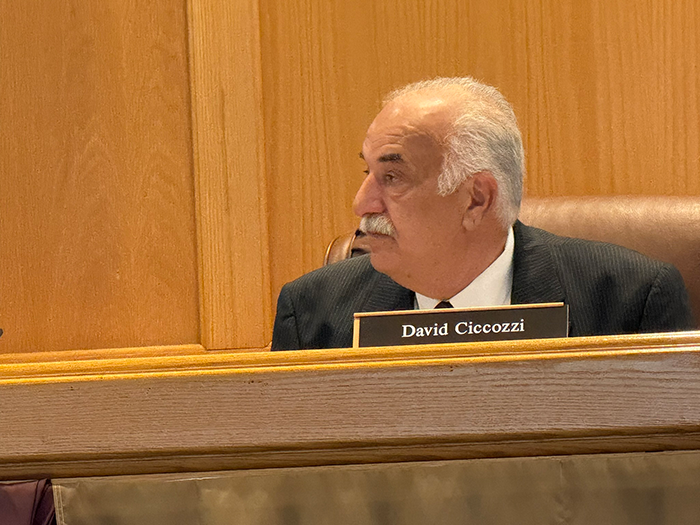
The council president also stressed the need for collaboration between the governing body and administration, saying, “No plan can succeed without all of us working together for the residents and in the best interests of our town’s future,” a statement that echoed the judge’s earlier comments about the importance of resolving differences through a constructive process.