WARETOWN – A first grader accustomed to learning in a classroom of about 19 students could enter second grade next year facing nearly double that number, as the Township of Ocean’s school funding crisis forces cuts that are reshaping classrooms and raising concerns about the future of small districts across New Jersey.
District officials say they are facing a roughly $1.4 million budget shortfall driving decisions that directly affect classrooms. The proposed 2026-2027 budget includes the termination of seven certificated staff members, while three additional certificated staff, two of whom are tenured, would be moved to part-time. All 21 full-time instructional assistants will also be reduced to part-time, significantly limiting classroom support.
The Township of Ocean educates about 875 students, with 571 attending local schools from preschool through sixth grade, including about 110 preschool students. Students in grades seven through 12 are sent to Southern Regional High School, a cost the district must absorb. About 24 percent of students receive special education services.
Officials said during a preliminary budget meeting that the district will eliminate one class each in grades one through four. Kindergarten could lose one or two classes, while fifth and sixth grades are already operating with more than 30 students per class.
Public Hearing And Tax Impact
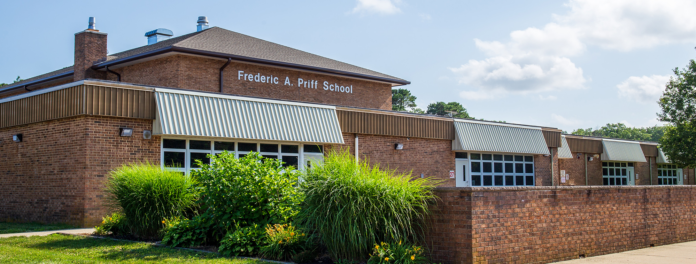
The proposed budget remains preliminary, with a public hearing scheduled for April 30 at 6:15 p.m. at the Frederick A. Priff School.
The plan includes a 3.36 percent tax increase, following a 3.4 percent increase last year and 9.9 percent the year before. Officials said the impact varies based on property values.
Rising costs include salaries, insurance, and tuition to Southern Regional, which increased by about $720,000 this year with another $750,000 adjustment from prior years. “That is a very large bill to fit into our budget,” Superintendent Ariane Phillips said.
“A 2 percent increase on our levy is about $300,000,” Business Administrator Kevin Byrnes said. “Just in order to pay for the tuition increase, we have to raise the levy by about four and a half.”
Health insurance costs have also surged, with increases of 30 to 37 percent in recent years, further tightening already constrained budgets. Officials said these increases mirror what residents are experiencing in their own households but must be absorbed within a system that limits local revenue.
Overlaying those rising costs is the continued loss of state aid under New Jersey’s school funding formula. Ocean Township has lost more than $5.2 million over time, according to district officials, even as enrollment and student needs have increased.
Administrators described the disconnect between what the state calculates the district should be spending and what it is actually able to raise under tax cap restrictions.
“The state calculates what they feel your tax revenue should be, but there’s a cap on tax increases, so making up that difference can be very difficult,” officials said.
The state’s adequacy formula places the district’s needs at more than $20 million, while the actual tax levy is closer to $16.5 million, leaving a shortfall of nearly $3.9 million.

Parents Ask For Help
A group of parents attended a recent Township Committee meeting and were told the township and school district operate separate budgets, limiting municipal control over school funding.
Committeeman Ben LoParo, who previously served on both the local and Southern Regional school boards, said the township has taken steps to advocate for change at the state level. He described outreach to Senator Carmen Amato, Assemblymen Brian Rumpf and Gregory Myhre, and Congressman Jeff Van Drew’s office to push for legislative solutions.
LoParo outlined several pending bills aimed at addressing inequities in the school funding formula, including measures to cap annual aid reductions, provide supplemental funding, and revise how aid is calculated. He noted that many of those proposals remain under consideration in Trenton.
When asked about PILOT (Payment in Lieu of Taxes) agreements in the municipality, township officials explained that one agreement is tied to an affordable housing complex. Without a PILOT agreement, Waretown would not be home to a local Shop Rite according to officials. Revenue from PILOT programs does not pass on to the school district.
Cannabis tax revenue is being used for municipal services such as daytime ambulance coverage with no excess available for the school district.
Consolidation Discussion
Officials discussed the push from the state for smaller districts to consolidate, which many believe accounts for the decreased amount of state aid. Board of Education Member Kelly Zuzic said the district has already reviewed the feasibility of consolidation and suggested that similar efforts elsewhere have shown limited financial benefit. She referenced a prior presentation from Rowan University’s Center for Public Policy and pointed to other districts that have undergone the process.
“I will encourage each of you, if you have a moment, go on to Ocean Gate’s website,” Zuzic said. “They did a regional feasibility study… and the section of the report… finds that while regionalization presents significant operational efficiencies and modest cost savings, the primary challenge lies in establishing a tax apportionment formula that is equitable to all member communities, as no single method provides tax savings for all five municipalities.”
Zuzic also noted that nearby districts, including Long Beach Island, are currently exploring feasibility studies, adding that uncertainty about how changes in sending relationships could further impact Ocean Township’s financial outlook.
At the township level, LoParo suggested the district should still consider a non-binding feasibility study, which the town could seek a grant to fund. He has already spoken with school officials and his contacts within Stafford schools to explore the possibility of a joint study.
The Bottom Line
For now, the impact in Ocean Township is already visible. Teachers are being terminated, instructional assistants have been reduced to part-time, class sections are being eliminated, and class sizes are increasing across multiple grade levels.
The April 30 public hearing will give residents a chance to weigh in before the budget is finalized. Officials have said that without changes at the state level, the financial challenges facing the district are likely to persist, leaving communities to continue navigating the gap between rising costs and limited revenue.