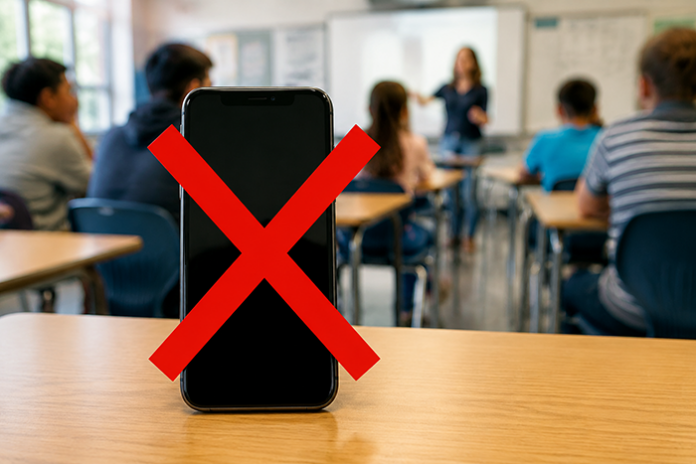
LITTLE EGG HARBOR – The Pinelands Regional Board of Education introduced a policy at their latest meeting regulating students’ use of internet-enabled devices.
In January, outgoing Governor Phil Murphy signed a bill requiring all school districts to craft a bell-to-bell policy restricting phones and similar devices. The goal was to restrict the use of electronic distractions while also letting districts have control in how this was done.
Board members Lisa Betty, Florence Grosso, Stephanie Johnson, Patricia Martin, Betti Anne McVey, and Vice President Crystal Martin voted in favor of the policy.
The policy prohibits the use of internet-enabled devices on school grounds during the day except under several circumstances. These circumstances include fulfilling the accommodations in a student’s individualized education program (IEP) or supporting the implementation of a 504 plan or student’s health plan, according to the policy.
The exceptions also include translation services, a student caregiver who is routinely responsible for the care or well-being of a family member, and when no reasonable alternative to the use of the internet-enabled device for a specific purpose exists, according to the policy.
Other exceptions of the prohibition of use of internet-enabled devices include when it is required by law and in case of an emergency, according to the policy.
The policy states that district staff shall apply clear, age-appropriate consequences and use strategies to redirect students who attempt to use internet-enabled devices.
In other news, New Jersey School Boards Association Field Representative Timothy Teehan provided a presentation on self-evaluation and board goals. The presentation provided an overview of topics including the cycle of goal setting and governance areas to focus on. The board did not vote on any board goals.
Teehan said, “Board goals are really your opportunity to reflect on what’s working and what’s not working for your board team, and then to look at how you can improve as a team so that you can have the positive impact that you should be having on behalf of all the students in the district.”
“District goals are those goals that your superintendent sets in collaboration with the board, and those are goals that hopefully will impact student achievement and other things that you deemed and identified as being the most important things,” he explained.
“As opposed to the board goals, which are goals that you set as a board team, you’re looking at yourselves and saying ‘where are our strengths and where are our weaknesses or areas we’d like to grow in?’ It’s a way for you to become a better board,” he said.
District goals include program, instruction, staff, professional development, facilities, and finance, according to the presentation. Board goals include process and procedures, according to the presentation.
Board member Martin said, “We’ll have more concrete things to talk about at the next meeting.”