FORKED RIVER — A new round of oyster reef restoration is underway in Ocean County as shellfish farmers and conservation partners placed hundreds of thousands of young oysters into coastal waters this fall.
The Ocean County Soil Conservation District announced that the second reef planting under the COASTAL Aquaculture Project was completed in November, advancing a long-term effort to improve water quality and habitat in the Barnegat and Great Bay region.
Nine shellfish aquaculture producers raised oyster spat — juvenile oysters attached to recycled shell — on their leases throughout the summer before transporting them to two established restoration sites: the Tuckerton Reef, created in 2016, and the Mill Creek Reef, established in 2022. Both sites are overseen and monitored by Stockton University.
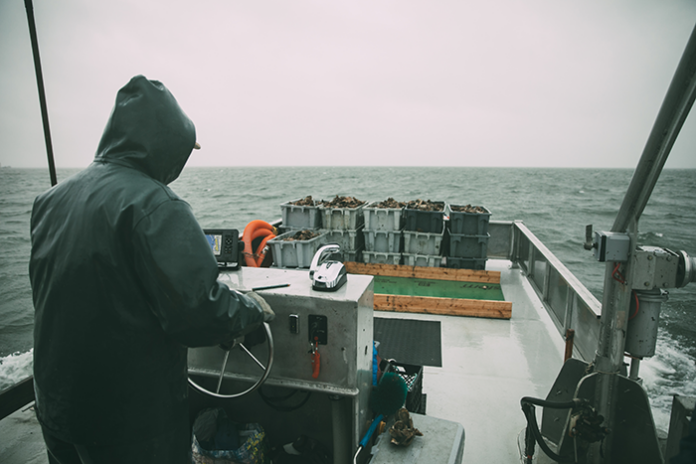
Despite rainy and windy conditions on Nov. 19, participating farmers loaded their boats and traveled to the reef locations, where Stockton University Marine Field Station staff and conservation officials marked planting areas with buoys. Roughly 435,000 oysters, averaging about 1.5 inches in size, were deployed between the two reefs.
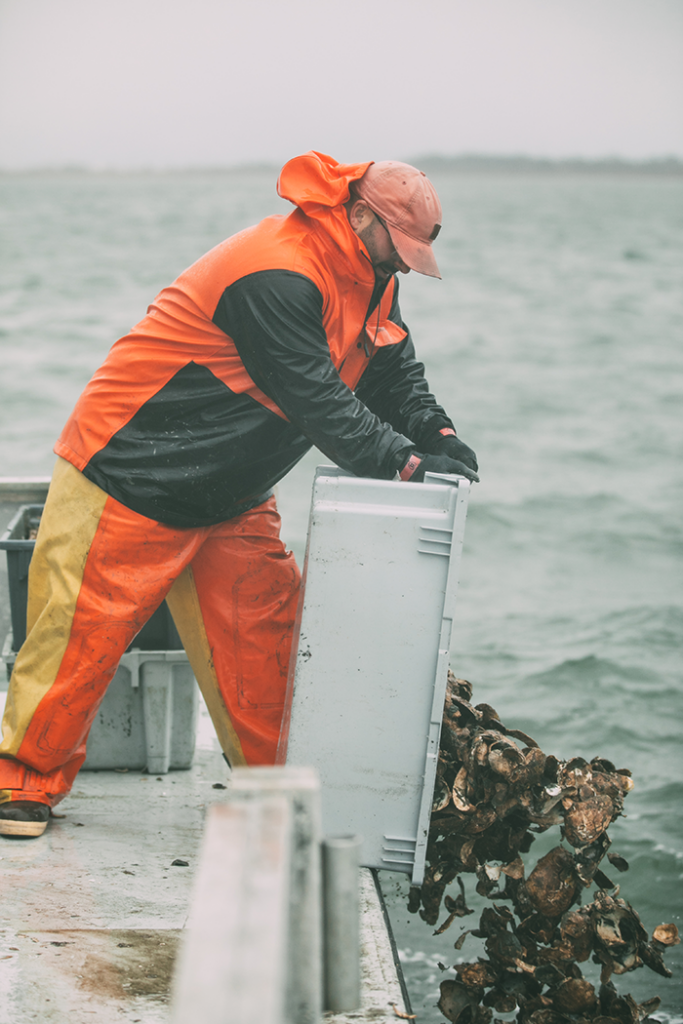
(Photo by Kyle Gronostajski/Jetty Rock Foundation)
This marks the second straight year that oysters grown for a full season on commercial farms were used in the restoration effort. Officials say the larger, shell-based clusters provide more vertical structure, helping the oysters avoid burial by sediment and reducing losses to predators.
Students and staff from the Stockton University Marine Field Station conduct monitoring of the reefs each spring and fall to track survival and growth.
The reef planting is the second of four planned under the COASTAL project, which has been in development since 2020. The initiative is funded through the Regional Conservation Partnership Program of the U.S. Department of Agriculture’s Natural Resources Conservation Service.
Project leaders say the effort is designed to link working shellfish farms with conservation practices, using aquaculture as a tool to restore estuarine habitat while strengthening the local seafood industry. By increasing oyster populations, the project aims to enhance water quality and ecological health across New Jersey’s coastal bays.
More information about the COASTAL Aquaculture Project is available at soildistrict.org/projects/nj-coastal-aquaculture-project. Inquiries can be directed to kadams@soildistrict.org
.