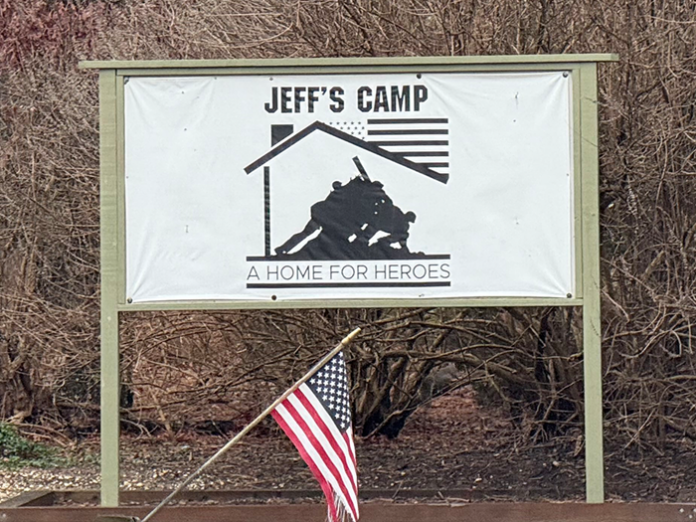
BARNEGAT – Jeff’s Camp, a nonprofit founded with the goal of helping veterans facing housing as well as food insecurity, has officially voted to dissolve, marking the end of a five-year effort rooted in personal loss, community hope, and persistent regulatory challenges.
The organization’s executive board unanimously voted to cease operations. A statement from board members acknowledged the difficult nature of the decision and pledged to ensure a responsible and transparent wind-down process, including the distribution of remaining assets to other veteran-focused nonprofits
“We are deeply saddened by this decision,” the board said. “We recognize the impact this will have on the individuals and communities we serve. We remain committed to working closely with our partner and sister veterans’ organizations to help ensure continuity of care wherever possible.”
A Difficult Decision
Melissa Snock, president of Jeff’s Camp and a retired U.S. Army veteran with 22 years of service, said the decision followed months of reflection and difficult conversations.
“This wasn’t something we decided overnight,” Snock said in an interview. “I’ve been kicking this around for about six months. It became clear that despite how much we believed in the mission, we didn’t have the volunteer support, the funding stability, or the ability to overcome the bureaucratic hurdles we were facing.”
Snock said the board explored options such as restructuring or merging with another organization but ultimately concluded that dissolution was the most responsible course.
“As painful as it is, sometimes caring about the mission means knowing when you can’t do it justice anymore,” she said.
A Promise Born From Loss
Jeff’s Camp was founded by Barnegat resident Marty Weber, whose vision grew out of grief and frustration following the 2017 death of his longtime partner, Jeff Poissant. The two had met while serving in the Army and later built a life together in Ocean County. Weber has said he believed delays in care through the U.S. Department of Veterans Affairs contributed to Poissant’s death, a belief that fueled his determination to help other veterans avoid falling through the cracks.
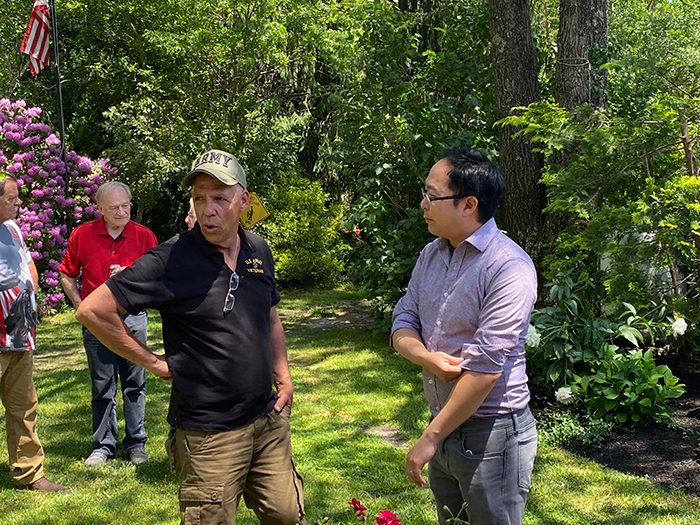
In 2021, Weber publicly unveiled plans for Jeff’s Camp alongside then-Congressman Andy Kim, announcing an ambitious proposal for a village of tiny homes, a sober living facility, and wraparound services for homeless veterans on a 36-acre property deep in the Pinelands.
The concept drew widespread attention and excitement. Unfortunately, it also came with formidable obstacles.
Challenges And Changes
The proposed site sits in a Pinelands “Preserved Forest” zone, among the most restrictive land-use designations in the state. Preliminary hearings before the Pinelands Commission made clear that the original plan, which included multiple residential structures, would not be approved.
Jeff’s Camp later attempted to pivot, working with a design team from NJIT to develop a scaled-down plan focused on a single, non-residential service building. Even that approach required extensive approvals and fundraising that proved difficult to sustain over time.
Snock, who succeeded Weber as president, said the organization worked hard to adapt, but the cumulative strain took its toll.
“We tried to be pragmatic,” she said. “But without consistent volunteer engagement and reliable funding, it became unsustainable.”
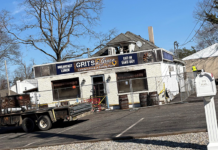
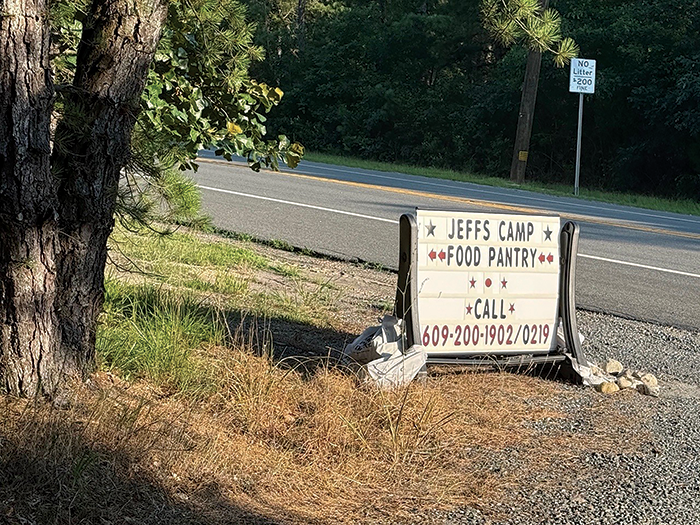
Despite the challenges, Jeff’s Camp continued outreach efforts until its final months. Programs included a food pantry operating out of storage containers along Route 72, wellness backpacks distributed directly to veterans in need, and community events designed to build connection and dignity.
Snock said it was important to the board that the organization’s final chapter reflect the heart of its mission.
“I wanted us to go out doing something meaningful,” she said, recalling the group’s final veterans picnic earlier this year. “We fed people. We gave away supplies. We showed up.”
As part of the dissolution, remaining resources will be donated to other nonprofits serving veterans in Ocean County, a move Snock said reflects Jeff’s Camp’s founding purpose – helping veterans, even if the organization itself can no longer do the work.
Soldiering On
Asked how she hopes the community and the veterans served will remember Jeff’s Camp, Snock paused.
“I hope they remember us for what we did do,” she said. “We cared. We tried. And everything we did was for the veterans who deserved better.”
The board has indicated that final administrative and tax filings are underway and that all outstanding obligations will be fulfilled before the organization formally closes.
For many who followed Jeff’s Camp from its earliest days, the ending is bittersweet – a reminder of how hard it can be to turn vision into reality, even with passion, purpose, and community support.
But for Snock, the mission does not end here.
“My service to veterans isn’t over,” she said. “It just won’t be through Jeff’s Camp anymore.”