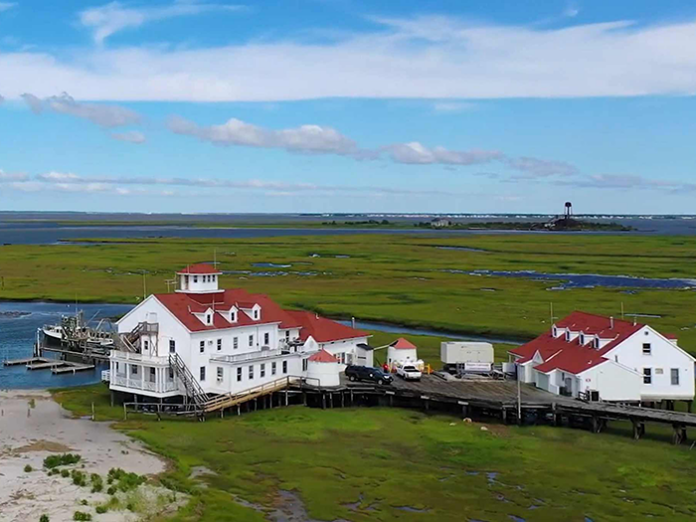
TUCKERTON – When most people think of the Jersey Shore and the phrase The Retreat, they think of a lovely shore getaway. Maybe a few days spent on the sand soaking up the rays while contemplating which restaurant they’ll dine at later. That’s not the case here.
Rutgers University released a documentary called: “Marine Field Station: The Retreat.” This story is not about a vacation to the shore. It’s about how the field researchers are losing a station they not only work at, but care about. Coastline erosion along the East Coast is accelerating at astronomical levels, with most conservative estimates still well below the actual loss numbers. The documentary discusses the scenario of coastal erosion by a group of scientists who are witnessing the effects of climate change in real time.
All while documenting the evidence as it’s happening.
Rising sea levels and loss of habitat are not something of science fiction; it’s of science reality. Just ask your neighbor in Tuckerton, or Loveladies, or anywhere the land touches the ocean. When it rains, it floods. Bad flooding. High tides that used to bring an inch or two of water now bring feet of water. “The Retreat” focuses on how the field station where scientists study will eventually have to be abandoned. Much like countless other properties around New Jersey.
“Retreat means to actually move away from the coastline,” said Thomas “Motz” Grothues, in the documentary. “It means leaving property you invested in behind.”
Scientists who work at the station are constantly in the field researching how the area is changing. So many things are being studied at one time while trying to learn what those changes mean for the area long term. The results can help address what problems need to be focused on first.
While speaking recently, Grothues said he and his colleagues have known they will have to leave the station. “We’ve known for a while sitting here (at the station) that eventually it all changes,” he said. “The shorelines move and I think time scale is the thing that bothers people. We’ve been watching the shoreline erode. We watch it with a scientific interest, but eventually its reaching where it threatens the station. We think about the long-term consequences of that.”
Grothues, along with other ecologists from Rutgers who work at the station, witness the loss from both a professional and personal level. It’s like trying to protect something you have a vested interest in being slowly taken away piece by piece, while knowing very little can be done to stop it. Perhaps one silver lining of the documentary is the invaluable data collected from the erosion. The data from stations like this are logged and shared with other institutions along the eastern seaboard. By combining their efforts, the scientists can learn from the data.
“We’ve been seeing whole communities face these types of challenges,” said Grothues. “So, we thought that we’d document the change as it happened, as a case lesson for ‘retreats’ elsewhere.”
The notion of abandoning a home or a piece of land, especially one you own, may seem insane. But it’s happening in small communities like Tuckerton and beyond. Places like New York and Miami are losing shoreline each year. The issue is larger cities have millions of dollars to build sea walls or other projects to slow the progress. Smaller communities don’t have million-dollar budgets to throw at eroding coastlines.
Grothues, who works at the Rutgers University Marine Field Station and has been at the station since 1999, said the public may be shocked at just how fast the sea level is rising.
“These landscapes naturally move quite a bit,” he said, referring to the spit of land the field station is built on. He spoke about places like the end of Long Beach Island, where sand replenishment is utilized due to the number of homes there. The opposite can be said of the end of Holgate where there are no homes, and the water cuts off part of the island.
Rutgers’ Megalopolitan Coastal Transformation Hub helped fund the project. Lisa Auermuller, the Hub’s Executive Director, is an ecologist at the Marine Field Station. In the documentary, she spoke about why it was so important to make people aware of the problem. “The Hub is all about doing research around the coast; with regards to impact of climate change on the coast and understanding how people who make discissions in coastal cities (New York, New Jersey, Philadelphia, etc.) use what research questions they have,” said Auermuller. “We then use those questions to help guide the things we study.”
“The documentary part is to ensure that there is a broader impact of doing our research,” she said.
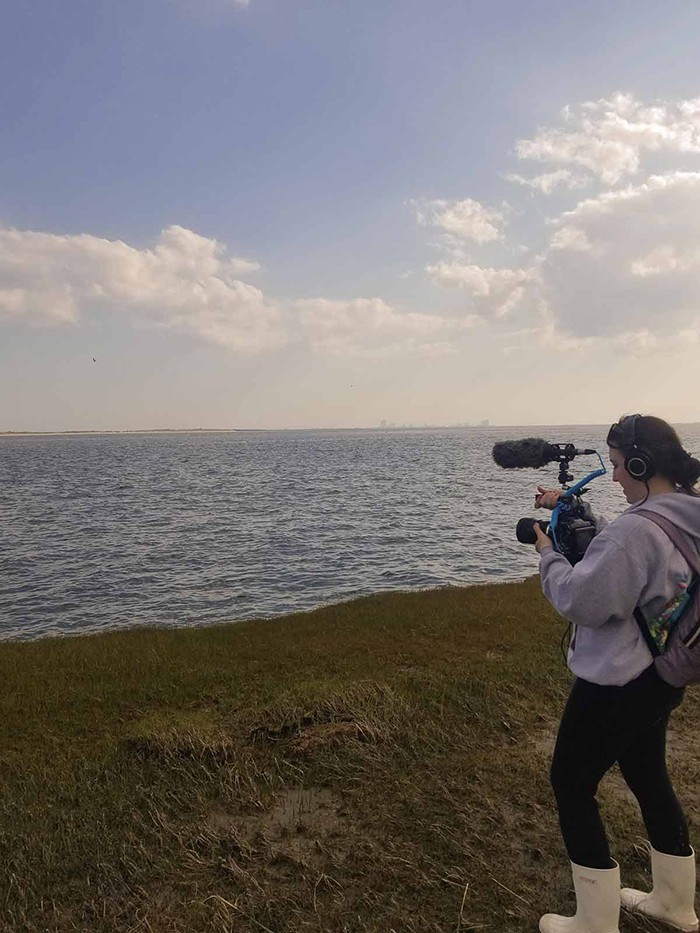
Auermuller said the Rutgers students who filmed the documentary experienced a type of filming they weren’t normally accustomed to. Being in the elements, seeing first-hand what the scientists see, was something different for them. Meanwhile, members of the community saw what the members of Rutgers Field Station work in daily. This type of exposure to the issues at the field station are meant to be seen by all those effected by rising tidewaters, regardless of involvement or political ideas.
“Ultimately, we must make the decision to retreat from the station, just like many of our coastal residents and businesses along coastal New Jersey,” she said.
The film crew met with challenging factors such as tide water crossing the road leading to the station. Issues like the bad weather and storms, a common occurrence to year-round residents in summer vacation towns, gave the students an idea of what exactly the theme of the film is trying to get across.
Tourists and residents alike were able to see some of the weather this summer, with high winds and tornados impacting parts of LBI and Beach Haven West. Over the course of years, the damaging effects of storms and flood waters are slowly reducing shore communities.
“I think it’s really eye-opening to these students (and the public), who maybe didn’t know these parts of New Jersey existed, and here they are trying to capture it,” Auermuller said.
The documentary “Marine Field Station: The Retreat” can be viewed here: coastalhub.org/2025/08/22/marine-field-station-the-retreat/