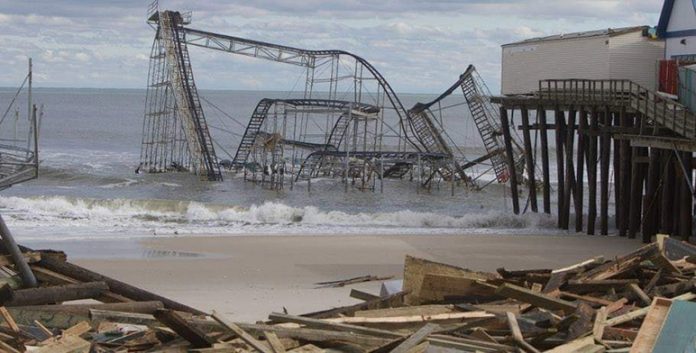
JERSEY SHORE – Thirteen years after Superstorm Sandy tore across the Jersey Shore, United States Senator Andy Kim (D-NJ) says the storm’s lessons must still guide federal disaster policy.
Kim shared a video address exclusively with our newsroom on the anniversary of the storm, reflecting on how Sandy reshaped coastal communities. He underscored the need for a stronger, more responsive Federal Emergency Management Agency (FEMA).
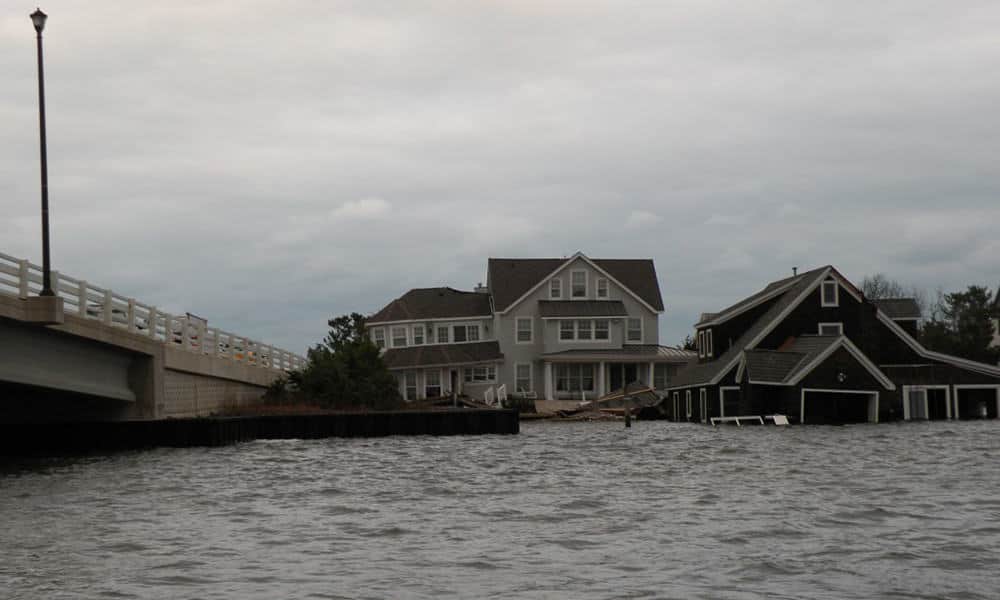
“It’s impossible to remember Superstorm Sandy without first thinking of the destruction – houses, boardwalks, towns flooded, power out for weeks,” Kim said.
Thirty-four New Jersey residents lost their lives, and thousands were left with homes damaged or destroyed. But Kim also reminded viewers of the unity that emerged in the storm’s wake. Starting with the neighbors who shared generators, cleared basements, and raised money for those in need.
Remembering Recovery And Resilience
Kim credited the New Jersey Organizing Project (NJOP), a grassroots group formed after Sandy, for continuing to help families still struggling with the long-term financial and emotional toll of the storm. The organization, founded by Shore residents, advocates for homeowners dealing with flood insurance, rebuilding costs, and FEMA-related recovery challenges more than a decade later.
FEMA statistics show that about 346,000 homes across New Jersey were damaged or destroyed by Sandy. The agency ultimately approved more than $1.4 billion in Individual Assistance and $3.2 billion in Public Assistance for local governments and infrastructure. Those funds helped stabilize areas like Ortley Beach, Mantoloking, and Long Beach Island, but the recovery was far from simple.
Many homeowners spent years navigating paperwork and rebuilding through New Jersey’s RREM program, revealing gaps in coordination between state agencies and FEMA.
Kim’s Push For Reform
Kim said the storm’s legacy must serve as a guide for reform. “We must make sense of this and learn its most essential lessons: the importance of smartly investing in a FEMA that works for the people,” he said.
He described FEMA as “vital, though not without its imperfections,” and called for continued investment in a system capable of meeting people’s needs quickly and efficiently. “We don’t just need FEMA to exist,” Kim said. “We need a reformed and better-funded FEMA that responds to the realities people face.”
The senator noted that disasters like Sandy are no longer rare events. “Since Sandy, the number of storms across the US has only grown, Irma, Maria, Florence, Michael, Laura, Sally, Ida, Helene, and wildfires in Colorado, Arizona, Tennessee, California,” he said. “Natural disasters are not going away.”
Kim said one of the reasons he made this video is because FEMA is under attack from the White House.
Because of the timing of Kim’s video release, it was too late for this publication to solicit comment from the area’s other federal representatives, Congressman Chris Smith (R-4th) and Congressman Jeff Van Drew (R-2nd), whose districts both represent New Jersey’s coastal communities. Their perspectives on FEMA’s current readiness and reform priorities will be included once available.
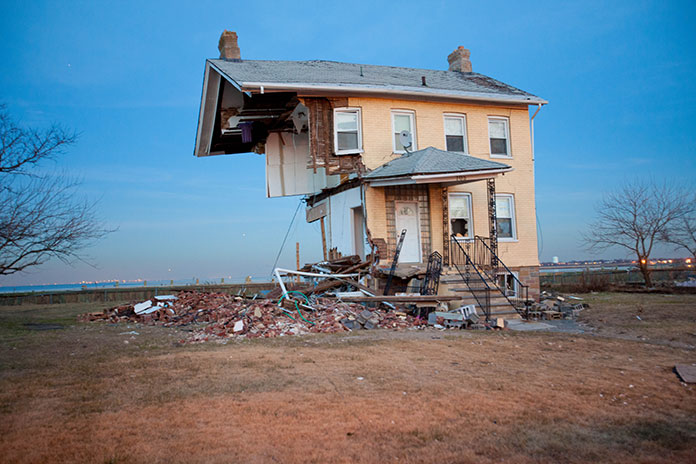
Along the Jersey Shore, FEMA-funded mitigation projects continue more than a decade after Sandy. Ocean and Monmouth counties remain among the most flood-prone in the state, with ongoing home elevations, dune-replenishment efforts, and infrastructure fortifications aimed at reducing future risks. FEMA’s own reports highlight that homes built before modern flood standards suffered the most damage during Sandy – a costly lesson that continues to shape how the Shore rebuilds.
Kim said that beyond funding and reform, the true lesson of Sandy lies in cooperation and care. “When disaster strikes,” he said, “It is care from the federal government, from FEMA, from each other, that helps save us.”