JERSEY SHORE – With the turbulent ocean sea visible from the window of the Sawmill restaurant’s second floor as an added reminder of Superstorm Sandy that hit the Jersey Shore 13 years ago, several speakers addressed members of the news media about concerns of the future.
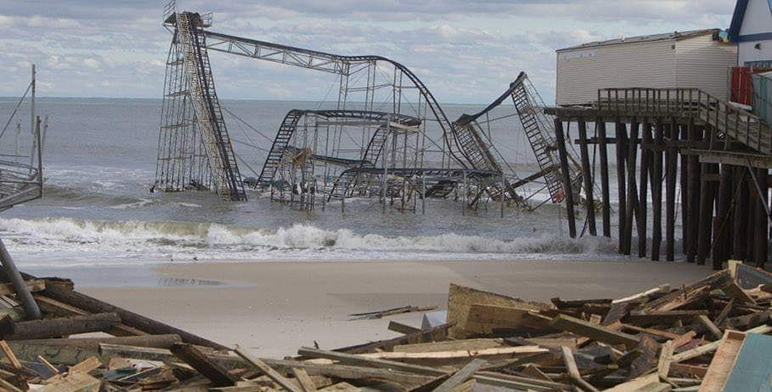
The speakers noted that Superstorm Sandy’s legacy calls for building a more resilient New Jersey. The massive storm hit the Jersey coastline on October 29, 2012 bringing 80 mile-per-hour wind and a record-breaking storm surge as high as 14 feet.
The massive storm coincided with a full moon and a high tide that rebounded its impact, causing hundreds of thousands of residents displaced from their homes. Two million people lost power and 34 New Jerseyans were lost. It was the fourth costliest storm in U.S. history, with damages totaling $30 billion in the Garden State alone.
The New Jersey League of Conservation Voters (LCV) hosted the event which carried the theme that recovery efforts brought various response and recovery organizations together after Superstorm Sandy but the call for stronger climate resiliency policies to protect the state is necessary now.

Speakers highlighted the ongoing effects of climate change on coastal communities and the urgent need to be proactive before the next storm.
LCV Campaign Manager Luke Pavlov said the group’s environmental 2026 program’s point “is to make the environment a top issue. We want to hold all candidates accountable.
“These storms are never going away. We want to do our part to see that we are planning for these storms and resiliency in the future,” Pavlov said.
Ortley Beach Voters and Taxpayers Association Vice President Paul Jeffrey reminded attendees that Ortley Beach, a barrier island section of Toms River, was known as Superstorm Sandy’s ‘Ground Zero’ as it was the heaviest hit community on the northern barrier island in Ocean County along with Mantoloking.
“Many of our homes were damaged but many were totally wiped out. We had homes off the beach block and pieces of those homes in front of our house when we came back and we couldn’t come back for a month due to the terrible destruction. The reason why we were called ‘Ground Zero’ is because our dunes were not properly maintained over the years. If you looked here in Seaside Park or north in Lavallette, they were. We had complained about it but it never got fixed (before the storm). That tells you the value of mitigation,” Jeffrey added.
Jeffrey later told Jersey Shore Online.com that “mitigation programs work and affects future storm damage. Every dollar spent on mitigation saves $6 in damage on recovery cost. It is good to spend on mitigation now because climate change is here now.”
He also noted that, “on November 1 if you have a (house) closing and you don’t have your flood insurance in place you won’t close. They (the state) will cancel the closing.”

Neptune Councilman Derel Stroud addressed municipal preparedness and climate challenges. “Sea levels are already rising. Right now, on our streets we are losing homes and we are losing small businesses. We are looking at 25 years in the future. By the end of this century, we will see between three and seven feet in sea level rise.”
Stroud stressed, “we have options and solutions. The question isn’t if we should prepare – it is will we be smart and invest in our shore communities now. If we don’t act now your property values will suffer.”
New Jersey Organizing Project Co-founder and Board President Joe Mangino spoke about community advocacy for climate resilience. He said his group formed two years after Superstorm Sandy. “We wanted to get those funds out faster to people. People needed rental assistance that was available. We knew people needed mortgage forbearance to them. These are all the things we worked on and nothing was easy.”
“There were a lot of protests involved; we camped out at the State House to bring our issues to the forefront,” he added. “Sandy is what birthed us and when Hurricane Ida hit, we knew what we had to do. We mobilized and prepared those people for what they were about to endure.”
Rebuild by Design New Jersey Program Manager Hana Katz discussed innovative resiliency projects. The Mount Holly resident said her home is in a flood zone. “We are here today to remember the people we lost during Superstorm Sandy and those who passed away in other states from other storms.”
“My home was flooded but we were the lucky ones compared to others here in New Jersey who suffered and are still suffering from disaster,” she added.
Her group’s goal is to promote the need for “thoughtful infrastructure” and urged people to review details of projects aimed at that cause listed on their website rebuildbydesign.org.
Each speaker noted that New Jersey has faced one climate disaster after another and there was a great need for the public and political leaders to advocate for policies that strengthen the safety and resiliency of coastal communities.