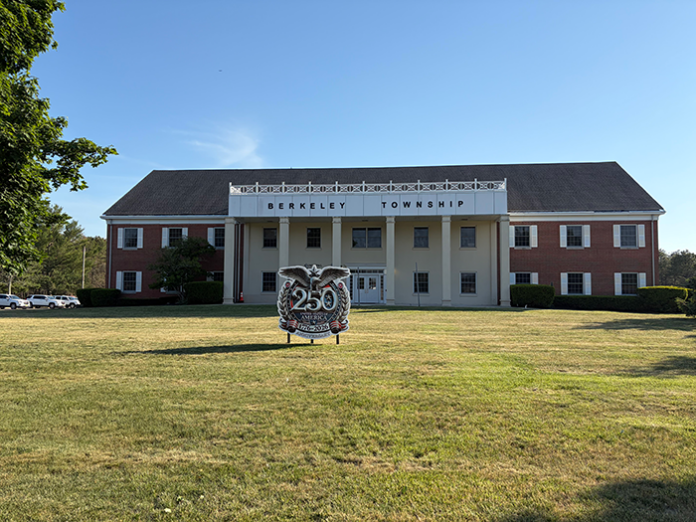
BERKELEY – The Township Council is set to vote on the $68,600,647.78 budget at its next meeting, which takes place at 6 p.m. on July 20 at the town hall located at 627 Pinewald-Keswick Road.
None of the following figures are set until the budget is approved. This article does not include other budgets, such as the county and the two school districts. Even though the town collects all taxes and then distributes the money, they have no control over the other entities.
The municipal budget is an increase of $2,218,767.09 over last year, according to the budget document.
The amount to be raised in taxes will increase by $2,356,595.29, from last year’s $42,707,196.65 to this year’s proposed $45,063,791.94.
The tax rate last year was 78.5 cents per $100 of assessed valuation. This year would be 82.39 cents, an increase of 4.95%. This figure is based on the assessment of your property, not what you paid for it.
A law dating back to when Chris Christie was governor caps increases at 2% for most of the things a town budgets for. Berkeley is under cap.
The proposed budget includes dipping into surplus more, from last year’s $7.5 million to this year’s $9.95 million. This would leave only $625,075.78 in surplus.
When looking at the costs to run the town, the most significant change is that the town is receiving fewer grants this year. Last year was about $4 million; this year, just under $1 million.
Salaries and wages increased from $21.6 million to $22.7 million.
The budget sets aside less money for uncollected taxes. Last year’s $1,924,324.90 will be reduced to $871,570.75. The reserve for uncollected taxes is a fund used to cover the town’s finances when people don’t pay their taxes for one reason or another. Every town has a percentage of taxes that are successfully collected, often in the high 90s. Berkeley’s percentage is quite high. Last year was 99.63%. Towns use this figure to estimate how much they’ll need to cover expenses.
The town has $91,583,085.15 worth of debt, of this is $7,382,896.24 in interest. Towns generally borrow money to do larger projects. The philosophy behind this is that they are paying less per year to pay off the interest and principal over a number of years, rather than paying off the project immediately. Plus, most towns don’t have the money available to do a large project. The down side is that, much like credit cards, it costs more in the long run.