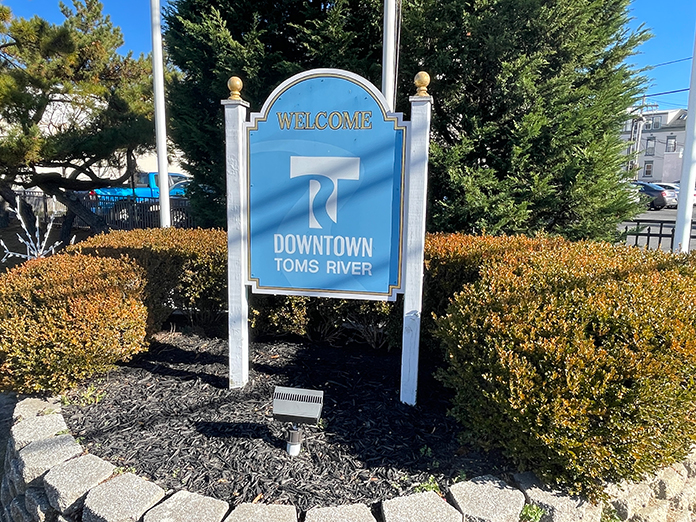
TOMS RIVER – Superior Court Judge Sean D. Gertner already ruled in February that Toms River broke the law when it repealed the redevelopment plan covering parts of its downtown waterfront. Now Meridia Toms River 40 Urban Renewal LLC, which owns property and has proposed a project within that area, wants the same judge to go a step further. The company wants him to rule that the township violated its civil rights and order it to pay for the harm.
Toms River has filed its own court papers asking Gertner to reject that claim. The township says that even if officials used the wrong legal procedure, that mistake did not amount to a civil rights violation.
Gertner is scheduled to hear arguments from both sides on September 18. Meridia is represented by attorneys Steven G. Mlenak and Michael J. Coskey of Greenbaum, Rowe, Smith & Davis LLP. The township is represented by attorneys Brian P. Trelease, Christopher D. Zingaro and Sarah E. Fitzpatrick of Rainone Coughlin Minchello LLC.
A ruling in Meridia’s favor would not automatically authorize construction of the waterfront project. It could, however, expose the township to court ordered relief, although Meridia has not said how much money it would seek. The company is asking Gertner to decide liability first and hold later proceedings on damages, attorney’s fees and any other relief available under the New Jersey Civil Rights Act.
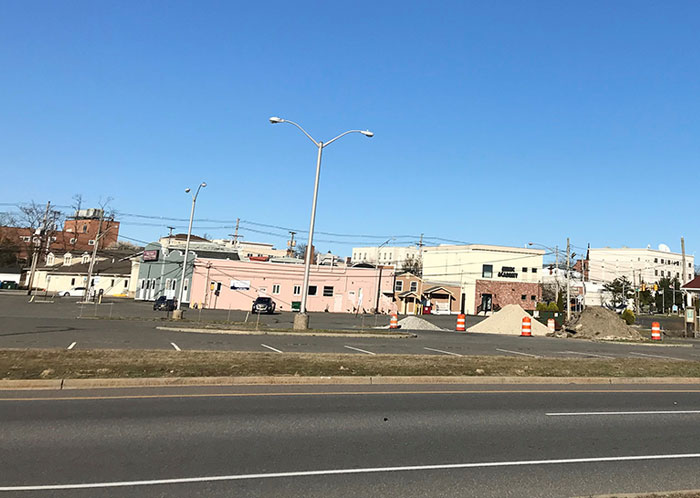
The dispute centers on property at 40 and 48 West Water Street and 511 Irons Street, including the former Red Carpet Inn site. Meridia wants to build a mix of apartments, retail space and affordable housing there. Earlier plans called for buildings as tall as ten stories. The project was later scaled back to six stories.
Mayor Daniel Rodrick has opposed the project even before he became mayor. After the February ruling, he said, “Residents do not want a city of 150-foot-tall buildings downtown.” Rodrick has stressed that the redevelopment plan alone (made by a prior administration) does not authorize construction. He said any proposal would still require a redevelopment agreement with the township and made clear he would not support high-rises downtown.
Meridia maintains the township interfered with the project. It says officials improperly declared the company in default and tried to terminate its redevelopment agreement. The township and Rodrick contend the developer missed contractual deadlines and that the municipality had the right to end the agreement. Those competing contract claims remain pending in a separate lawsuit. They won’t be decided on September 18.
The Vote Behind The Dispute
The civil rights claim traces back to the council’s attempt to repeal three redevelopment plans, covering properties beyond Meridia’s project. In October 2024, the council introduced an ordinance repealing the Downtown Core, Robbins Parkway and Waterfront redevelopment plans, which would have restored the older zoning in those areas.
Meridia and other affected owners filed a protest petition in response. Under state law, owners of at least 20 percent of the affected property can force a two thirds vote instead of a simple majority. For Toms River’s seven member council, that meant five votes were needed.
The repeal passed December 18, 2024, by a 4-2 vote, one short of that threshold. Township officials argued the higher vote requirement didn’t apply. They said Meridia’s property should have reverted to the township over an alleged contract breach, and that the protest rule didn’t cover an ordinance passed under the state’s separate redevelopment law.
Meridia sued, and Gertner ruled February 25 that the repeal was invalid. He found Meridia still owned the property, the petition was valid, and five votes were required. He also cited improper notice to affected owners, conflicts of interest among officials involved, and a Planning Board recommendation that didn’t hold up against the township’s master plan.
That ruling restored the redevelopment plans but left two claims unresolved, since the civil rights count and a contract claim had already been split off before trial. The contract claim was later folded into Meridia’s other lawsuit against the township and Rodrick. Gertner must now decide whether disregarding the petition also violated Meridia’s civil rights.
Meridia argues the petition didn’t just add a procedural step, but it changed what the council was legally allowed to do. They said that once enough owners signed it, five votes were required, and without them the council had no authority to treat the ordinance as adopted. Meridia’s attorneys contend that once it passed anyway, the protection the petition provided was “irretrievably lost,” making court the only way to enforce it. They compare it to referendum rights, arguing the law gave property owners real power to demand broader council support.
The township argues the February ruling doesn’t automatically mean a civil rights violation occurred. Its attorneys describe the protest provision as a procedural mechanism rather than a substantive right. In their view, the petition only changed a vote count, not Meridia’s right to any particular zoning outcome.
The township also argues that the “shocks the conscience” standard applied in other land-use civil rights cases governs Meridia’s claim. Officials relied on “a reasonable and good faith interpretation of prevailing law,” it argues, believing both that Meridia’s ownership had lapsed and that the protest rule didn’t apply. Being wrong, the township says, isn’t the same as violating someone’s rights.
Meridia’s Lawsuits
Meridia has a separate lawsuit accusing the township and Rodrick of interfering with the project, wrongly declaring it in default, and trying to terminate the deal. Meridia wants a ruling that it wasn’t in default, an order to honor the agreement, and damages. The township and Rodrick deny it and say Meridia missed its own obligations.
Meridia also has a builder’s remedy lawsuit tied to Toms River’s affordable housing requirements. Its project would combine market-rate apartments with income-restricted units, which Meridia says could count toward the township’s housing obligation. Gertner has allowed Meridia to join that case as an objector.
The township’s temporary immunity from additional builder’s remedy suits is set to expire October 1. Once it does, developers can seek approval for projects beyond normal zoning limits if they include affordable units. Meridia’s builder’s remedy lawsuit has been on hold while the township’s immunity remained in place.
Gertner’s ruling here won’t settle the waterfront’s future. It will decide something narrower, whether the repeal was simply an unlawful act that’s already been corrected, or a violation that means Toms River owes Meridia for it.