BERKELEY – Although South Seaside Park isn’t part of Berkeley any longer, they are still paying taxes to them. This means the de-annexation won’t impact this year’s taxes for the rest of Berkeley’s residents, officials said.
South Seaside Park is a small portion of land between Seaside Park and Island Beach State Park. After a lengthy court battle, they were allowed to leave Berkeley and join Seaside Park this year.
However, the state attorney general’s office has made a determination that Berkeley will continue to collect taxes from that area until the start of next year, even though the land and services are being taken care of by Seaside Park.
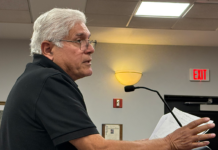
South Seaside Park resident Kathy Fulcomer came to a recent Berkeley Township Council meeting to ask why her taxes are still going to Berkeley even though Seaside Park is performing all the work.
Berkeley Township Attorney Lauren Staiger said this will likely be decided in court.
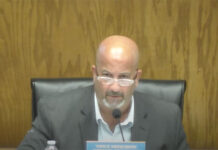
That property represents more than $12 million in property taxes, Mayor John Bacchione said in an interview with The Berkeley Times after the meeting. “It’s not an easy task to replace that money.”
Officials have been finding ways to cut costs without cutting services, he said.
“It wasn’t easy keeping (the budget) down to what it is,” because of the cost of utilities, fuel, and insurance going up, Bacchione said.
Meanwhile, Berkeley and Seaside Park are still at odds over the financial settlement between the two. There was land that Berkeley controlled, such as the White Sands Beach and some easements. Furthermore, if Berkeley borrowed money for a project, Seaside Park might owe some debt service if South Seaside Park residents benefitted from that project. The two towns have been having trouble coming to a consensus on how much all of this is worth.
Budget Info
Berkeley’s $68,600,647.78 budget was passed at a recent Township Council meeting. It is an increase of $2,218,767.09 over last year, according to the budget document.
The amount to be raised in taxes will increase by $2,356,595.29, from last year’s $42,707,196.65 to this year’s $45,063,791.94.
The tax rate last year was 78.5 cents per $100 of assessed valuation. This year would be 82.39 cents, an increase of 4.95%. This figure is based on the assessment of your property, not what you paid for it.
A law dating back to when Chris Christie was governor caps increases at 2% for most of the things a town budgets for. Berkeley is under cap.
The proposed budget includes dipping into surplus more, from last year’s $7.5 million to this year’s $9.95 million. This would leave only $625,075.78 in surplus, about 1% of the budget.
Other changes include that the town received less in grant money, from about $4 million last year to just under $1 million this year. Salaries and wages increased from $21.6 million to $22.7 million.
The budget sets aside less money for uncollected taxes. Last year’s $1,924,324.90 will be reduced to $871,570.75. The reserve for uncollected taxes is a fund used to cover the town’s finances when people don’t pay their taxes for one reason or another. Every town has a percentage of taxes that are successfully collected, often in the high 90s. Berkeley’s percentage is quite high. Last year was 99.63%. Towns use this figure to estimate how much they’ll need to cover expenses.
The town has $91,583,085.15 worth of debt, of this is $7,382,896.24 in interest. Towns generally borrow money to do larger projects. The philosophy behind this is that they are paying less per year to pay off the interest and principal over a number of years, rather than paying off the project immediately. Plus, most towns don’t have the money available to do a large project. The down side is that, much like credit cards, it costs more in the long run.
This article does not include other budgets, such as the county and the two school districts. Even though the town collects all taxes and then distributes the money, they have no control over the other entities.