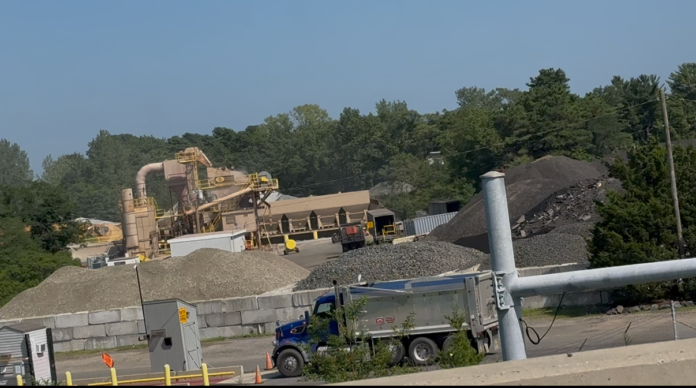
BRICK – Little was accomplished during the recent Board of Adjustment hearing for the Stavola Industries application, who is seeking approval to modernize their 17.3 acre asphalt plant on Chambersbridge Road.
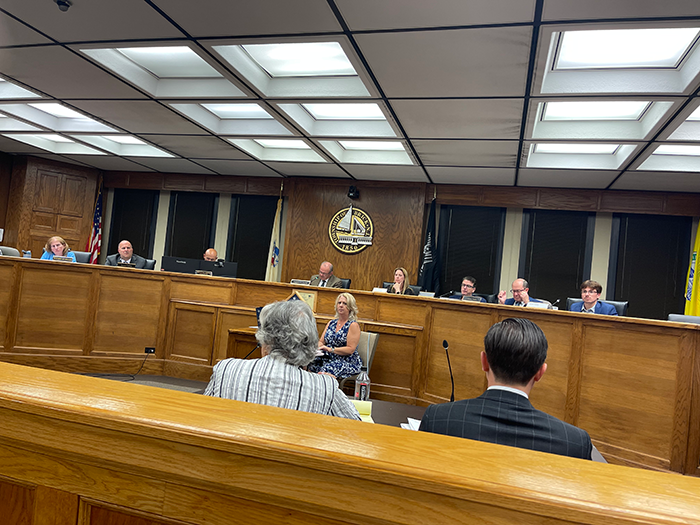
It was the fourth hearing for the application, which was held during a regularly-scheduled Board of Adjustment hearing. The application followed several other residential applications, leaving just 40 minutes for the Stavola proposal.
In attendance were two opposing attorneys – one from the Brick Township Municipal Utilities Authority (BTMUA), and one from the environmental group, Save Barnegat Bay, who both say the location of the plant poses health risks due to its proximity to the Metedeconk River, which supplies drinking water to 100,000 residents and is located just a half-mile upstream.
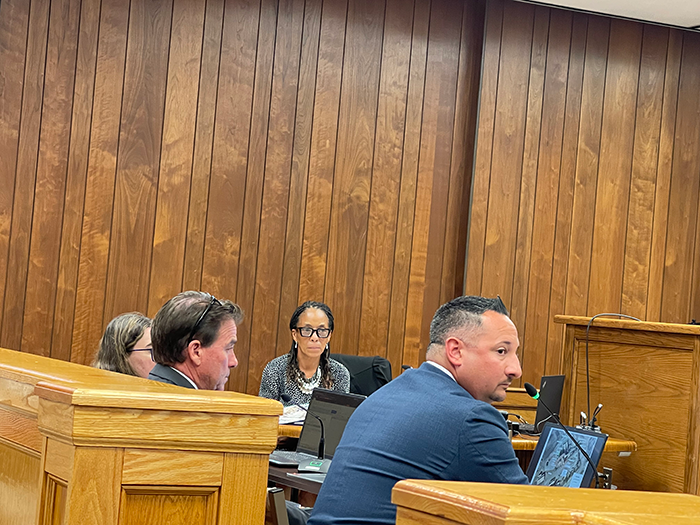
The hearing picked up where the last one left off: Save Barnegat Bay attorney Michele Donato cross-examining Stavola Industries civil engineer Josh Sewald from Dynamic Engineering, who provided testimony at the previous meeting.
Donato asked the engineer if asphalt production would be increased and she asked for clarification on which structures would be demolished at the site.
Sewald said that the Plant Operator – who would testify at a future hearing – would have details on asphalt production, but he did provide additional exhibits at the most recent meeting at the request of Board of Adjustment Chair David Chadwick.
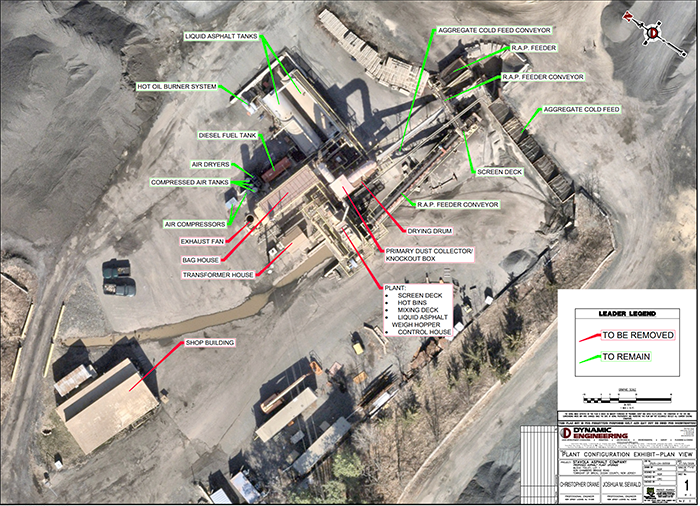
During the previous hearing, Chadwick asked Sewald for an image that would identify all the relocated, demolished and remaining elements of the proposal, “and to walk us through that in detail,” which Sewald did.
The Board also requested a quantification of the improvement in emissions and the environmental impact, which would be “addressed with a different witness” at a later date, said Stavola attorney John Jackson.
Referencing the new PowerPoint exhibit that showed an aerial map of the plant, the engineer first identified all the major components of the asphalt plant. Items identified in green would remain and might be “shifted around,” and items identified in red would be replaced and upgraded.
Sewald identified the different components of the plant, starting with existing tanks on the property, marked in green, that would be utilized “to change the way that we cook our asphalt.”
He then identified the areas, also in green, where different products in stockpiles “are moving throughout the asphalt plant…before it gets cooked.”
The red items indicated on the aerial map would be “substantially modified or completely removed and replaced, upgraded and modernized with the new technology,” he said.
Sewald said the asphalt plant would ultimately “change the way that we cook the asphalt.” He said the “equipment component” is the basis of his testimony, and that the Plant Operator would “talk in intimate detail what each of these features do.”
Donato asked Sewald if he was aware of any environmental problems at the plant, including air quality and water violations. The engineer said he was not. “That was prior to my firm being engaged,” he said.
Chadwick ended the meeting and apologized to the public for having to sit through unrelated applications. He said the next hearing for Stavola would be a “special meeting,” with the Stavola application the only agenda item.
He set a tentative date of October 8 at 7 p.m., and said he would confirm that date at the next regularly-scheduled Board of Adjustment meeting on September 2.