
TOMS RIVER – An Ocean County judge has rejected Jeffrey Lentz’s attempt to throw out evidence in the case accusing him of fatally shooting a French bulldog named Ruby while she was in his care, allowing prosecutors to move forward with the evidence collected during a search of his Berkeley Township home.
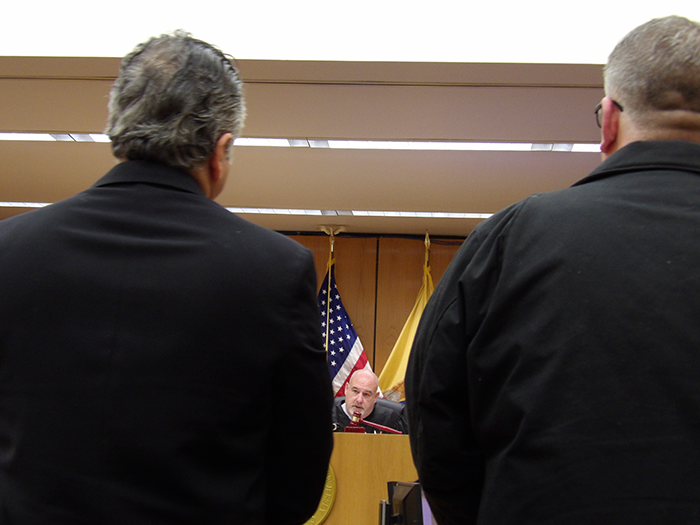
In a 17-page written opinion, Superior Court Judge Kimarie Rahill denied Lentz’s motion to suppress evidence, ruling that police lawfully executed the search warrant and had probable cause to obtain it.
The judge also denied Lentz’s request for what is known as a Franks hearing, a special court proceeding that allows a defendant to challenge a search warrant by arguing investigators intentionally or recklessly included false information or left out important facts when asking a judge to approve it. Rahill concluded the defense (Lentz’s attorneys) failed to make the substantial preliminary showing required to receive such a hearing.
The ruling means prosecutors can continue using evidence collected during the October 2025 search as Lentz faces charges of second-degree possession of a weapon for an unlawful purpose, third-degree animal cruelty and fourth-degree possession of a large-capacity ammunition magazine.
According to prosecutors, Ruby’s owners left the dog with Lentz while they attended a wedding on October 3, 2025. Investigators allege Lentz later called to tell them, “Ruby is gone.” Officers responding to the home reported seeing blood on a couch and a rolled-up carpet through the doorway, and veterinarians later determined Ruby had died from a gunshot wound. Lentz has pleaded not guilty, and the allegations against him remain unproven.
Defense Challenged Search
Lentz’s attorney argued that police violated New Jersey’s “knock-and-announce” rule when executing the search warrant by entering the electronic passcode for the front door before identifying themselves and by waiting too little time before entering the home. The defense also argued that Detective Riccardelli’s affidavit supporting the warrant contained material misrepresentations that undermined probable cause and warranted a Franks hearing.
After reviewing body-worn camera footage from the search, Rahill rejected those arguments. The judge found that although officers entered the electronic door code before knocking, the door remained completely closed until after police repeatedly knocked, announced “police” and “search warrant,” and waited before entering.
According to the opinion, officers knocked approximately 16 times, announced their presence twice and waited about 23 seconds before opening the door. Rahill emphasized that while the electronic lock had been disengaged, the door itself remained “tightly shut” until officers entered.
“The officers were in compliance with the knock and announce provision and did not enter the home until it was constitutionally permitted,” Rahill wrote.
Officer Safety Was A Key Factor
The judge also found the officers’ actions were reasonable because investigators believed firearms were inside the residence and had been told Lentz routinely carried a handgun on his hip.
The opinion notes investigators had received information that Lentz possessed numerous firearms throughout the home and had been drinking alcohol before Ruby’s death. Officers also observed blood inside the residence while speaking with Lentz through the closed front door before obtaining entry.
Rahill rejected another defense argument that officers waited until too close to 10 p.m. to execute the warrant. The warrant had been approved at 9:02 p.m. and executed at approximately 9:45 p.m., well within the timeframe allowed under the Attorney General’s directive governing search warrants, the judge wrote.

Probable Cause
Rahill also concluded the search warrant was properly supported by probable cause. According to the opinion, Detective Riccardelli’s affidavit relied on statements from Ruby’s owners, who reported that Lentz called them to say their dog was dead after they had left her in his care. The affidavit also described the officers’ observations of blood inside the residence and statements that Lentz routinely carried a firearm and kept numerous guns inside the home.
The judge wrote that those facts provided sufficient justification for issuing the search warrant. Rahill also rejected the defense’s claim that Detective Riccardelli omitted or misrepresented important information in the warrant application.
The defense argued investigators should have independently verified veterinary findings before applying for the warrant. However, Rahill concluded detectives reasonably relied on statements from Ruby’s owners, who reported veterinarians told them the dog had been shot and still had bullet fragments in her skull. The judge also noted police corroborated portions of the information through their own observations at the home.
“The statements made in the affidavit are trustworthy,” Rahill wrote, concluding that the defense failed to establish the preliminary showing required for a Franks hearing.
After addressing each of the defense’s arguments, Rahill denied both the motion to suppress evidence and the request for a Franks hearing, allowing prosecutors to continue using the evidence seized during the search as the criminal case moves forward.