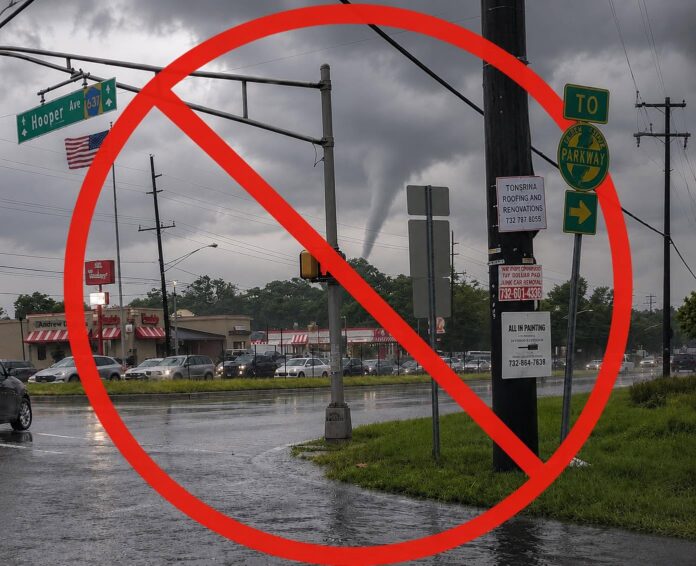
TOMS RIVER — A fabricated image appearing to show a tornado near Hooper Avenue and Route 37 spread across social media July 18, prompting a warning about the dangers of sharing unverified information during severe weather.
The Jersey Shore Hurricane News Facebook page was the first to debunk the post which spread like wildfire to the region. The National Weather Service confirmed the image was created using artificial intelligence and did not show an actual tornado in Toms River.
While fake weather images may seem harmless, they can influence decisions during emergencies. Residents may seek shelter, leave their homes, alter travel plans or contact family members based on what they see online.
False images can also create unnecessary panic, place additional drivers on already dangerous roads and make people believe severe weather is closer than it actually is.
The misinformation can have lasting consequences. Once people discover a dramatic image was fabricated, they may become less likely to trust future alerts, including legitimate warnings issued during a real emergency.
The concern is especially significant in Ocean County, where many senior citizens and other residents rely on Facebook and similar platforms for local news and emergency information. Not everyone has the time or ability to verify each photograph or video before reacting.
Residents are encouraged to pause before sharing dramatic weather content, check the original source and look for confirmation from the National Weather Service, local emergency officials or established news organizations.
Questionable photographs and videos should not be circulated as authentic until they can be verified.
Bad information can lead to dangerous decisions. During severe weather, everyone has a role in preventing misinformation from spreading.