
STAFFORD – This is the third and final installment in an ongoing series examining the high cost of aging in Ocean County and the housing challenges facing residents of Summit West, an age-restricted rental community in Stafford Township.
When Sue and Jim Zeidler moved into Summit West in 2019, they believed the community would provide an affordable place to spend their retirement years. Today, they are among a growing number of older adults questioning whether retirement housing remains within reach for those living on fixed incomes.
Jim has been receiving disability benefits for the past 12 years after a career of physically demanding work left him with significant health problems, including back surgeries and hip replacements. Sue works at a local food store to supplement the couple’s income. Like many older adults, they expected living expenses would rise gradually. What they did not anticipate were rent increases that they say have pushed their housing costs nearly 50 percent higher since moving into the community.
According to the couple, their rent increased modestly during their first year at Summit West, followed by a 5 percent increase, then a 19 percent increase and another 8 percent increase scheduled to take effect this summer.
The financial consequences have extended far beyond housing costs. Jim said the couple now relies on credit cards for expenses they previously managed through their monthly income. Sue explored applying for food assistance but found even her limited earnings placed her above eligibility limits.
While the first two installments in this series focused on the personal impact of rising rents, this chapter examines a broader question. What protections exist when seniors can no longer keep pace with housing costs, and should New Jersey consider additional safeguards for older adults living on fixed incomes?
A Community Looking For Answers
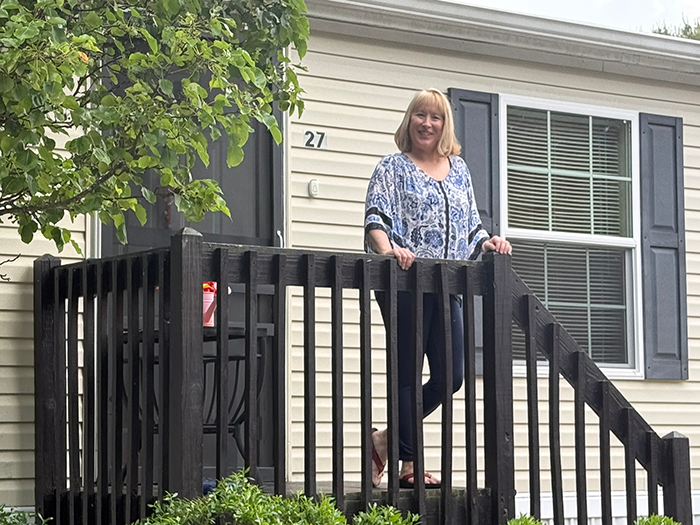
Much of the effort to answer that question has been led by Summit West resident Beth Mann, who moved into the community in 2023 believing she had found housing that would remain affordable. Instead, she found herself facing a 20 percent rent increase during her second year as a tenant.
What followed was a crash course in New Jersey landlord/tenant laws. Mann learned that New Jersey does not impose a statewide rent-control law on most private rental properties. Nor does state law establish a specific percentage that automatically qualifies as excessive. Instead, tenants who challenge a rent increase generally must argue that it is unconscionable.
The legal standard is less straightforward than many residents realize. Courts may consider factors such as comparable rents, landlord operating expenses, the condition of the property, the length of a tenant’s occupancy and the overall reasonableness of the increase. Judges have broad discretion, and there is no bright-line percentage that automatically triggers relief.
The process itself can be daunting because tenants may find themselves defending their position while facing the possibility of losing their housing. Mann spent months researching legal issues, preparing documents and participating in mediation after being unable to secure legal representation.
She worries many seniors lack the time, health or financial resources necessary to undertake the same fight.
Should Seniors Receive Additional Protections?
The Summit West dispute has also drawn attention to a broader policy discussion taking place throughout New Jersey.
Federal and state housing programs already recognize that some populations face unique barriers to obtaining and maintaining stable housing. Depending on the program, preferences may be provided to individuals with disabilities, veterans, people experiencing homelessness, survivors of domestic violence and other vulnerable groups.
Ocean County Senior Services Director Maria LaFace believes older adults may deserve greater consideration within that framework. She spoke about the unique challenges seniors face at a recent conference and came up with a unique suggestion.
“Section 8 and other housing programs already recognize that some populations face greater barriers to maintaining stable housing,” LaFace said. “As more seniors struggle with housing affordability, I believe there is a conversation worth having about whether older adults should receive greater priority consideration. Many seniors are living almost entirely on Social Security and fixed incomes, and they simply do not have the ability to absorb large increases in housing costs.”
Several bills introduced in Trenton suggest lawmakers are beginning to grapple with the issue.
Assembly Bill A461, known as the Senior Citizen Tenant Protection Act, would create protections for qualifying senior renters and limit future rent increases under certain circumstances. Senate Bill 433 would limit annual rent increases for seniors living in certain Housing and Mortgage Finance Agency-financed properties. Senate Bill 413 would expand tenancy protections for senior citizens and individuals with disabilities, while Senate Bill 452 proposes broader statewide limits on rent increases.
Although none of the measures would immediately affect Summit West residents, advocates view them as evidence that housing affordability is increasingly being recognized as an aging issue as much as a housing issue.
The Limits Of Local Government
Many Summit West residents have asked whether Stafford Township can intervene. However, like many municipalities throughout the state, Stafford does not have a rent-control ordinance. Municipal rent-control or rent-leveling boards remain among the few tools available to local governments seeking to regulate private rental increases. Communities such as Jersey City, Hoboken, Union City, West New York and East Orange have long maintained some form of rent regulation.
Most municipalities, however, have been reluctant to impose restrictions on private property owners. Opponents argue that rent-control measures interfere with property rights, discourage investment and reduce incentives for housing development. Supporters contend that vulnerable populations need safeguards when housing costs rise significantly faster than incomes.
The Road To Homelessness
The New Jersey Department of Community Affairs has identified eviction as one of the leading causes of homelessness. Many seniors often move from one temporary arrangement to another, staying with relatives or living in vehicles while searching for housing they can afford.
Steve Brigham, founder of Destiny’s Bridge which assists homeless people, said the trend has become increasingly visible throughout Ocean County. According to Brigham, seniors now represent the largest group of individuals living in encampments his organization has established. Many are women. Many spent decades working and raising families. Few ever imagined they would face housing insecurity during their later years.
For Sue and Jim Zeidler, the debate unfolding in Trenton and town halls across New Jersey is not about legislation, court decisions or housing policy. It is about whether the place they chose for retirement will remain affordable next year, and the year after that.
As lawmakers consider new protections and advocates push for solutions, residents of Summit West continue to face the same uncertainty that brought them together in the first place. How much more can fixed incomes absorb before affordable retirement housing no longer exists at all?