By Chris Lundy and Jason Allentoff
TOMS RIVER – A house being used as a transitional shelter for families will be the focus of an upcoming meeting that may impact opportunities for unhoused people.
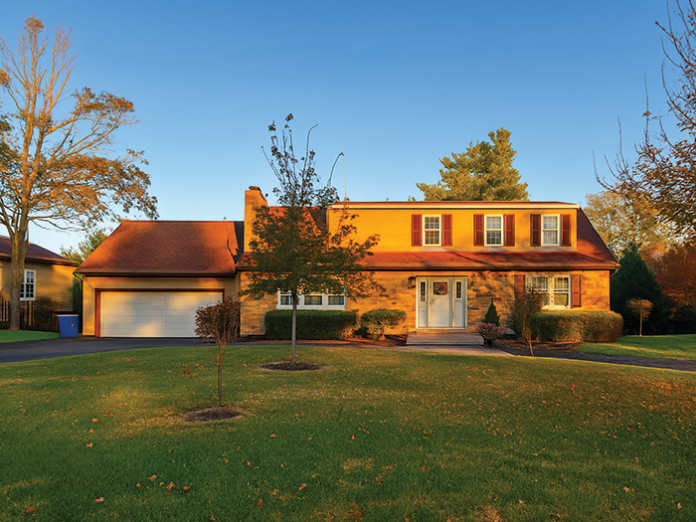
A six-bedroom house on Lexington Avenue is owned by St. Joseph’s Roman Catholic Church. It’s used by Interfaith Family Services in Toms River (despite the name, they serve Ocean County) to help families in need.
The program will be before the Township Zoning Board, which meets at 6:30 p.m. on March 12 in town hall. It had originally been scheduled for the February meeting, but that was cancelled due to a pipe leak in the building.
The upcoming meeting gave an opportunity to open the door and look inside the current operation. Not literally, of course. Interfaith protects the privacy of the people they serve. However, Mary Cranwell, director of Interfaith Family Services in Toms River, spoke with The Toms River Times about the program.
Interfaith has housed more than 1,000 individuals over the years. They boast less than 1% recidivism, she said.
Once a guest moves out to more permanent housing, they continue to keep in touch, Cranwell said. Sometimes, it’s a call to check in on them. Sometimes, a former guest will stop by for help with filling out tax forms or something of that nature.
A recent success story involved a child served by the group a long time ago. They grew up to become a physician and ran into a volunteer who had helped them years earlier.
The program will never have more than 14 individuals at any time, she said. This is dependent on what constitutes a family. The family unit could be, at minimum, one adult and one child. A young couple with a baby would be a family of three. A senior with guardianship of their grandchild would be a family of two. Regardless of the make-up of each family, the highest number of guests would be 14 at any given time.
One issue is that people in need have to travel to find services. They might not have reliable transportation. If there is a permanent location, volunteers can come to them, she said.
“Our families by and large are employed. Their children are going to school,” she said.
Even though the minimum wage was increased, costs for everything also increased, she said. The service workers, caregivers in nursing homes and other jobs are vital but their wages don’t keep up with the cost of living. “These are people we need in our community but they can’t afford to live in our community.”
This doesn’t even begin to address the impact of child care costs, health care and prescriptions, she explained.
Members of the public might blame a homeless person for their circumstances. While some of these individuals might not have made the best decisions in their lives, the reason they are in the position they are in has more to do with the lack of a safety net. The same mistake can be made by two people with different resources, causing one of them to be homeless and the other one to have a minor setback.
“Ocean County is made up of small cities but we still operate as a small town,” she said. There are never enough resources for people in need. That’s why faith-based groups and nonprofits have to fill in the gaps.
Throughout the county, there are 60 Code Blue beds that open up when the temperatures reach freezing. That is nowhere near enough, she said.
“The face of homelessness is a family portrait,” she said.
Approval For Change
Mayor Daniel T. Rodrick voiced support for an application by St. Joseph’s Roman Catholic Church to continue operating a transitional housing program for women and children, as the proposal heads to the township’s zoning board next month.
The building has provided temporary housing for women with children and pregnant women for 29 years. According to township officials, the current application is required due to changes in state law, not because of any expansion or modification of the longstanding program.
Rodrick said the program’s small scale distinguishes it from larger shelter proposals considered elsewhere.
“Unlike other proposals that would have created large shelters – primarily for young men, most of whom are drug addicted and mentally ill – this approach ensures personalized, stable support in a family-like setting, helping women and children regain their footing before moving on to permanent housing,” Rodrick said. “For nearly three decades, this modest but vital effort has kept local mothers and children safe during their most vulnerable moments.”
Rodrick emphasized that the zoning board – not the mayor’s office – will make the final determination on the application. He noted that the board is primarily comprised of members appointed by the prior administration.
Rodrick also thanked Father Scott (Reverend G. Scott Shaffer) and the parish for their service to the community.
“Father Scott’s dedication to service has made a real difference in Toms River,” Rodrick said. “His commitment, compassion, and steady leadership have improved countless lives in our community, and we are deeply thankful for his ongoing work.”
“This is about strengthening families and supporting our neighbors,” the mayor added. “When we help those in need, we build a stronger, more caring Toms River.”
How To Help
Nonprofits are always in need of volunteers and donations. People are often more generous around the holidays but there’s a need year-round. “Things are tough for everyone right now, but those who are helping others still need help,” Cranwell said.
For more information, visit interfaithfamilyservices.com