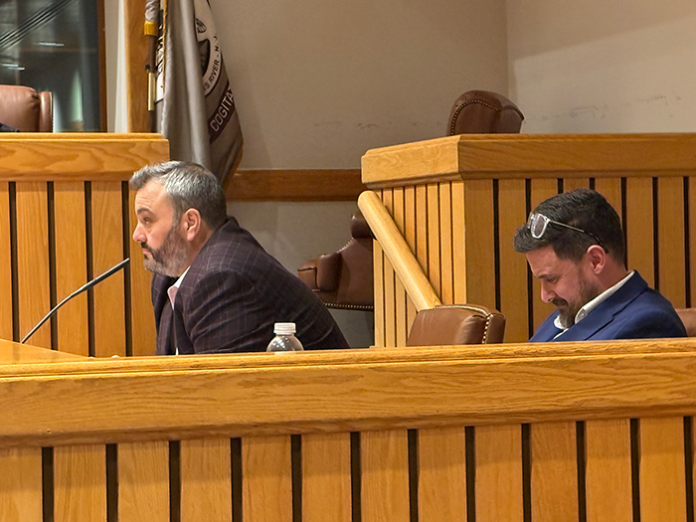
TOMS RIVER – A contentious debate marked by interruptions, accusations, and visible frustration ended with the Township Council voting to dissolve Toms River’s Rent Leveling Board, eliminating a local system that had governed rent increases in mobile home communities for decades.
The vote comes as New Jersey has shifted oversight of manufactured home rent increases to the state under a 2025 law establishing a uniform 3.5 percent cap.
The ordinance repeals provisions of Chapter 363 of township code and formally eliminates the board that had served as a forum for disputes between landlords and tenants in manufactured home communities.
While the ordinance itself was procedural, the discussion leading up to it revealed confusion over whether the board remained necessary.
How The Local Board Worked
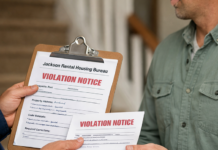
For years, Toms River’s Rent Leveling Board applied specifically to mobile home parks, where residents typically own their homes but lease the land beneath them.
The board allowed landlords to seek rent increases and tenants to challenge them, request reductions, or raise concerns related to conditions in the park. Hearings were conducted locally, with both sides presenting financial information and testimony. The board typically met four times annually and included both a certified public accountant and an attorney as part of its structure to review financial submissions and legal issues tied to rent adjustments.
Township code also limited how much rents could increase, capping them at “3 1/2% of the previous twelve-month rental income… or the percentage increase in the consumer price index… whichever shall be less.”
Even so, the board did not have final authority. Either side could take disputes to Superior Court, meaning the local process often served as an initial step rather than a binding resolution.
State Law Replaces Local Oversight
The structure changed in 2025, when New Jersey adopted legislation imposing a statewide 3.5 percent cap on rent increases in manufactured home communities and placed oversight with the Department of Community Affairs.
Landlords seeking to exceed that cap must apply to the state and provide documentation supporting the request. This includes operating costs, capital improvements, or financial hardship. The department may review submissions, hold hearings, and determine whether higher increases are justified. Tenants must be notified and have the opportunity to challenge those increases.
The law also creates statewide enforcement, allowing penalties for violations and giving tenants the right to seek damages and attorney fees, while directing the Department of Community Affairs to adopt rules and oversee implementation.
Toms River is not the first municipality in Ocean County to move away from a local rent leveling board. Barnegat previously dissolved its board after the same law took effect, concluding that rent oversight for manufactured home parks had shifted to the state.
Officials Clash Over “Layer Of Protection”
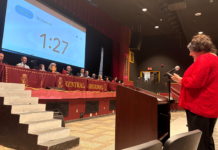
The move from local to state oversight was at the center of a quarrelsome exchange during the council meeting. When a resident asked what removing the board would mean for someone living in a mobile home, the clearest explanation ultimately came from another resident during public comment.
Council President David Ciccozzi said the administration had requested the ordinance to dissolve the board. “We were told that this [the local rent leveling board] wasn’t necessary, that it was redundant, it wasn’t needed,” Ciccozzi said. “That the state is running it.”
His remarks highlighted a central divide in the discussion. Supporters of removing the board viewed the local board as duplicative of a system now handled by the state. Others argued that redundancy did not mean the board had no value.
Mayor Daniel Rodrick rejected the claim that the administration sought to dissolve the board and argued it continued to serve an important role. “I’m opposed to repealing it because it’s a layer of protection for all those people who live in the mobile home park,” Rodrick said. “Once the board is gone, it will be a lot easier to jack up rents.”
Rodrick also suggested that eliminating the board could open the door to redevelopment, suggesting that if residents are pushed out of mobile homes near Lake Ridge, developers would follow.
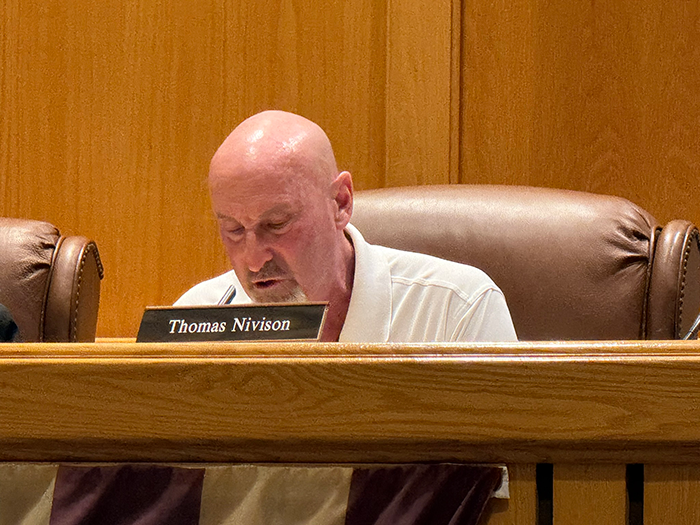
The discussion then grew more personal. Rodrick accused Council Vice President Tom Nivison of having a conflict of interest and told him he should abstain. “You work for the guy,” Rodrick said, referring to one of the mobile home park owners. “You can’t talk.”
Nivison pushed back, saying he had consulted with two attorneys who advised he was not conflicted and could participate in the vote. He then directed his comments toward Acting Business Administrator Drew Cabot, a member of the Rent Leveling Board according to the township website.
“Your little boy there smiling was all in favor,” Nivison said, adding that Chabot indicated the move could save the township about $15,000. “Smiley was all in favor of it.”
Councilwoman Lynn O’Toole also opposed dissolving the board, citing concerns about shifting authority entirely to the state and its potential impact on vulnerable residents. She pointed to what she described as a broad divide between a Democrat-controlled state government and Republican-led Ocean County.
During public comment, Renee McNally, a senior property manager at Homestead Run who also lives in the community, said the protections residents rely on are already in place under state law.
“We’ve had rent leveling in place for years, and we’ve never been allowed to raise lot rent more than 3.5 percent,” McNally said. “The state has now taken that over for all mobile home parks in New Jersey. We’re reporting the same information to them, so having a local board is really redundant. The protections are still there, and we’re still capped at 3.5 percent.”
The ordinance to remove the board ultimately passed by a 4-3 vote, with Ciccozzi, Nivison, Councilmen Robert Bianchini and Clinton Bradley voting in favor. Council members Harry Aber and Craig Coleman voted against it, along with O’Toole.