TOMS RIVER – Long before a Superior Court judge warned Toms River it could lose the legal protection shielding the township from builder’s remedy lawsuits, the warning signs were already on display inside Town Hall.
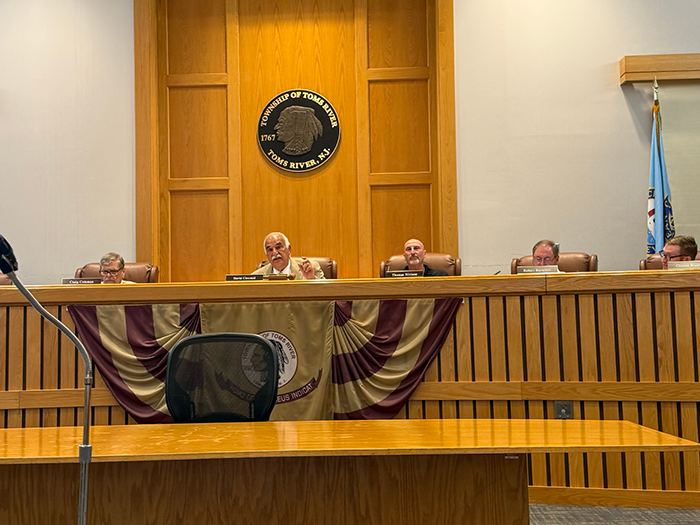
At a special meeting on July 29, what began as a discussion of revisions to the township’s affordable housing plan devolved into a public airing of accusations over secrecy, exclusion and a breakdown in communication between Mayor Daniel Rodrick and the Township Council.
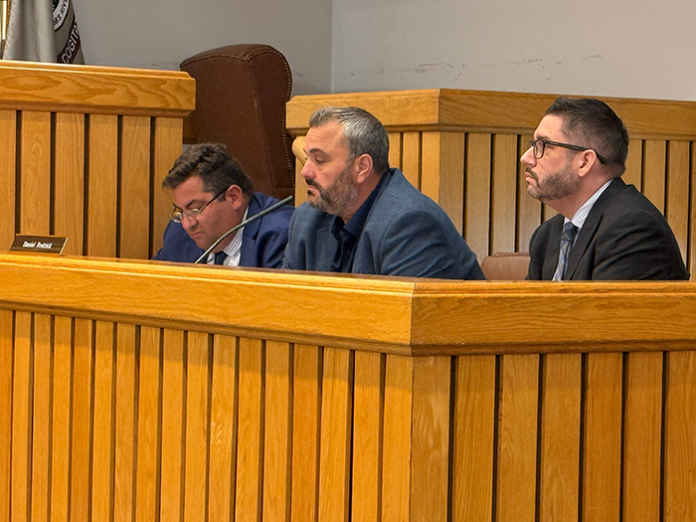
The divide reflects the township’s current political landscape. Rodrick is generally aligned with Council members Harry M. Aber Jr., Craig Coleman and Lynn O’Toole. Opposing him on many major issues is the four-member council majority consisting of Council President David Ciccozzi and Council members Robert Bianchini, Thomas Nivison and Clinton Bradley.
Although both sides said they wanted to protect Toms River from overdevelopment while complying with New Jersey’s affordable housing obligations, they offered sharply different explanations for why the council majority ultimately tabled several ordinances and resolutions needed to implement revisions to the township’s affordable housing settlement.
Mayor: Council Derailed Months Of Negotiations
Rodrick argued his administration had negotiated an agreement that significantly reduced the township’s affordable housing obligation by extending existing deed restrictions, identifying township-owned sites for 100 percent affordable housing developments and incorporating the JD Jamestown redevelopment into the settlement negotiated with Fair Share Housing Center.
Following the meeting, Rodrick accused the council majority of jeopardizing that work.
“Tonight, they said the quiet part out loud,” Rodrick wrote in a statement released after the meeting. “They intentionally sabotaged a plan that would have protected our community because they prefer thousands of new apartments and high-rise towers over a carefully negotiated solution.”
Rodrick also maintained the JD Jamestown redevelopment had already been approved as part of the settlement. “Remember Jamestown, they voted for that in the settlement agreement with Fair Share Housing and the State of New Jersey,” he wrote in a text message. “That settlement agreement is binding. They voted against the zoning for it.”
The mayor rejected suggestions that the council had been excluded from negotiations.
“Councilman Ciccozzi publicly admitted he doesn’t answer my phone calls. He also ignores emails and text messages. Those communications are all documented, and I would gladly release my phone records to demonstrate our repeated attempts to keep the council informed.”
Council Majority: We Needed Time
Members of the council majority insisted they were not rejecting affordable housing. Instead, they argued they had been left out of negotiations and were being asked to vote on major revisions without enough time to understand them
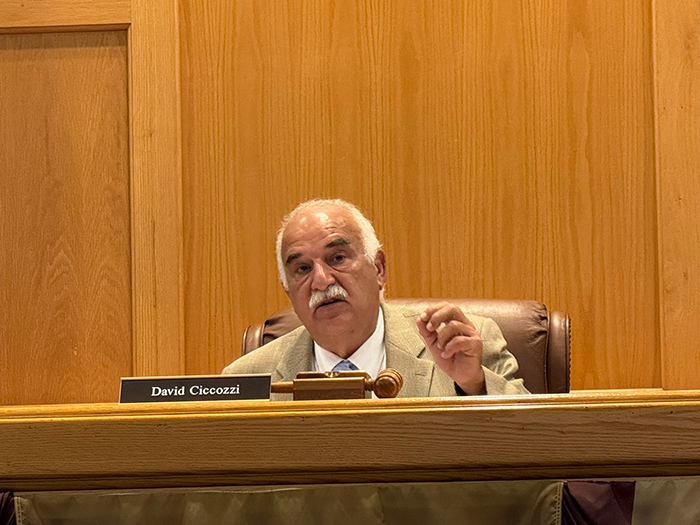
At one point, Ciccozzi held up several thick stacks of documents that he said had been provided shortly before the meeting. Displaying the paperwork, he argued the governing body could not responsibly approve complex legal agreements it had little opportunity to review.
Rather than defeating the proposals, the council majority voted to table the ordinances and resolutions to give members additional time to review the documents and better understand how the changes would affect the township’s affordable housing settlement.
“Let’s go back to the drawing board,” Ciccozzi said. “You have to get us involved with this. You can’t arbitrarily do it on your own.”
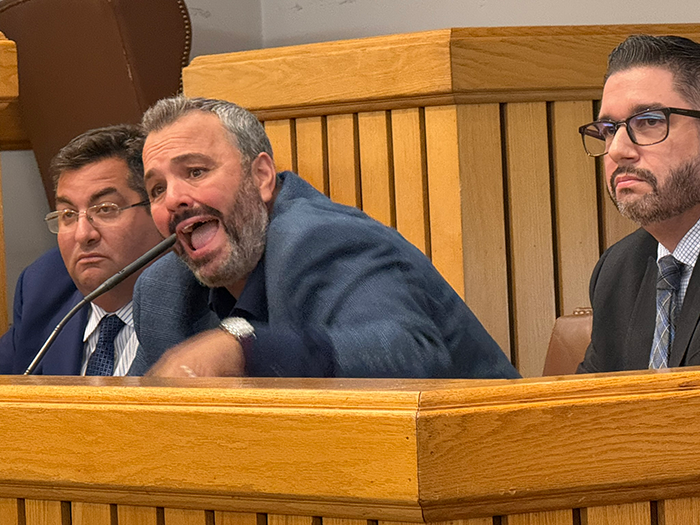
Rodrick immediately disputed that characterization. “Anyone in the public that would like to open the call record, the text log, or the email log will see that these people have been texted literally dozens of…” he said before being interrupted.
Ciccozzi acknowledged he generally does not answer Rodrick’s phone calls but said there was a reason. “Why should I answer him today?” Ciccozzi asked. “I know what it is. He’s going to put the screws on me right before the meeting.”
Rodrick responded immediately. “You never answer. You never answer, and then you come here and say, ‘I don’t include you.'”
Ciccozzi said discussions involving significant policy decisions should take place through meetings involving the governing body rather than through last-minute phone calls before council sessions.
A Meeting That Never Happened
The strained relationship became even more apparent during a discussion about a proposed meeting with a local attorney representing a developer. Ciccozzi said Rodrick invited him to attend. Believing another elected official with experience in affordable housing should hear the discussion, he asked Bianchini to accompany him.
According to both men, Bianchini was immediately told he had not been invited.
“I was invited by Dave to go to a meeting … and I was told I wasn’t invited,” Bianchini said. “That I was an entourage.”
Ciccozzi said Rodrick then questioned why Bianchini was there. “I said, ‘He’s here to listen,'” Ciccozzi recalled. “(Rodrick) said, ‘I don’t want him here. He’s got to go.'”
Rather than proceed alone, Ciccozzi said both men left. “I’m not going in there without a witness next to my side, ” he said.
For the council majority, the incident reinforced its belief that elected officials were being excluded from negotiations they would ultimately be expected to approve.
Communication Breakdown Reaches The Courtroom
The communication problems highlighted during the July 29 council meeting resurfaced two days later before Superior Court Judge Sean D. Gertner.
Attorneys representing Fair Share Housing Center, developers and the township described late-arriving documents, uncertainty over redevelopment projects and disputes about who had been included in negotiations. Repeatedly, Gertner returned to the same message.
“Everyone’s got to be at the table at the same time,” the judge said, urging “open and honest communication” among township officials, developers and Fair Share Housing Center.
Gertner warned that unless meaningful progress is made before September 1, Toms River could lose the temporary immunity that currently protects it from additional builder’s remedy lawsuits, potentially shifting far greater control over future residential development from local officials to the courts.