OCEAN COUNTY – For the past several days, fear overtook at least a dozen unhoused people staying in Ocean County-funded motels. Conversations were lowered. Some stopped sleeping. January 5 loomed as the date many believed they would once again lose the comfort of a warm bed.
Word had spread quickly that funding for the motel placements had run out. First, people were told the contract ended on December 31, with only a brief reprieve through the holiday weekend. As the days grew colder, the rumors hardened into dread. Many worried they would be forced back to the woods, like the Winding River encampment where some had lived before the motel rooms offered a fragile pause from survival mode.
What ultimately stopped that from happening was not a last-minute decision or emergency intervention. It was language already written into the county’s agreement for homelessness and housing insecurity services. The contract authorizes the use of county funds for emergency housing and related stabilization services, including temporary motel placements, and includes a 60-day extension clause intended to prevent abrupt disruptions in care.
For the people living inside the motel rooms, the extension did not bring certainty about what comes next. But it brought time.
“Continued participation with assigned service providers is essential so individuals can transition into permanent housing solutions as quickly and safely as possible,” stressed Dr. Tracy Maksel, Deputy Ocean County Administrator.

Lives on Hold
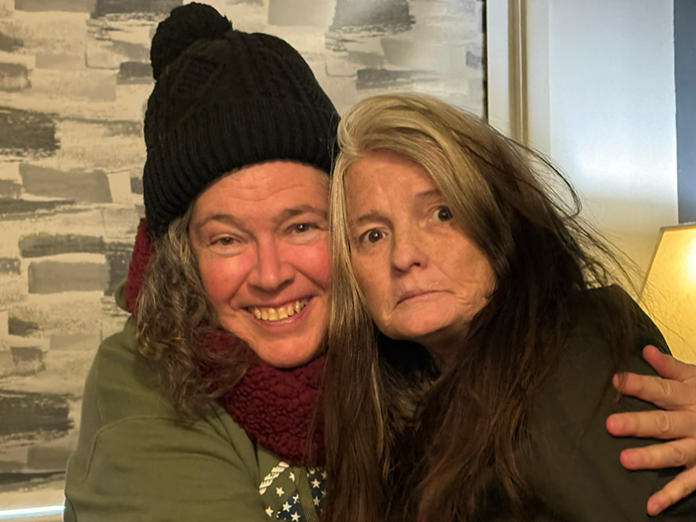
Joy Holman has seen it all up close. A longtime local volunteer, Holman considers helping the unhoused her ministry. Nearly every day, she loads her car with food, blankets and supplies and goes to visit the people she calls her friends.
Holman often works with people facing the greatest barriers, including mental and physical illness and substance use disorders. As January 5 approached, Holman watched anxiety ripple through the motels. She made phone calls, checked in with contacts, and tried to reassure people even when answers were scarce.
Even without the threat of her friends losing their motel stays, Holman had been active. She’s given her personal address to ensure they receive their mail. She set up appointments, met with providers, and recommended housing opportunities. Holman also took the time to introduce some of her friends on a frigid January 3 afternoon.
Victoria is a 57-year-old woman whose eyes tell a mixed tale of sadness and fear. She lives with significant physical disabilities and survives on roughly $800 a month in disability income. Victoria remains haunted by the day she was forced to leave the Winding River camp. Her right leg could barely move, and the two-mile hike seemed endless. She left with just her pocketbook.
“I can’t go back to the woods,” she said quietly. “My body just can’t take it.”
Kathy faces the same uncertainty with quieter fear. At 76, she is among the oldest people staying in the motels. Frail and managing health issues, Kathy worries about what would happen if she were forced out, particularly because of the small dog that stays close to her side. She feels neither will survive without the other.
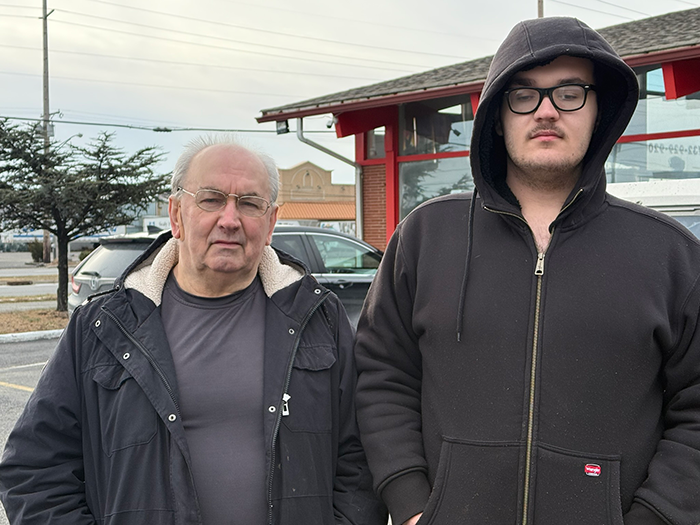
Victor and his wife Sylvia came to the United States from Ukraine to help with cleanup efforts following the September 11 attacks. They stayed, built a life, and raised a son who is now 24 and was born in this country. Years later, despite that history, the family found themselves homeless.
For a time, they lived in the encampment at Winding River before being placed together in a motel room. Sylvia recently suffered a stroke, leaving Victor worried not only about housing, but about her health and access to care.
Their son Christian says he spends his days walking up and down the highway, submitting job applications wherever he can reach on foot. Without a car or reliable transportation, the search has been exhausting and unsuccessful.
Ron, 54, said his fears are physical as much as emotional.
He has been homeless for more than three years and lives with kidney disease, uncontrolled diabetes, and multiple cancer diagnoses. Despite repeated attempts, he said he has been denied disability benefits.
“I don’t know if my body can take going back outside,” Ron said.
He recalled one housing opportunity that nearly worked. A landlord agreed to hold an apartment while paperwork was completed. Months passed, and the unit was eventually rented to someone else.
“They waited as long as they could,” Ron said. “Then they had to move on.”
Encampments, Motels, and What Comes Next
Many of the people now staying in motels were placed there after the Winding River encampment was shut down. The camp was organized by Minister Steve Brigham, who previously established Lakewood’s Tent City and said months ago that he had decided to stop setting up camps in the woods.
At that time, Brigham cited a Supreme Court ruling he believed effectively criminalized homelessness and said he could no longer risk placing people in situations that might lead to arrest or further harm. But with the Code Blue warming center at capacity and motel placements uncertain, Brigham acknowledged that he has since established small, discreet camps, so people have at least some protections from the elements.
“I didn’t want to do this again,” Brigham said. “But when people have nowhere else to go, you don’t just turn your back on them.”
Jennifer Hakeem of Monarch Housing Associates and the Ending Homelessness Group said the fear experienced by motel residents reflects the instability of the housing system itself.
“We do have funding available to help pay for housing,” Hakeem said. “The hardest part is finding housing that actually exists and that people qualify for.”
She explained that one-bedroom apartments at fair-market rent are extremely scarce in Ocean County, particularly for people with very low incomes, disabilities, prior evictions, or pets. While shared housing can sometimes be an option, she emphasized that it must be voluntary.
“Our goal is stability,” Hakeem said. “Not just moving someone from one temporary situation into another.”
A Pause, Not a Resolution
When January 5 passed without displacement, relief settled briefly inside the motels. But it was cautious. The extension provided time, not answers.
“This didn’t fix anything,” Holman said. “It just stopped something worse from happening right now.”
For now, that pause means heat in the middle of winter. It means a bed instead of frozen ground. It means one more night without having to choose which belongings can be carried and which will be left behind. The uncertainty remains, but for the moment, survival is not the immediate question.