TOMS RIVER – A building near St. Joseph’s Roman Catholic Church got the approval to operate as a shelter for homeless families.
The six-bedroom house at 407 Lexington Avenue is owned by the church. It’s used by Interfaith Family Services in Toms River (despite the name, they serve Ocean County) to help families in need.
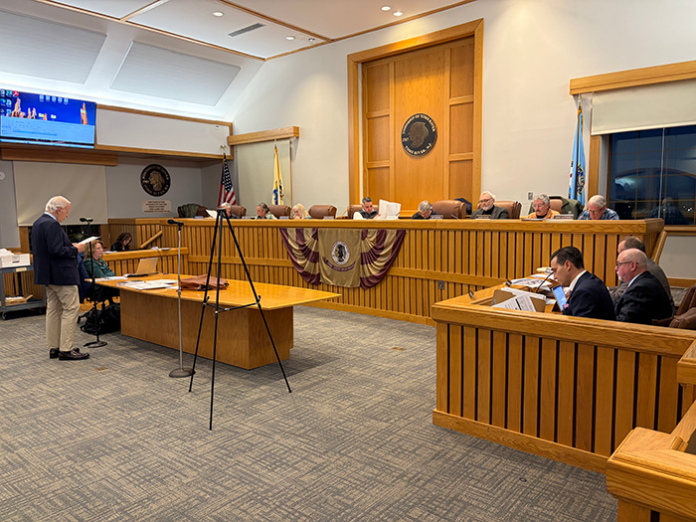
The property had been used to help the homeless for many years. However, since it was now going to offer families a longer stay, it had to appear before the town’s Zoning Board, which governs the use of properties.
Harvey York, an attorney representing the applicant, briefly went over the history of the property. It had started being used as a shelter in 1997.
However, there weren’t really any approvals given back then. They were part of a group of religious leaders of all denominations across the county that were putting homeless up for one week at a time. The reason for this is that for one week, they are legally a guest. Anything longer than that needs to be addressed differently.
In order for the building to be used for a longer stay, they had to get a sprinkler system, he explained. They are also making changes to the back deck and an air conditioning unit.
“Everything we did on the property got municipal approval,” he said.
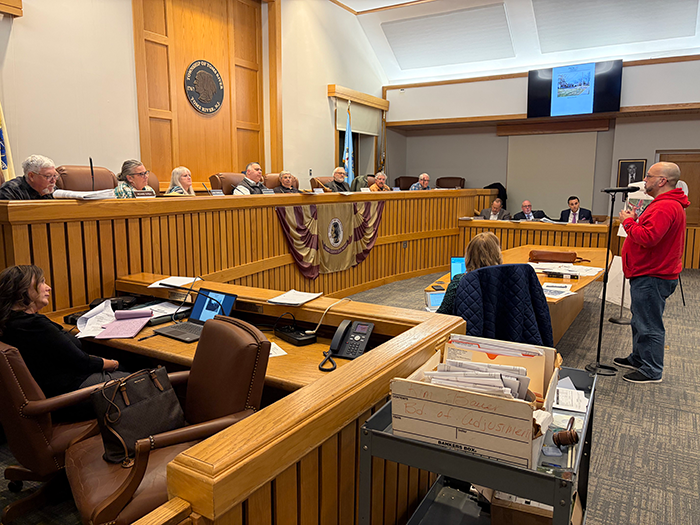
He brought up Mary Cranwell, director of Interfaith Family Services of Toms River, to speak more about the project. She said that the building will be staffed 24/7 with trained shelter employees.
When interviewing clients, they’ve learned that 82% of them live in Toms River, she said.
The definition of a family for the purposes of a family shelter is at least one adult and a child, but it could be a grandchild, for example. Pregnant women won’t be turned away.
The maximum number of people who can stay is 14, she said, and each family has a bedroom.
The goal is to get these families into permanent homes within three months, she said. The challenge is that there are very few homes that are truly affordable in the area.
In a previous interview, Cranwell told The Toms River Times that people in need have to travel to find services. They might not have reliable transportation. If there is a permanent location, volunteers can come to them, she said.
Interfaith has housed more than 1,000 individuals over the years. They boast less than 1% recidivism, she said.
During the portion of the meeting where residents can ask questions, Janet Laing asked about how residents would be screened and how they find Interfaith.
Cranwell said there’s a 3-4 hour intake process that includes drug testing when needed. Most of the residents are referred by other agencies.
Laing was worried that the approval would set a precedent, where any group can start homeless shelters in any residential area.
Zoning Board Attorney Christopher Dasti said that each application stands on its own merit.
Zoning Board member Dana Tormollan suggested the property be fenced in for children’s safety. She asked about what school the children would attend.
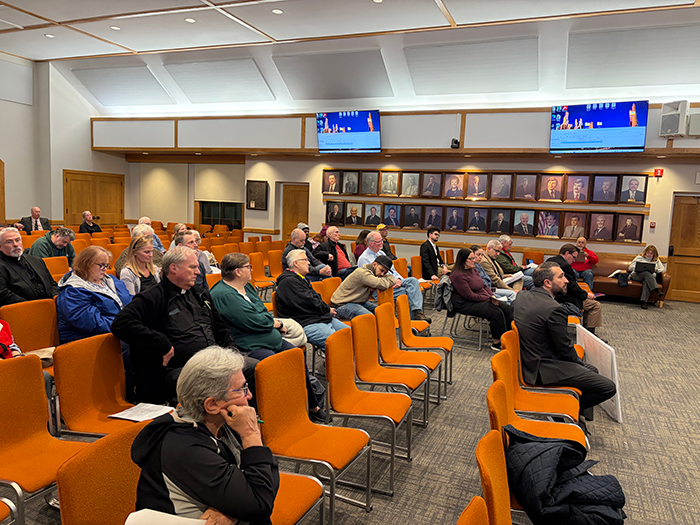
Cranwell said the children would stay in the school they currently attend and the child’s district is responsible for transportation.
Resident Paul Williams said he was impressed with the project but thought it would be better in a non-residential location. He recommended that the language in the approval documents say that it is only for families with children.
Dasti said the documents will have all of the board’s concerns.
There has been a lot of arguing in town about homeless people and what the municipal government can and should do about it.
Williams said that this is really the town’s obligation to take care of its own.
York said he agrees, however “the reality of our community is that if the churches don’t do it, no one would do it.”
Zoning Board member Richard Tutela said “It’s not our job but it’s the job before us.”
The Board voted to approve the shelter.
The issue brought to mind another recent application, this time by Christ Episcopal Church on Washington Street. The Zoning Board rejected a proposal to have a 17-bed homeless shelter on its property in an R-150 residential zone. York had been the attorney who represented that church as well.
The denial followed eight months of hearings in which supporters cited the project’s alignment with both legal precedent and moral imperative – and opponents raised concerns about property values, public safety, and the proximity of the site to homes and school bus stops.