TOMS RIVER – A group of ordinances that would take power away from the Township Council was voted down by…the Township Council. It was the latest in the power struggle between elected officials in town.
Critics said it was the mayor making a power grab from the Township Council, and the mayor said they did nothing more than bring the town government in line with what is supposed to happen.
The backdrop to this issue is the same as most of the issues in town this year. There are two groups of Republicans. Mayor Daniel Rodrick heads up one side, and some members of the Township Council support him on most if not all of his initiatives. The other group challenges him on most if not all of his initiatives.
The Toms River Times received copies of the ordinances and will summarize them here:
The first one that was challenged involved paying bills (claims). It stated that the “Township Council may only reject the payment of claim on a non-political, legal basis, which shall be clearly and unequivocally stated on the dais by the councilmember(s) voting to reject the claim.”
Furthermore, if a vendor files suit against the town for not paying a bill that was rejected by the council, the councilmembers who voted to reject the payment would be personally liable for any additional costs incurred (court costs and similar charges).
One ordinance would have changed how items are added to the agenda of the Township Council meeting.
One ordinance would have removed most of township code relating to appointing department heads. The code speaks of the mayor putting up a name to run a department. Then the council has “advise and consent” on the position. The only thing that would be left of the code would be this sentence “Where required by law or in any part of this Code, Council is to exercise its powers of advice and consent.”
Another ordinance would have made assistant township attorneys be appointed by the mayor.
One ordinance would have changed the positions in the Municipal Clerk’s office. It stated that there will be one clerk appointed by the council, and one deputy clerk, appointed by the mayor, with the advice and consent of the council.
During most of the conflicts this year, Mayor Rodrick had four supporters on the council. That forms a majority so they would approve his ideas. However, due to the results of the election, come January his opposition will have a majority.
Justin Lamb, who serves as council president, presides over meetings. He didn’t win his council seat back for the coming year.
“I’m not going to be here in seven weeks,” he said. “I don’t think it’s fair” to make such changes to the government structure. He voted against these ordinances, so they didn’t pass.
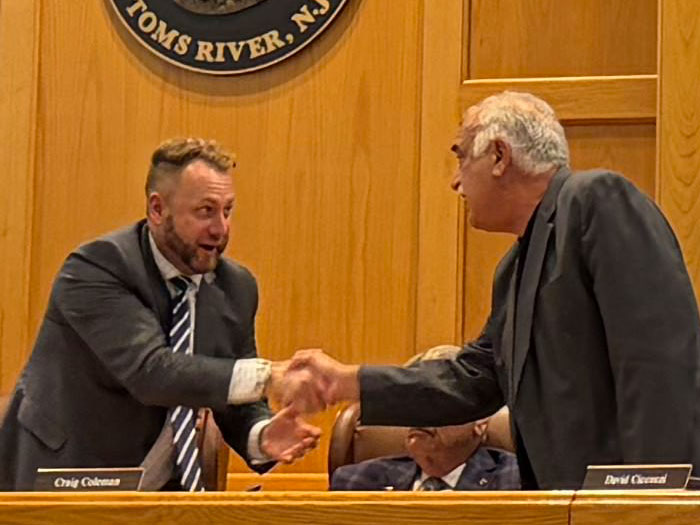
Councilman Craig Coleman, who is an ally of Rodrick, abstained on a few of the ordinances.
There were also ordinances to dissolve the Municipal Utilities Authority and create a small branch of government in-house to take on the same duties.
Lamb called the MUA a “patronage pit” – where political allies are given jobs, but said the removal of it was “rushed.”
Rodrick said that it was wrong that people earn a $45,000 health insurance package for a few hours of work per year for the MUA and criticized those who voted against dissolving it.
“It’s pretty clear this council (by this he meant those who voted against) is bought and owned by special interests,” he said.
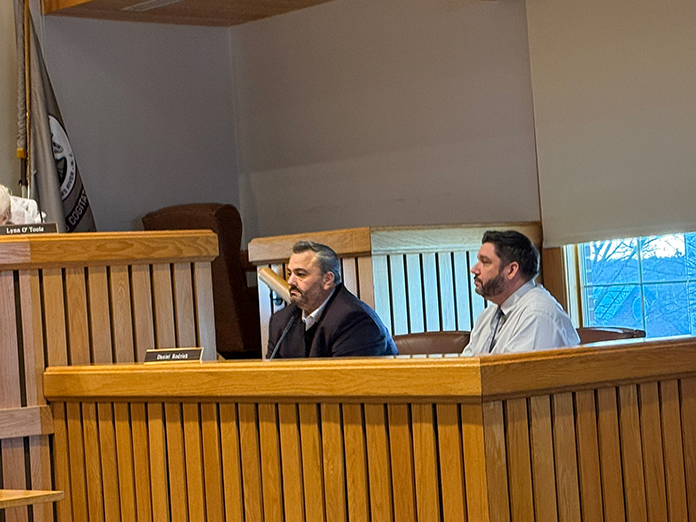
At this point, Rodrick, Business Administrator Jon Salonis, and Councilwoman Lynn O’Toole left the meeting.
Rodrick gave an interview with The Toms River Times the next morning, explaining in more detail what the ordinances were meant to do.
They weren’t power grabs, they were bringing the township in line with what is supposed to happen in this form of government. He said that before Paul Brush became mayor, many years ago, he was a Democrat mayor with a Republican council. The council members changed the way things are so that Brush would not have as much power.
Some of the ordinances that he put forward were ways to bring it back to the way it was supposed to be, Rodrick said.
The council is supposed to have advice and consent when it comes to department heads – and that wouldn’t change, he said. However, the council is not supposed to have advice and consent on such employees as deputy department heads or other employees.
“They wanted to have all their friends in their own fiefdom in the clerk’s office,” he said.
The mayor and business administrator oversee the work done by the clerk’s office, the legal department, and other elements of administration, so it makes more sense for the hiring and firing of these people to be governed by the mayor and business administrator, he said.
Furthermore, the ordinances bring the township in line with state law. State law always supersedes municipal ordinances. So, there’s nothing in his changes that would be illegal, he noted.
The change to the MUA, on the other hand, was a cost-saving move, he said. This authority costs taxpayers and ratepayers a fortune, and if it was brought in-house, a lot of the costs would have gone down.
Soon after those votes took place during the meeting, the video feed for the meeting was cut, and those watching at home were unable to learn what happened. In an interview the next day, Rodrick told The Toms River Times “I honestly don’t know what happened to the video feed.”
Some critics saw these ordinances as a power grab – a way to prevent the council from taking action next year.
During the public portion of the meeting, resident Tony Rivoli called this meeting “historic.”
“One gentleman wanted the government to change because he didn’t win the election,” he said of Rodrick.
Speaking of patronage, Councilman David Ciccozzi (another Rodrick critic) spoke about the election. He talked about how much money was used by people to try to unseat him, but he narrowly won.
He said part of him was happy that these powerful people wasted money, but part of him is sad because ultimately the taxpayers will pay for it. He said that professionals like lawyers and engineers donate to politicians’ campaigns in the hopes of getting work if they win. Then, they bill the township more than their work is worth – to make their donations back.
Several people complimented Lamb on helping vote the ordinances down. Lamb said that a lot happens that people don’t see. He asserted that he had never been a “puppet” voting with Rodrick. If he voted for something the mayor put forth, it was because he believed in it. If he voted against it, it was because he didn’t. It wasn’t about picking sides.
People who run for office have strong personalities, he said.
“I’ve been standing up to him and people like him for a long time,” he said. “Loyalty is everything and my loyalty is with the taxpayers.”
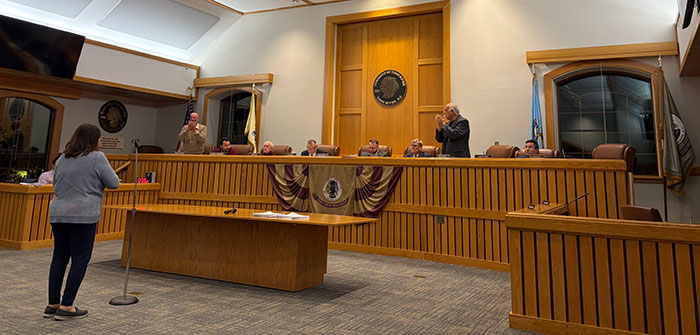
Still, two of Rodrick’s frequent critics on the council gave him a standing ovation.
Resident Michael Cohen, who started coming to meetings when the animal shelter was shut down, had a different view of Lamb: “Darth Vader engaged in years of evildoing. Turning on the Emperor at the very end does not make him a hero.”
Lamb replied that he had not seen that movie.