TOMS RIVER – The conclusion to how many affordable housing units must be set aside in town has revealed a lower number than was initially demanded.
The town has to provide for 186 units that would be part of new construction, Mayor Daniel Rodrick said. The Fair Share Housing Authority, which oversees this statewide, had wanted 670 units.
Through negotiation with existing apartment complexes, the town was able to offer deed restrictions for 470 of those 670 units, he said.
This is when the town pays apartment complexes to keep the rent affordable for another 20 years. Otherwise, these units would become market rate, and would price out the poor.
These payments came from the town’s affordable housing trust fund, which had approximately $9 million in it, Rodrick said.
The trust fund is fueled entirely by payments from developers, not taxes.
This left an obligation of 200 units, he said. Town officials thought they had a strong argument to reduce that to zero. However, if they took that fight to court and lost, the result could have been thousands of new apartments. So, the responsible thing to do was to take the settlement.
“We got a good deal,” he said. “After extensive discussions, Fair Share has graciously accepted the extension of controls on 448 pre-existing apartments.”
There was also a so-called “gap period” between the last round and this one. The town has to purchase 70 more deed restrictions on existing apartments to satisfy that.
“This is not just a small concession. It’s crucial in limiting the 1,096-unit burden Fair Share initially sought” on top of the 670 units, he said. “Further, they’ve agreed to just 186 newly constructed affordable units.”
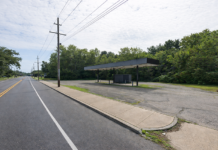
Of these, 134 would be located on the Lakewood side of Route 70, and 40 would be an extension of the Jamestown Apartments off Hooper Avenue, just north of Route 37.
Fair Share has also agreed to stay out of any further litigation that might be started regarding the administration’s block of a proposed downtown apartment complex, he said.
Every town in New Jersey has to allow a certain number of housing units for low income residents. This dates back to a lawsuit from 50 years ago, when the town of Mount Laurel was accused of zoning poor people out.
What followed was a complicated calculation every ten years that told towns how many units were needed. Often, this led to new apartment complexes springing up.
If the town doesn’t allow the homes, they could be on the receiving end of builder’s remedy lawsuits. This is when a developer sues the town, accusing them of discriminating against the poor. If the developer wins, they have a lot of freedom with whatever they want to build.
The agreement was discussed and voted on during a recent Township Council meeting.
A resident who lived near Jamestown said it’s already dangerous with a lot of car traffic and elementary school-aged kids walking around. “I just can’t see adding more residents to that street.”
Rodrick said the Jamestown Apartments were one of the complexes that joined the lawsuit so some of the new units will go there.
A bit of conversation took place about where specifically the new apartments will be, but officials reminded residents that any construction plan will have to be brought before the town’s planning board in a public meeting.
Christopher Zingaro, an attorney representing Toms River in the affordable housing arena, said that multiple developers came forward. This was a major risk that had to be considered.
When it came to Jamestown the affordable housing going there will be a mix of new apartments and old apartments that will be deed restricted, he explained.
In a year where members of the governing body clashed on every major decision – and even plenty of minor ones – there was little argument from the Township Council.
“This is a big win for our township,” then-Council President Justin Lamb said. “Thank you to the mayor and administration and attorneys.
“Arguably, the courts have been moving the goal posts on affordable housing,” he said.
“This plan is far from perfect, but I’m pleasantly surprised,” said Councilman David Ciccozzi, a frequent critic of Rodrick.
“It’s not a perfect world,” Councilwoman Lynn O’Toole replied.
“That’s true,” Ciccozzi agreed.
Outgoing Councilman James Quinlisk voted against it, stating that Rodrick ran on a campaign of stopping development, but the only development he stopped was the downtown apartment/retail complex.
Rodrick said that if he hadn’t fought the affordable housing recommendations, there would have been development everywhere.
Editor’s Note: This story appeared in The Toms River Times before the new council was sworn in for 2026.