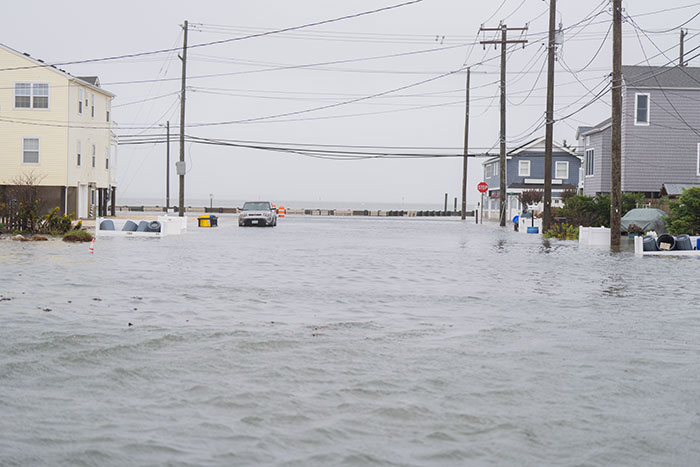
LONG BEACH ISLAND – When the nor’easter blew through Long Beach Island in mid-October, it triggered a familiar surge of dread and defiance. Bay water flooded across roads, closing stretches of Long Beach Boulevard and Bay Avenue, while wind-driven sand whipped against pilings and porches. Yet the storm did little to shake the attachment of those who call the barrier island home, whether year-round or in spirit.
For many longtime families, the houses have always been seasonal, summer places that have weathered decades of wind and salt. But more and more, newcomers are moving in full-time, drawn by the quiet winters, remote work, and that ineffable LBI calm that follows the chaos of every storm.
An Island Built On Memory
Jim Mahoney’s home in Holgate has stood through the island’s worst storms – a weather-worn cottage carrying the scars of each generation’s defining flood.
“My dad bought it in 1959,” Mahoney said. “It’s on the same lot where another house washed away in the 1944 hurricane. He found a structure floating in the bay, paid twenty-five bucks for it, and dragged it onto the foundation. That’s the house I’m still in today.”
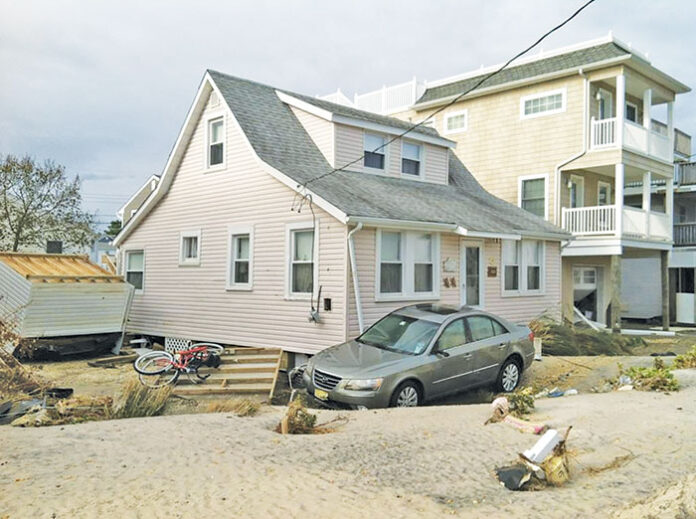
Since then, it’s survived Hurricane Donna in 1960, the March 1962 “Ash Wednesday” storm, and Superstorm Sandy. “The ’62 storm took our house off the foundation, but it didn’t get far,” said Mahoney. “My dad had it dragged back, and it’s still in the same spot even after Sandy.”
While the house didn’t move during Sandy, it took in 30 inches of water. Mahoney didn’t have flood insurance, and because it was a second home, it wasn’t eligible for government funds. He’s also decided against raising the house and paying higher taxes for the improvements.
“It’s a risk you take,” Mahoney said. “I’ve known it to wash over many times and know it’s going to happen again. The storms don’t trouble me. I don’t want my house to float away, but that’s life on a sandbar.”
Yanni Kaloudis said his parents were the second owners of their Holgate home, bought in 1974 for $34,000. Many on his street have lived there for 20 to 30 years, with one who bought just after the 1962 storm.
“Our street did pretty badly during Sandy,” said Kaloudis. “The first two houses on the corner of Joan Road and the Boulevard were totally destroyed. My neighbor’s house got ripped off its pilings and knocked into mine. Amazingly, we didn’t have any structural damage, but theirs had to be demolished.”
After the storm, he watched his quiet street transform. “The small houses started coming down,” he said. “Now it’s three-story homes everywhere. The houses got bigger, but the block feels smaller.”
Still, he stays for the same reason as always. “Holgate’s one of those places where everyone knows everyone,” he said. “It’s just a really nice family community.”
“We just simply love our block,” said Roselle De of Brant Beach. “We’ve gone to christenings and weddings and now funerals together. It’s really come full circle.”
De and her husband rebuilt their 1,600-square-foot home to nearly double in size during COVID after buying it in 1995 and renting there for ten years. “We decided to rebuild because we love our neighbors,” she said. “Even after Sandy, it never crossed our minds to leave.”
During Sandy, the water stopped just three inches from the floorboards. “We had just finished the kitchen and bathrooms,” she recalled. “We were relieved, but we couldn’t feel happy because there was devastation all around us. Our neighbors lost everything.”
De says she’d make the same choice again, though she offers a word of advice: “I wouldn’t buy on the bay,” she said. “I’d only buy on the beach block, and I’d go there and stand in the rain to make sure the water drains right. The dunes and the slope give you protection. That’s what keeps me at peace.”
Even so, she worries about what the future holds. “One hundred years from now, that island won’t be there,” she said quietly. “But I won’t be here either.”
For Joe Mangino, who helped organize recovery efforts after Sandy, the October nor’easter brought back frustration and déjà vu. “The people who lived through Sandy are prepared,” he said. “But the newcomers – the ones who replaced families that couldn’t afford to come back – still don’t understand the difference between ‘just a flood’ and a real storm.”
Mangino’s own home and business were destroyed in Sandy, launching years of recovery work. “My wife and I were displaced. My recovery timeline was seven years from the day the storm hit to the day I could finally say we were done,” he said. “That includes fighting to keep my grant money when they tried to claw it back.”
Mangino noted that while beach-replenishment projects make for great photo ops, they do little for bay flooding. “Beach replenishment helps the oceanfront homeowners,” he said. “But it does nothing for the bay side. That’s where the flooding really happens, and that’s where the working-class families lived before they got priced out.”
When Staying Becomes Too Risky
DiAnne Gove, former state assemblywoman and one-time Long Beach Township mayor, spent decades serving and living on the island. She finally moved to the mainland after flooding made daily life unpredictable.
“It was hard to leave my roots,” Gove said. “I loved this island, but I wanted to feel safe. What finally got to me wasn’t just the water in the streets; it was what that meant for everyone else.”
She worries most about first responders and residents caught during high-tide flooding. “When the streets fill up, police, fire, and rescue can’t always get through,” she said. “Even a few inches of water can stop an ambulance. And when cars ignore the barricades, they create wakes that push water straight into garages and front doors.”
Gove said she’s watched that same behavior countless times during nor’easters. “People think they’re just driving through a puddle,” she said. “But the wake from a truck or SUV can ruin a home that might have otherwise been dry.”
Her concern echoes what local police now enforce. Beach Haven Police Chief Jim Markoski has seen the damage firsthand. “People don’t realize that driving through flooded streets creates wakes that push water into homes and businesses,” he said. The borough now fines motorists who ignore barricades, hoping to deter those who splash through saltwater to reach a restaurant or shortcut.