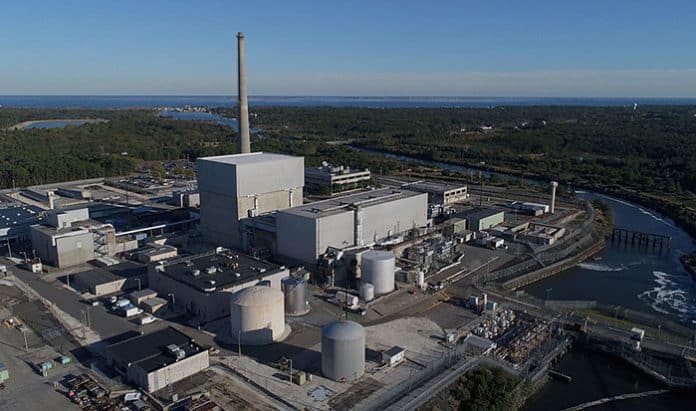
LACEY – Nearly seven years after Oyster Creek Nuclear Generating Station powered down for the last time, the focus has shifted from what was once the nation’s oldest operating nuclear plant to how its story will end.
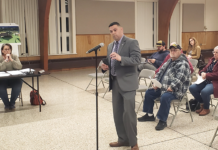
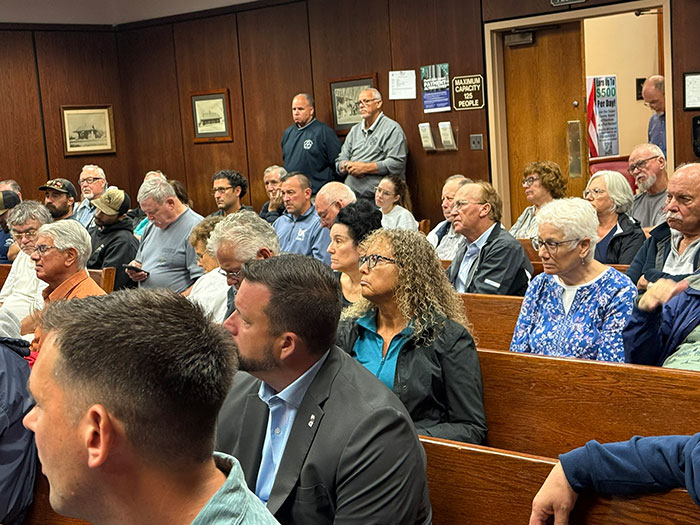
On September 17, local officials, residents, and regulators gathered at the Lacey Township Municipal Building, and online, for a meeting that delved deep into Oyster Creek’s License Termination Plan (LTP). With roughly 100 people participating, the session was part technical briefing and part listening forum.
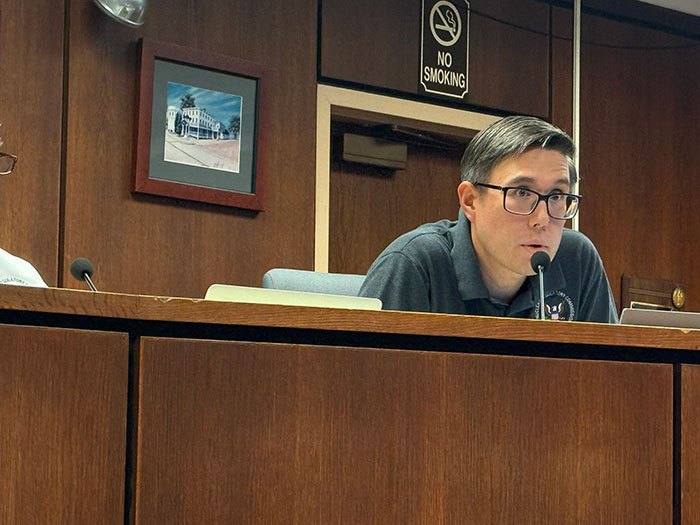
“We are interested in hearing your comments, or any comments or questions that you maybe have on the license termination plan, so that the staff can take that back as part of the review,” said Shaun Anderson, Deputy Director for the NRC’s (Nuclear Regulatory Commission) Division of Decommissioning, Uranium Recovery, and Waste Programs.
Amy Snyder, Senior Project Manager for reactor decommissioning at the Nuclear Regulatory Commission (NRC), began the hearing with an overview of the agency’s role in the Oyster Creek process. The NRC, she explained, has overseen 14 reactor closures and the cleanup of more than 80 other sites.
Holtec Decommissioning International (HDI) submitted Oyster Creek’s LTP, in August 2024 with supplements through May 2025. It details the remaining steps of the process, including site characterization, dismantlement of structures, environmental remediation, and a final radiation survey.
NRC’s lead decommissioning inspector Andrew Taverna explained the inspection process. “We look at whether site operations and license terminations are in conformance with their regulatory requirements, the licensing basis, and the commitments the licensee has made,” he said. “Our inspections can be invasive…we review maintenance, surveillances, radiation protection, transportation, and environmental monitoring programs. As the amount and complexity of decommissioning increases, so does our inspection effort, commensurate with the risk.”
Taverna added that his team creates annual inspection plans in advance, while also meeting with Holtec biweekly to track upcoming activities and adjust oversight as needed. Reports are issued within 30 to 45 days of each inspection, and any violations are addressed in accordance with NRC enforcement policy.
Spent Fuel Remains
While dismantlement can ultimately clear most of the 800-acre property, one part of the site will remain restricted: the Independent Spent Fuel Storage Installation (ISFSI). It is not included in Holtec’s LTP and will remain under NRC oversight.
By 2021, all of Oyster Creek’s fuel had been moved into steel-and-concrete dry cannisters stored at the ISFSI. These casks are designed to safely hold radioactive material for decades. But they were never meant to be permanent.
A national solution, long promised at Yucca Mountain in Nevada, remains politically deadlocked. Alternative interim facilities in states like Texas and New Mexico face lawsuits and strong local resistance. Without a federal repository, the NRC requires utilities to keep fuel on site.
“The NRC will continue to inspect the spent fuel periodically,” assured Anthony Dimitriadis, chief of the NRC’s Region I Decommissioning, ISFSI, and Reactor Health Physics branch. “As long as the fuel is there on site – and the licensee will maintain security and vigilance of the spent fuel.”
Under federal regulations, the spent fuel could remain where it is now well into the 2070s.
“So, Lacey Township is basically Yucca Mountain,” suggested local resident Alison Lemke, who said the community should be compensated for “babysitting” nuclear waste. “We should really be getting what Yucca Mountain was supposed to get, which was at least some sort of infrastructure funding, and also funding for our schools.”
Debate Over Past And Future
The meeting drew several elected officials and representatives. Lacey Township was represented by Mayor Peter Curatolo, Committeeman Robert Laureigh, and Administrator Veronica Laureigh. From neighboring Township of Ocean, Mayor Ben Loparo and Deputy Mayor Ken Baulderstone attended. Ben Giovine, Director of Intergovernmental Affairs for US Senator Andy Kim, also came to listen to NRC representatives and local residents voice their concerns.
Curatolo encouraged residents to continue to ask questions and submit comments to the NRC regarding the decommissioning process. Written comments on the plan may be submitted through the federal rulemaking website, regulations.gov, under Docket ID NRC-2025-0907; or by mail to: Office of Administration, TWFN-7-A60M, U.S. Nuclear Regulatory Commission, Washington, DC 20555-0001, Attention: Program Management, Announcements and Editing Staff. The deadline for filing comments is October 15.
“(Lacey Township) also wants to be a resource to you as a conduit through the NRC and Holtec,” said Curatolo. The mayor added that he also felt personally comfortable about how the decommissioning process had gone thus far and praised the open line of communication between all those involved in it.
The public comment session revealed a community grappling with both the plant’s past and its uncertain future.
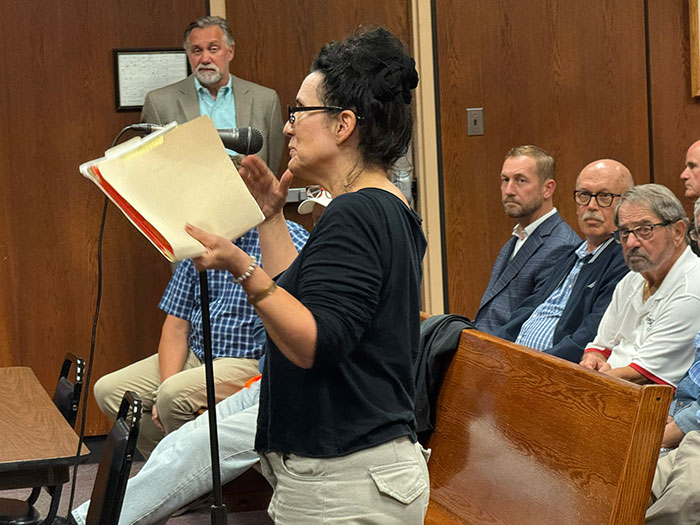
Waretown resident Steve Wassersug, with over 50 years in the environmental field, delivered prepared remarks. He expressed particular concerns about emergency response preparation. “This facility is not immune from potential disasters,” he said. “Especially given recent events like Superstorm Sandy and the Jones Road fire.”
“Lessons learned from unplanned disasters taught us not only must we be vigilant,” continued Wassersug. “But also create and test ‘what if’ scenarios.”
Environmental worries dominated much of the discussion. Several residents pointed to the fragility of Barnegat Bay and questioned what might happen if contaminants seeped into the groundwater or waterways.
Others saw the issue differently. A few questioned whether it was wise to let a site with existing nuclear infrastructure sit idle, particularly at a time when electricity costs dominate headlines.
That line of questioning echoed ongoing political debates about small modular reactors (SMRs). Earlier this year, lawmakers signaled support for exploring SMRs at Oyster Creek, touting them as a potential clean energy alternative. NRC officials stressed that the September 17 meeting was only about the LTP, not new reactors. While some residents suggested SMRs could bring jobs and safer nuclear technology, others insisted no new reactors should be considered until the legacy of the old plant is fully addressed.
Jeffrey Dostal, Holtec’s Site Vice President for Oyster Creek Nuclear Generating Station offered some reassurances in an exclusive interview after the hearing. “I want to assure the people of this community that Holtec is committed to finishing the decommissioning of Oyster Creek safely and with complete transparency,” he said. “We recognize the responsibility that comes with storing the spent fuel here, and we are doing everything in our power to ensure it remains safe, secure, and properly monitored until a national solution is developed.”
Dostal also underscored that he and many of Holtec’s employees live locally. “We don’t minimize the concern,” he added. “We live here, too. Many of our employees raise their families in this community. Our mission is to ensure Oyster Creek is cleaned up to the highest standards and that the fuel is managed responsibly until a national solution becomes available.”