BARNEGAT – The October 22 meeting of Barnegat Township’s Rent Leveling Board will most likely be its last. For residents of Pinewood Estates, the board’s final actions resulted in a much better outcome than they could have ever imagined.
What began as an anxious evening for Pinewood Estates residents, many of them seniors living on fixed incomes, ended with relief. Instead of the steep rent hikes they feared, the board’s deliberations produced an increase far smaller than expected.
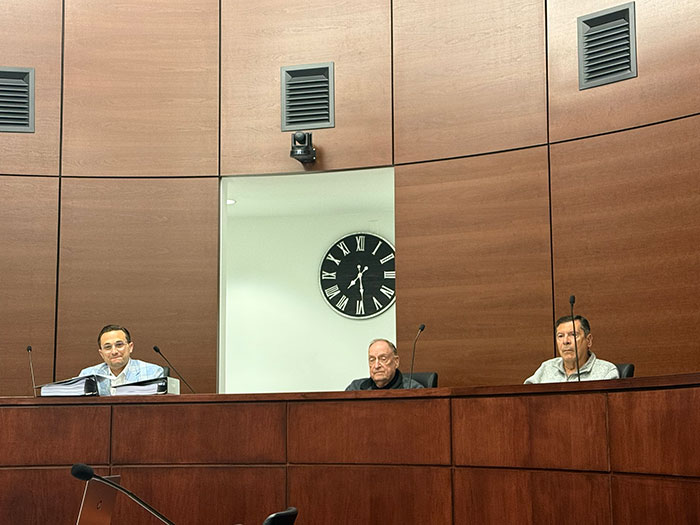
The session, conducted by Township Attorney Christopher Dasti, Deputy Mayor Albert Bille, and Township Administrator Martin Lisella, marked the conclusion of a local oversight process that will soon end due to changes in state law. The township’s rent leveling ordinance, which has long overseen rent adjustments in Barnegat’s manufactured home communities, expires at the end of this year.
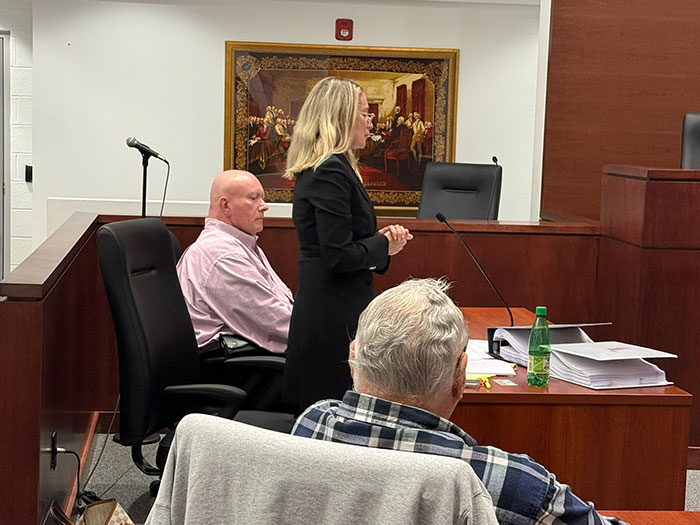
Attorney Nicole Tomlin spoke on behalf of Pinewood Estates Associates LLC and summarized her client’s application for approval of a utility and capital improvement rent increase. The August 29, 2025 application sought approval for a major capital improvement and utility improvement.
“Prior to coming before the board today, my client had the opportunity to meet and confer with the homeowners association,” said Tomlin. “A request has been made for a reduction in the amount of rent increased sought at this time, including the CPI increase, the tax increase and the utility and capital improvement increase.”
Tomlin added that her client ultimately agreed to limit the total adjustment to $45 per tenant, rounded to the nearest dollar. The original request, which sought over $138 in monthly utility surcharges alone, was reduced following discussions with the Pinewood Manufactured Homeowners Association. The revised amount includes $26.29 for utilities, $6.67 for capital improvements, and $12.04 for the Consumer Price Index adjustment.
Addressing Failing Infrastructure
William McGuire, regional manager for RHP Properties which owns Pinewood Estates, testified on behalf of the property owners. He explained that the increases stemmed from substantial and unavoidable repairs to aging infrastructure.
“The system was over 50 years old,” McGuire said. “It was a cinder-block built tank that had collapsed into itself.”
McGuire outlined the complex and costly process of replacing two septic systems that had reached the point of failure. During construction, new State Department of Environmental Protection regulations went into effect, requiring state permitting and halting work for more than three months.
“We were trying to put a football-field-size septic system in a postage-stamp lot,” McGuire said. “What would have been roughly an $80,000 repair turned into a replacement.”
In addition to the septic overhaul, McGuire said the company was required by the DEP to pump the system daily to prevent overflow during the delay period. He also described the replacement of galvanized water service lines, electrical upgrades, and other repairs that added to the overall expense.
Careful Review And Cooperation
Much of the credit for the night’s productive outcome went to Frank Belluardo, president of the Pinewood Manufactured Homeowners Association, who reviewed every line item and invoice related to the application before the meeting.
Belluardo spoke on behalf of the residents, describing his extensive review of the 1,700-page submission and confirming that he had verified the accuracy of each expense through records and correspondence with the DEP.
“It took quite a bit of time to do it,” Belluardo said. “I compared daily pumping records, contacted the DEP, and verified that the daily pumping was part of the job. Everything has been confirmed and acceptable.”
Deputy Mayor Bille publicly commended Belluardo for his diligence and professionalism.
“Your work on this has been exemplary,” Bille said. “You dig and dig, and the work you did was precise. I thank you for working with us.”
Bille also expressed his appreciation to Lisella, who he said had been phenomenally helpful in resolving the matter. “Both of us being in business understand the business point of view,” he added. “We also understand the tenant’s point of view.”
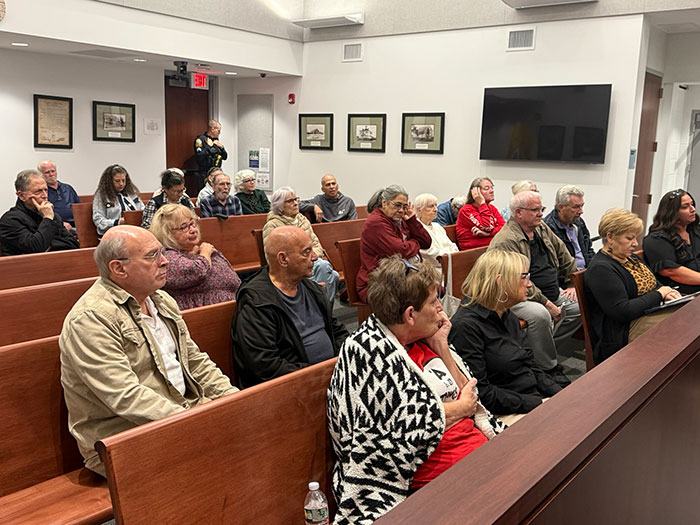
Residents’ Voices
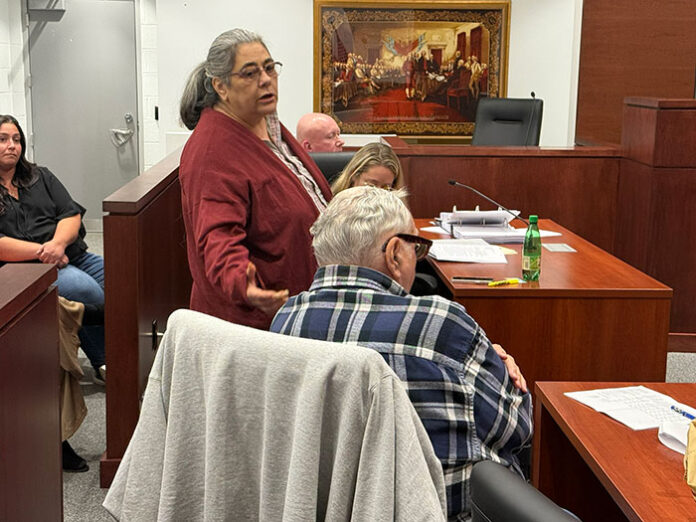
When the public comment portion opened, the tone shifted from tension to gratitude. Longtime Pinewood Estates resident Lorraine Ferraro, a familiar voice at township meetings, expressed appreciation for the resolution.
“I came here prepared to put up an argument on numerous issues,” Ferraro said. “But I just want to say thank you to RHP management, and much, much appreciation to Frank, who puts many, many hours into this. I just hope that since we will no longer have a Rent Leveling Board, RHP will continue to work with the homeowners in the future.”
John Bell, who has lived in Pinewood for a short time, said his lot rent has already increased dramatically. He held the original letter from Tomlin’s office asking for the original increase of $158. Bell learned that his rent would only go up by $45 and not to nearly $600 as he expected.
Afterward, Belluardo reflected on the effort it took to reach that point. “All I’m glad is it’s over and I can help the people,” he said. “That’s what I’m here for – to help the people.”
While the outcome of the October 22 meeting offered relief, it also signaled the end of an era. The township’s Rent Leveling Board will cease operations at year’s end, as New Jersey’s new statewide legislation (A3361/S2953) calls for a uniform 3-percent annual cap on rent increases for manufactured-home leases, unless higher adjustments are approved by the Department of Community Affairs.