LACEY – In the darkness of the Brooklyn-Battery Tunnel, Carol Mittelsdorf could hear the buzz of fluorescent lights, her flip-flops against the pavement and the tiny bells on an ankle bracelet she had decided to wear that morning.
She could not see her hand in front of her face. Thick white smoke filled the tunnel as she moved toward Brooklyn, keeping her bearings by sliding a ring along the tiled wall. Somewhere ahead, she saw the silhouette of a small woman with her arms stretched out.
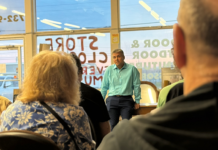
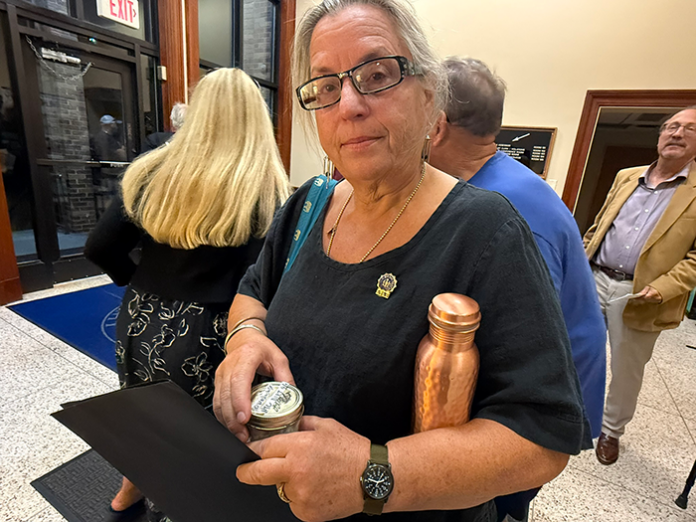
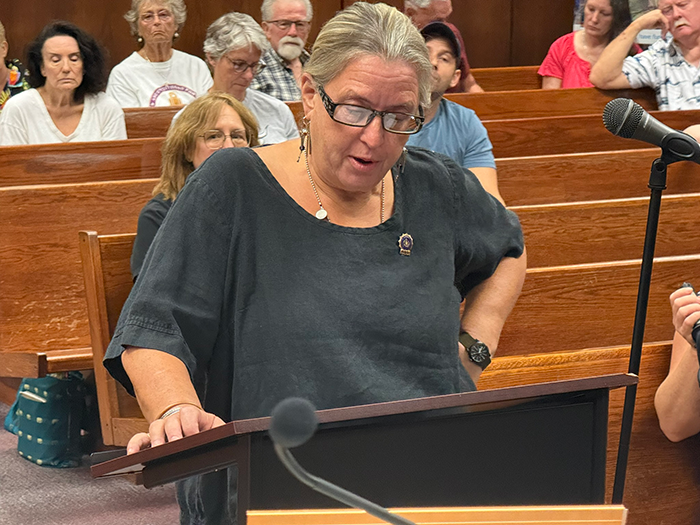
Twenty-five years later, Mittelsdorf, now a Lacey Township resident, stood during public comment at the September 10 Township Committee meeting and shared a story she had never told publicly. It was the night before the 25th anniversary of the terrorist attacks.
Mittelsdorf had not even told her sister that she planned to speak. Her words took those in the meeting room back to an ordinary commute that became what she called “the longest day.”
An Ordinary Morning
In 2001, Mittelsdorf lived on Staten Island and traveled by express bus into lower Manhattan. Her commute ended at the World Trade Center, one block from her office at 15 Maiden Lane.
Four days before the attacks, she attended a fundraiser at Suspenders Pub with Cantor Fitzgerald employees. She remembered a room filled with laughter, never imagining how many of those around her would be killed the following Tuesday.
“Unknowingly, I stood among everyday heroes,” Mittelsdorf said. “Looking back, I wished I had taken time to meet them all.”
On September 11, Mittelsdorf saw the first plane strike the World Trade Center as her bus passed through the toll plaza and entered the Brooklyn-Battery Tunnel. She called her mother, who was home in Lanoka Harbor. Then the bus entered the tunnel and her phone went dead.
A man across the aisle had an earbud connected to an AM radio and began shouting updates. The World Trade Center had been attacked. Then came word that the Pentagon had been hit.
The driver said he was not permitted to use the radio during the emergency. Then another voice broke through the bus’s public address system. “Out of the silence, haunting screams came through the bus’s PA system,” Mittelsdorf recalled. “The driver’s wife was somehow patched through. She was crying for her husband to ‘get out of there.’”
The passengers were trapped underground and underwater, with no clear understanding of what was happening above them. After nearly an hour in the tunnel, they could finally see the dim light of the exit. At that moment, Mittelsdorf said, the second tower exploded above them and chaos followed.
Mittelsdorf left the bus and stumbled through debris, wondering whether she was living through the final moments of her life. Rather than continue toward lower Manhattan, she turned around and headed back through the tunnel toward Brooklyn.
A Hand Reaching Through The Smoke
As Mittelsdorf made her way through the tunnel, she saw the outline of a small woman waving her arms. “I reached out for her, and she grabbed my arm with a vice-like grip,” Mittelsdorf said.
The woman was 80 years old, legally blind and recovering from triple-bypass surgery. She had become separated from her aide and the ambulance taking her to a follow-up appointment.
Mittelsdorf told her there was nothing to see through the thick white smoke. When she asked if the woman was afraid, the answer stayed with her. “She said she was a Holocaust survivor, and nothing scared her anymore,” she recalled.
The two shuffled through the tunnel until Mittelsdorf saw a golf cart carrying firefighters. She flagged them down and got the woman a ride but never learned her name or what happened to her afterward.
It took Mittelsdorf almost two hours to reach Brooklyn. Covered from head to toe in dust, she sat at the Red Hook toll plaza without cell service or a way home. When the Red Cross arrived, she began handing out water to firefighters.
She later learned that FDNY firefighter Stephen Siller had run through the same tunnel toward the World Trade Center, where he was killed. Mittelsdorf eventually accepted a ride from strangers and reached her Staten Island home at approximately 5 p.m.
“By the grace of God, I made it back home exhausted and filthy,” she said. “But I will never forget.”
Returning To A War Zone
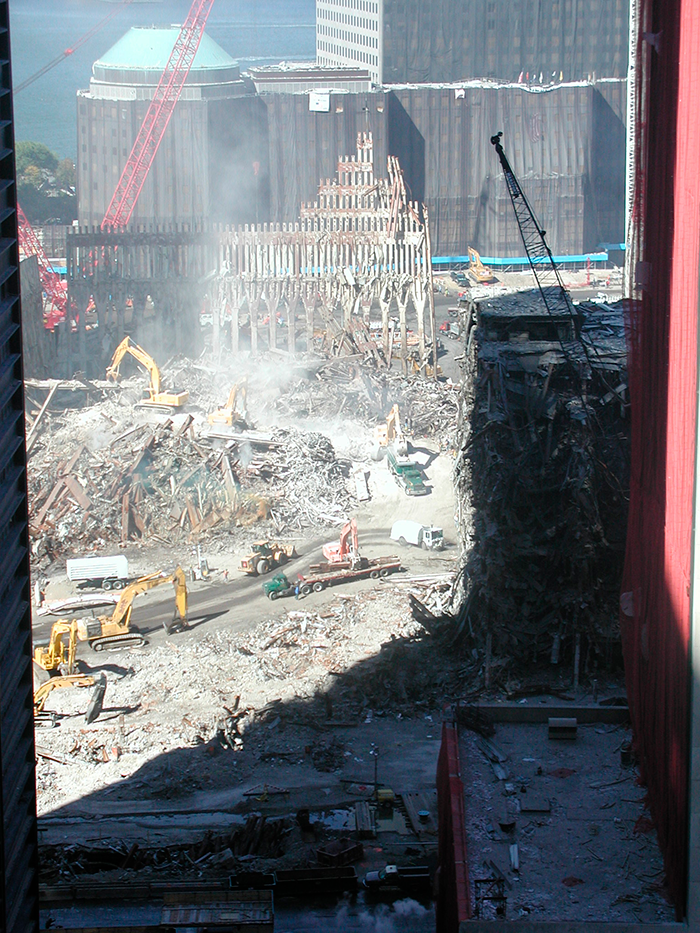
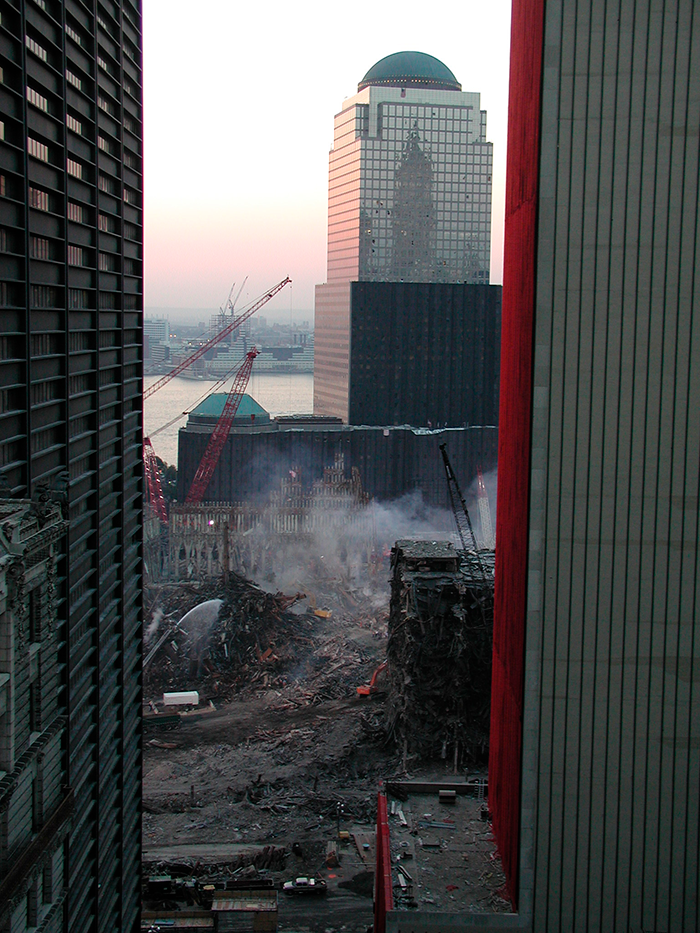
Mittelsdorf returned to her office days later and found what she described as “a literal war zone.” Walls and poles around Ground Zero were covered with photographs of missing people, their numbers multiplying by the hour. She and others trudged through rubble for weeks to get to work.
The images that stayed with her were remnants of ordinary lives interrupted without warning. She remembered “MORGUE” spray-painted on the walls of a Burger King and Brooks Brothers. Outside her office, a car with a baby seat and an empty can of Pringles never moved. A messenger’s bicycle remained chained to a signpost at Broadway and Maiden Lane.
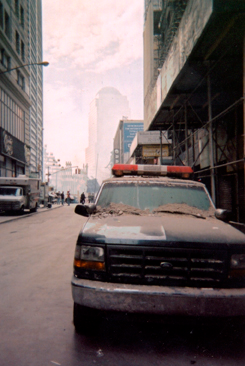
She watched a SWAT team unload automatic weapons beside a Snapple truck delivering tea near the stock exchange. A week later, hotel bellboys pushed piles of unclaimed suitcases into FedEx so they could be returned to families of guests who never came back.
The smell clung to lower Manhattan. Mittelsdorf placed lavender inside her mask to make it bearable and said she still cannot tolerate the scent. She is enrolled in a federal 9/11 registry and has experienced health problems connected to 9/11, though she prefers to keep the full details private.
“I’ll never forget the sounds, the smells, the thousands of pieces of paper, the clouds and piles of dust,” she said.
Ground That Will Always Be Sacred
The losses continued long after September 11. Roland “Tony” Gray, an NYPD detective whom Mittelsdorf described as the love of her life, worked on the pile at Ground Zero and later died of cancer.
Her friend and former coworker John Holloman emerged from the subway as the second plane struck and witnessed people falling from the towers and others killed by debris. Mittelsdorf said he never returned to work. Her best friend, Maryalice Cassidy, who also lived in Lacey before her death, had begun working at the Federal Reserve Bank of New York one day before the attacks.
Mittelsdorf thinks of the families who continue returning to the World Trade Center site, standing silently near the last places their loved ones were known to be. “The ground of the World Trade Center will always be sacred for me,” she said. “It became hallowed ground that day. All our lives changed forever in an instant.”
For 25 years, Mittelsdorf carried the sound of those tiny bells, the stranger’s grip and the sight of a city covered with the faces of the missing. On the night before the anniversary, she finally allowed others to carry part of that day with her.
“We won’t forget because we were there,” she said before naming Tony, John and Maryalice. “May they all rest in peace.”