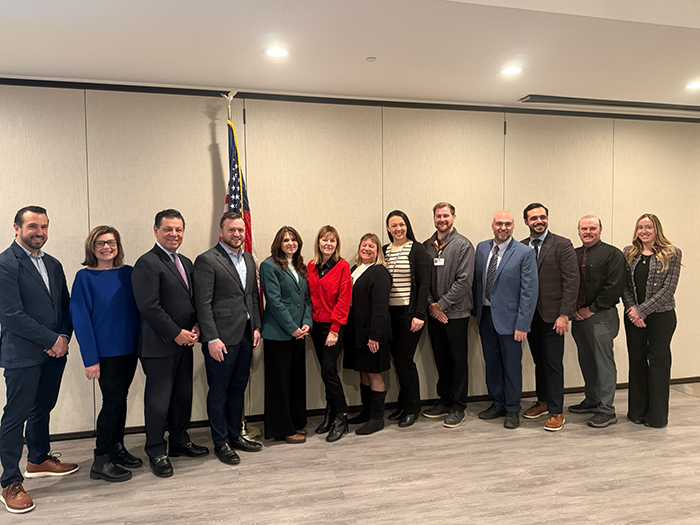
STAFFORD – The Southern Ocean County Chamber of Commerce gathered local business leaders, elected officials and law enforcement representatives for its 118th State of the Chamber address at The Mainland Kitchen & Pub. Participants heard perspectives on everything from state regulation and workforce training to public safety and environmental rules reshaping coastal development.
Blaise Scibetta, introduced by Chamber President Lori Pepenella as the chamber’s economic outreach director and 2026 board facilitator, opened the program by welcoming attendees and setting the tone for a morning focused on challenges and opportunities facing Southern Ocean County.
Assemblyman Greg Myhre (R-9th) offered a state-level look at how regulation and taxation affect local commerce, arguing that New Jersey’s business climate has contributed to residents and employers leaving the state.
“New Jersey is highly regulated,” Myhre said. “In fact, I think it’s probably more needlessly regulated states in the entire country.”
He pointed to the sheer volume of legislation introduced in Trenton and warned that businesses struggle to keep pace with constant policy changes. “Small businesses are the backbone of our economy,” Myhre said. “Government really needs to do their part to get out of the way and allow these businesses to flourish.”
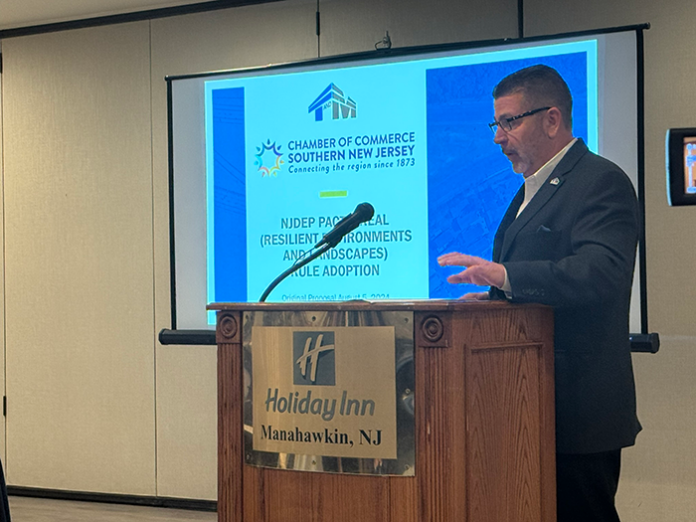
Ocean County Commissioner Director Frank Sadeghi expanded on those concerns at the county level, warning that newly adopted state environmental regulations could have sweeping consequences for coastal communities and the regional economy.
“I think this is going to be devastating to the economy of Ocean County,” Sadeghi said, referring to revised Department of Environmental Protection rules affecting properties in coastal and flood-prone areas.
Sadeghi said the rules would affect not only homeowners but also municipalities and businesses that rely on redevelopment and infrastructure investment. He added that Ocean County plans to join other counties challenging the regulations.
The keynote address came from Kris Krzyston, Vice President and Environmental Regional Consultant for T&M Associates, who outlined newly adopted New Jersey Department of Environmental Protection regulations and their potential impact on business and development.
“This rule was adopted nine days ago,” Krzyston said. “I’ve had to spend the last week reading five sets of rules to try and understand… what are the key highlights.”
He explained that the changes would raise required building elevations and expand flood hazard and coastal review areas.
“Your houses are going to have to be above five feet… above the FEMA flood elevation,” he said. Krzyston warned the rules could reduce the amount of land available for development and drive up construction costs.
“It’s going to decrease development in the state of New Jersey,” he said. “It’s going to impact the cost of everything that happens.”
Infrastructure and energy reliability were also part of the discussion, with remarks from Shayla Salter of Atlantic City Electric, which sponsored the event.
Salter spoke about the utility’s role in supporting business districts and coastal communities, particularly as weather patterns and regulatory requirements place increasing demands on the power grid. She addressed the importance of system upgrades, storm preparedness and coordination with local governments to reduce outages and speed restoration when severe weather strikes.
Her remarks tied infrastructure planning directly to economic stability, noting that reliable electric service is essential for small businesses, public safety operations and municipal services, especially in a region where seasonal tourism and coastal exposure amplify the consequences of service disruptions.
Public Safety And The Cost of Crashes
Public safety was another theme woven into the program, with Stafford Township Police Chief James Haldenwang focusing on the connection between safety and commerce. “People support businesses when they feel safe,” Haldenwang said. “Public safety is about people.”
He told attendees that policing is not simply about enforcement, but about recognizing the humanity behind most encounters.
“Most of the people that I arrested… were just people, people who made a mistake,” Haldenwang said, explaining that law enforcement often deals with neighbors, friends and family members rather than hardened criminals.
He said real progress comes from accountability paired with compassion. “We can’t fix the human condition, but we can make a difference,” he said, describing moments when people he once arrested later returned to thank him for helping redirect their lives.
He said modern policing depends on balancing authority with communication and restraint. For local businesses, Haldenwang said, that trust translates directly into a sense of security that allows communities and commercial districts to thrive.
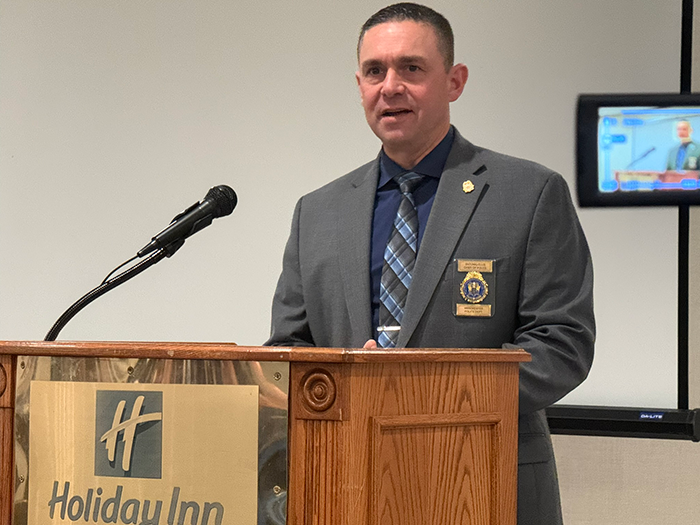
Manchester Police Chief Antonio Ellis approached the issue from an economic and traffic-safety perspective, outlining how crashes affect not only families but also the regional economy.
“Motor vehicle crashes carry significant financial costs,” Ellis said, citing medical care, insurance premiums and lost productivity.
He noted that Ocean County experienced a sharp rise in fatalities last year.
“In Ocean County, in 2025 we had 63 fatalities,” Ellis said. “A 25 percent increase from 2024.”
Ellis said those crashes ripple outward through business operations and daily commerce. “Traffic closures can cause road detours, congestion, delay of delivery and employee commuter times,” he said, adding that disruptions can limit access to local businesses and slow the movement of workers and customers.
“Traffic safety is not just a public safety issue,” Ellis said. “It’s an economic stability issue,” linking roadway conditions directly to workforce reliability, tourism and consumer confidence.