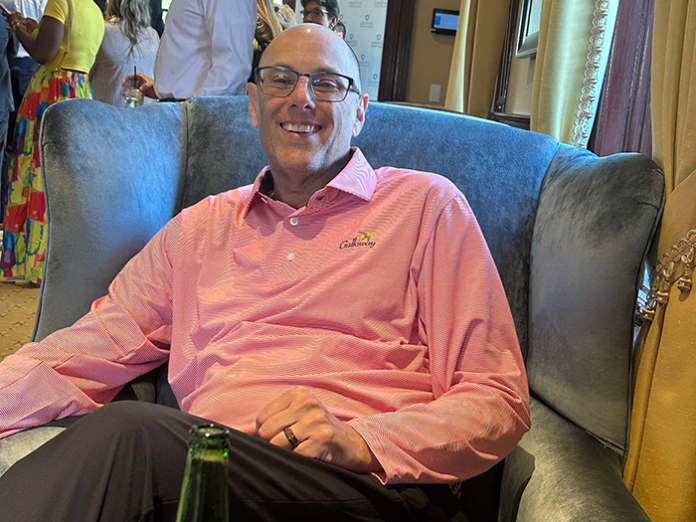
MANAHAWKIN – For most of his career, Jay Greco has stood on the other side of the pharmacy counter, helping people understand their medications, manage illnesses and afford their care. Now, the 57-year-old Manahawkin resident and owner of Jersey Shore Pharmacy in Barnegat is the one waiting for help.
Asked what frightens him most about living with a failing liver, Greco’s voice grew emotional as he answered: “Having an expiration date.”
Just weeks earlier, Greco said doctors gave him a stark assessment. Without a liver transplant, he could die within two to four years. The disease is already taking away pieces of the life he built around his family, including a 10-month-old grandchild and another grandbaby on the way.
Greco is searching for a healthy adult willing to donate a portion of their liver. Potential donors can begin the confidential screening process through a link established specifically for him. Completing the questionnaire does not commit someone to donation. Medical professionals determine whether proceeding would be safe.
For Greco, asking publicly does not come easily. He is accustomed to being the person others turn to for help. Asked why he was willing to share his ordeal, the answer again came down to a few words: “I need to. I need to live.”
A Career Built Around Helping Others
Greco said a family friend in the pharmacy business sparked his interest in the profession, leading to a career built around caring for people and forming lasting relationships.
He owned Medicap Pharmacy in Barnegat from 1999 until 2007 and has owned Jersey Shore Pharmacy since 2009. He chose to work independently rather than follow policies created by corporate executives removed from the pharmacy counter.
At Jersey Shore Pharmacy, service begins with recognizing people. “We know your name as soon as you walk in the door,” Greco said. Over the years, he has watched children grow into adults and served multiple generations of local families.
His commitment to community health also led him to Coastal Volunteers in Medicine, where he serves as board vice chair. The nonprofit operates a free, nonemergency primary-care clinic in Forked River for qualified Ocean County adults without health insurance. When medications cannot be obtained through grants or other assistance programs, Greco helps provide them at cost.
The work has opened his eyes to the barriers that prevent some from receiving care. “The amount of people that live and work here that are either underinsured or uninsured is astronomical,” he said.
Greco’s illness has now placed him on the other side of the health care system. “It’s definitely a twist of fate where I went from being the primary caregiver to the one needing care,” Greco said. “When you need something, you don’t want to wait.”
A Disease With Few Early Warnings
Routine blood tests first revealed that Greco’s liver enzyme levels were abnormal. He had no symptoms, and doctors monitored him for approximately two years. Around Easter, the disease progressed to decompensated cirrhosis, meaning his badly scarred liver could no longer function adequately.
Greco said his cirrhosis developed from metabolic dysfunction-associated steatotic liver disease, known as MASLD and formerly called nonalcoholic fatty liver disease. MASLD often produces no symptoms in its early stages, according to the Mayo Clinic.
In some patients, it progresses to inflammation and permanent scarring. Advanced cirrhosis can cause abdominal fluid buildup, bleeding from enlarged veins in the esophagus, confusion, liver cancer and end-stage liver failure.
Greco undergoes weekly procedures to remove fluid from his abdomen, a condition called ascites. By the time he is due for the procedure, he becomes short of breath. He has also undergone a procedure to treat an enlarged vein in his esophagus and reduce the risk of life-threatening bleeding.
The disease has caused considerable weight and muscle loss. Greco’s weight has fallen from more than 240 pounds to as little as 188 pounds, depending partly on fluid accumulation. He no longer uses his rowing machine or takes walks, and golf is one of the few activities he has tried to retain. Despite his declining health, he continues working five days a week at the pharmacy.
The Limits Of The Waiting List
Greco is completing the evaluations necessary to be placed on the deceased-donor waiting list. However, doctors have warned that waiting for a deceased donor may not be his best chance.
A MELD score uses laboratory results to measure the severity of liver disease and help determine a patient’s priority on the transplant waiting list. Greco said his score is 17 on a scale that reaches 40.
That presents a painful contradiction. “I’m not as sick as some people that also need a liver,” he explained. “So, if a deceased liver comes in, the chances of me getting it are very slim.”
A transplant from a living donor could happen sooner and be scheduled before Greco’s health declines further. It is possible because the liver can regenerate. Surgeons transplant a portion of a healthy donor’s liver into the recipient, and the donor’s remaining liver and the transplanted portion can regenerate after surgery.
The family’s online portal indicated that 17 submitted screening questionnaires during the first week of the search, but it does not disclose their identities or screening results. That does not mean that any of the 17 are qualified as potential donors. Cheri had hoped to become her husband’s donor but was unable to qualify for medical reasons. “I would do it tomorrow if I could,” she said.
“We Can’t Lose Him”
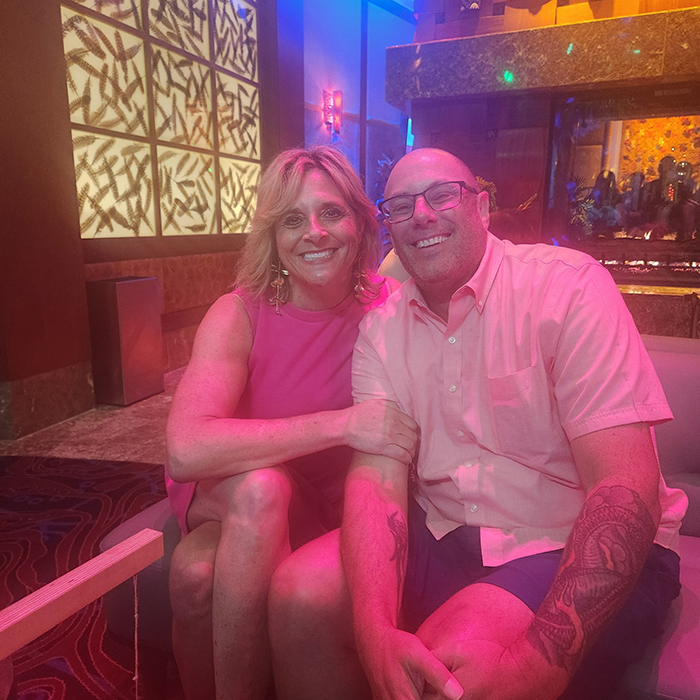
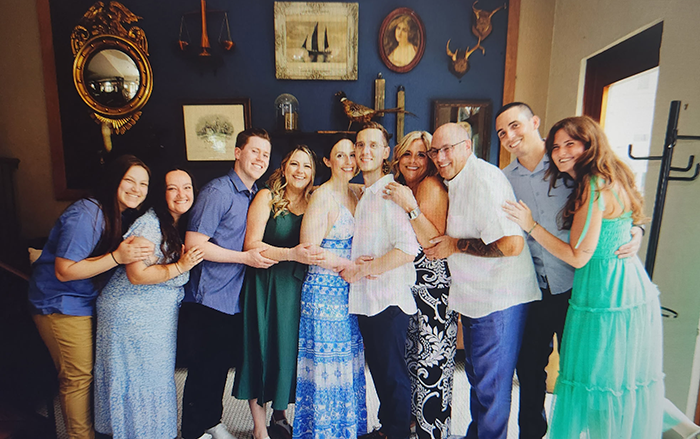
Jay and Cheri have been together for years and will celebrate their eighth wedding anniversary in August. It is a second marriage for both, bringing together four children ranging in age from 20 to 33.
Cheri watches as the funny, strong and energetic man she knows becomes unable to maintain his usual pace. “It’s just hard,” she said, struggling to discuss the possibility of losing him. “Scared to death. Scared to death. We can’t lose him.”
Asked which ordinary moments he most wants the chance to experience, Greco did not mention the pharmacy, golf or any grand ambition. “My grandkids,” he said.
The family hopes Jay’s story reaches a healthy stranger willing to learn more. A potential donor does not need to know him personally, and people unable to donate can help by sharing his appeal. Those interested can click here.
Cheri put the family’s hope more simply: “We need to find an angel who will save his life.”
If you would like to help, click here.