WARETOWN – Before a single fishing line sailed toward its target, the first lesson of the day had nothing to do with catching fish.
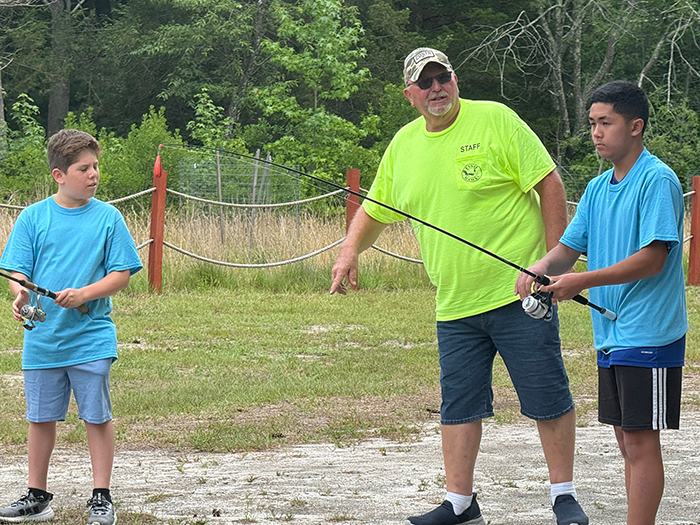
“Be careful,” a volunteer reminded a group of youngsters gathered around practice rods. “You don’t want to hook your friend in the head.”
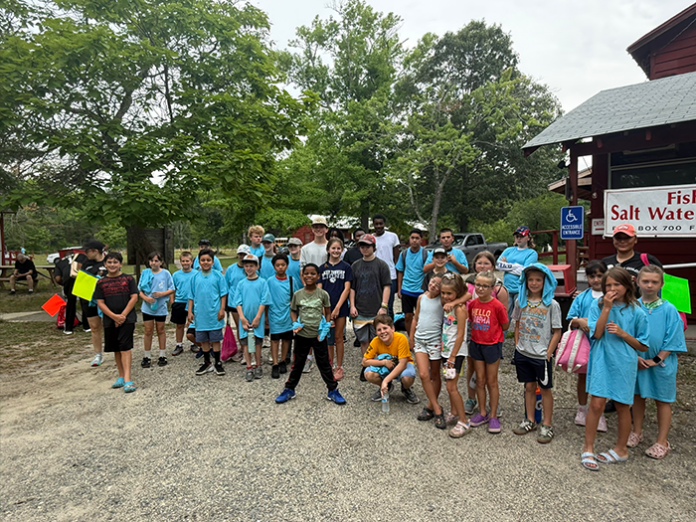
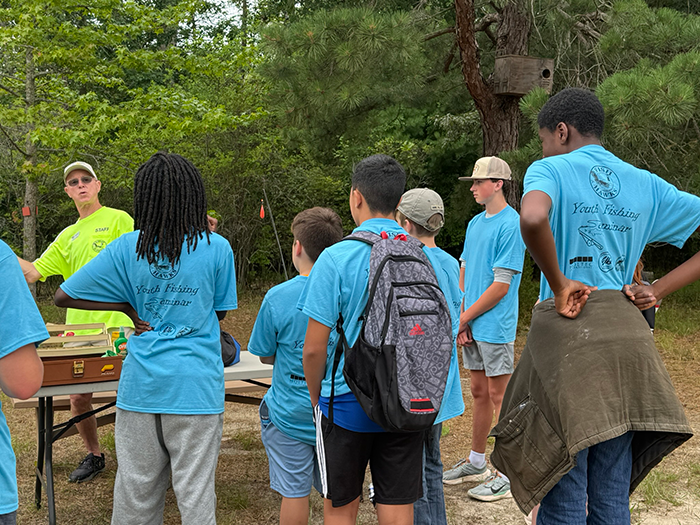
Within minutes, laughter replaced nervousness as nearly 40 children from Joint Base McGuire-Dix-Lakehurst spread across the grounds of the Lighthouse Center for Natural Resource Education. Some headed for an open field where oversized hula hoops served as casting targets. Others gathered around picnic tables to learn fishing knots, while another group made its way indoors for boating safety instruction.
For the volunteers with the Fish Hawks Saltwater Anglers Club, the annual Youth Fishing Seminar is about much more than teaching children how to catch fish. It’s an opportunity to introduce military children to the outdoors while passing along skills, confidence and a lifelong appreciation for New Jersey’s coastal waters.
Held July 11, the annual seminar welcomed children whose parents are stationed at Joint Base McGuire-Dix-Lakehurst for a full day of activities that blended recreation with education. The Fish Hawks, whose charter was established in Forked River in 1977, have hosted the military youth program since 2011, relying on dozens of volunteers to keep each station running smoothly.
“The first one we’re going to do is called the Palomar knot,” one instructor explained while slowly demonstrating each step.
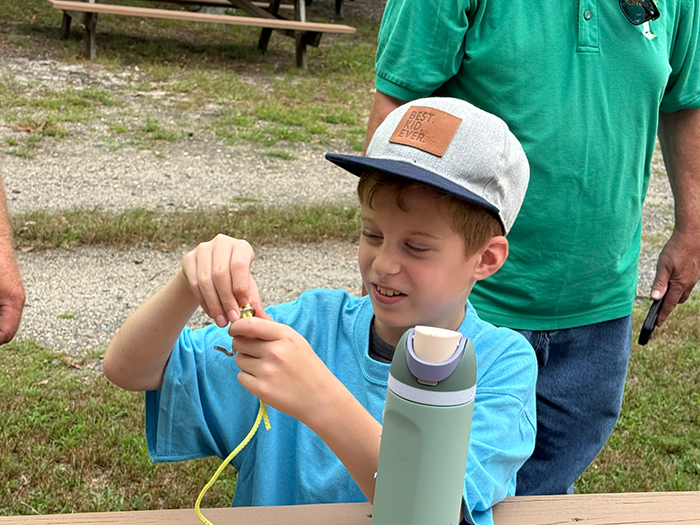
Some of the youngsters caught on almost immediately. “You did it already?” one of the Fish Hawk volunteers laughed after spotting a child who had mastered the knot before the lesson had even ended.
Nearby, other instructors walked the children through the fisherman’s knot, encouraging them to repeat the process until tying it became second nature. Volunteers moved from child to child offering tips, adjusting lines and making sure no one was left behind.
Before anyone picked up a rod, instructors emphasized the importance of looking behind them before casting and being aware of nearby people and trees. “I’ve been fishing my whole life,” one instructor admitted with a smile. “You don’t know how many times I’ve cast into a tree.”
Safety was woven into nearly every activity. The club even brought both left- and right-handed rod-and-reel combinations so every participant could learn with equipment that felt natural.
Inside the Lighthouse Center, members of the U.S. Coast Guard Auxiliary taught the basics of boating safety. The children learned about different types of Coast Guard-approved life jackets, how they should fit and why wearing the proper flotation device can save a life. Many eagerly tried on life vests as volunteers explained the importance of being prepared before ever stepping aboard a boat.
Another popular stop featured a table filled with locally caught fish. Volunteers introduced youngsters to species commonly found in New Jersey waters before demonstrating proper cleaning and filleting techniques. The station gave participants a close-up look at fish anatomy while teaching them what happens after a successful day on the water.
The day also included arts and crafts, turtle presentations and other nature activities that complemented the fishing instruction and kept the children engaged throughout the afternoon.
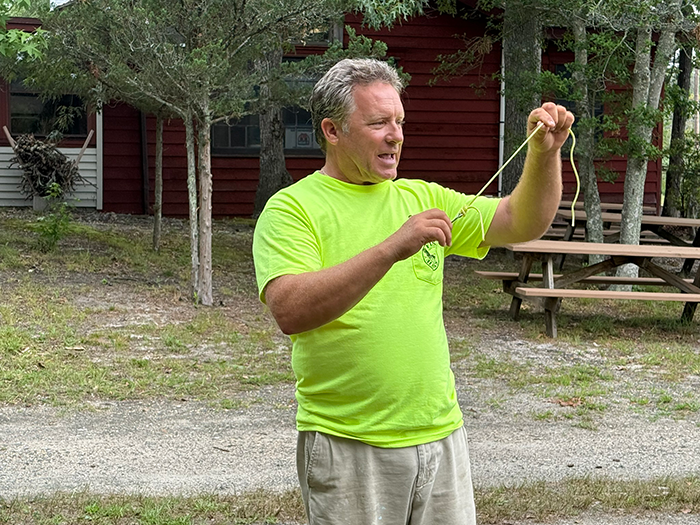
Helping coordinate the event was William Crockett, known to the children simply as “Mr. Will.” A former Army serviceman, Crockett now works as a civilian employee with the Department of Defense overseeing school-age care and youth recreation programs for military families. His easygoing manner and familiarity with military life made him a natural fit for guiding the children through the day’s activities.
By the time the final rotations ended, the children had learned far more than how to tie knots or cast a fishing line. They left with a better understanding of boating safety, fish identification and conservation, along with the confidence that comes from mastering something new.
Each participant also received a rod-and-reel combination, a fully stocked tackle box and an event T-shirt, ensuring they could continue practicing their new skills long after the seminar ended. They also carried home something far less tangible that couldn’t fit inside a tackle box. Just as importantly, each left knowing there were dozens of volunteers willing to spend an entire Saturday investing in them.
For the Fish Hawks, the day’s biggest accomplishment wasn’t measured by how accurately the children cast a line or tied a knot. It was spending time with military youngsters whose lives often include frequent moves and changing schools while their parents serve the country, and giving them skills and memories they can carry wherever those next orders take them.