LACEY – Two consolidated lawsuits aimed at stopping construction of a QuickChek gas station and convenience store on North Main Street were dismissed earlier this month – but another legal fight could still bring the project to a halt. And for many of those involved, it’s not just about zoning codes or development – it’s also about preserving Lacey’s history.
After reviewing written briefs and hearing oral arguments, Superior Court Judge Francis R. Hodgson issued a decision on July 10 saying he found no legal basis to overturn the board’s 2024 approval of the site plan for 101 North Main Street. The lawsuits – filed by Joanne Grant and the Charles A. Smith Memorial Association, along with a similar suit from Ramdut Seaside, LLC – alleged procedural, jurisdictional, and substantive flaws in the approval process.
Judge Hodgson disagreed, stating, “No evidence has been offered establishing that the board decision was arbitrary, capricious or unreasonable.” He emphasized that the property was already subject to a longstanding cross-access agreement with the adjacent library and that the proposed plan did not involve new construction or changes to the library property.
He also addressed concerns about public notice, ruling that notice requirements were “in substantial compliance” with state land use law and that there was no need to notify owners surrounding the library since no changes were proposed there.
While the plaintiffs argued that the applicant, 101 North Main LLC, lacked proper standing as only a contract purchaser, Hodgson concluded the company had sufficient legal interest to seek approval. He cited existing case law that recognizes contract purchasers as eligible applicants under New Jersey’s land use statutes.
The judge also dismissed claims that the zoning board failed to justify granting variances for parking, landscaping buffers, and signage. He found the board’s resolution, while brief, reflected a “reasonable acceptance of expert proofs” and that any deviations from township requirements were either minor or mitigated.
The court’s decision concludes, “Plaintiffs’ application for vacation of the board’s approval is denied. The complaint is dismissed with prejudice.”
A Different Legal Angle
In January 2025, the attorneys for Joanne Grant and the Charles A. Smith Memorial Association filed a separate lawsuit. The legal documents allege that the developer never had the legal authority to submit its zoning application in the first place.
That case, now before Superior Court Judge Valter H. Must, alleges that the Township’s sale of the property to 101 North Main, LLC was improper – and that at least part of the land shouldn’t have been sold at all.
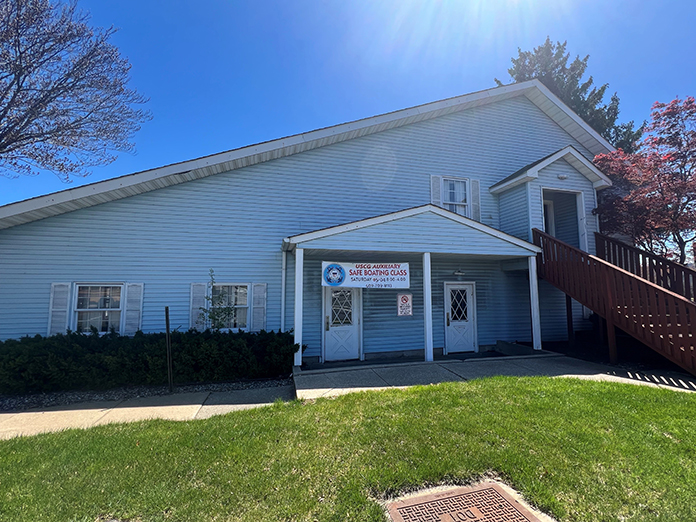
Plaintiffs’ attorney R.S. Gasiorowski argues that a portion of the land sold to developer Michael DeGeorge, principal of 101 North Main, LLC, was originally donated to the Township by the Charles A. Smith Memorial Association in 1934. The donation, funded by a $15,000 trust in the will of Gilded Age philanthropist and Freeholder Charles Arthur Smith, came with specific restrictions for use as a public community center. The lawsuit claims that permitting a gas station and convenience store violates those original terms.
Additionally, the suit contends that the decades of public use on the land established a “public dedication” – a legal status that can only be undone through a formal ordinance and proper public notice. According to the complaint, that never happened.
The plaintiffs also challenge the public bidding process used in the sale. They allege that the Township improperly altered the terms of the sale after bids were submitted and awarded the contract unfairly.
Opponents say the sale not only breaks the law but disregards the site’s deep historical significance to Lacey residents.
In response, both the developer and Lacey Township filed motions for summary judgment, asking the court to dismiss the case without a full trial.
Gasiorowski filed a cross-motion for summary judgment on behalf of the plaintiffs in June. Judge Must is scheduled to hear oral arguments on August 1, 2025, and will determine whether any part of the lawsuit will proceed or be dismissed.
Historic Buildings
While the legal arguments are technical, the motivation behind the continued legal action is deeply personal for many in the community – particularly local historians and preservationists.
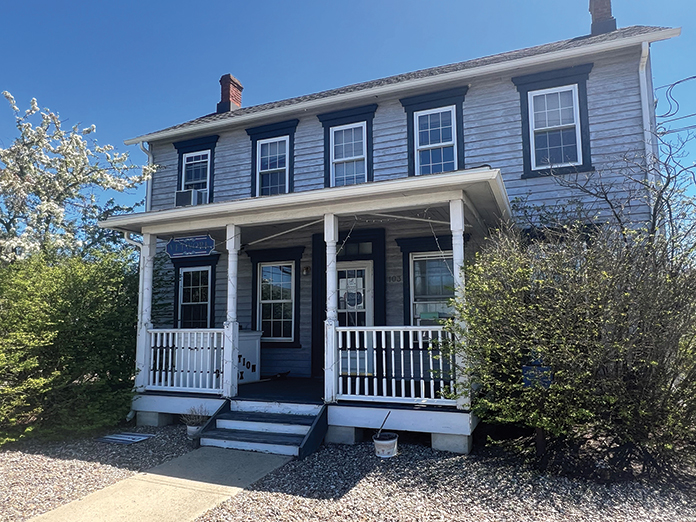
If the QuickChek project moves forward, opponents argue that two of Forked River’s most historic buildings will be demolished. In addition to the Charles A. Smith Memorial Community Hall, the Worden House would come down. Officials have said there is considerable damage to the interior of the structure.
Built in 1850, the Worden House originally stood elsewhere and was relocated in 1982 to its current spot next to the community hall. It was built by Jacob A. Vaughn for his son, a Civil War survivor who endured ten months in Andersonville prison camp. Later, the house was owned for 50 years by Benjamin Burd Worden, a Forked River stationmaster and telegraph officer.
Preservation advocates point out that the Worden House was included in Ocean County’s 2005 historic structure inventory and listed as having “HIGH remaining historic fabric.” State preservation officials also took notice. Dorothy P. Guzzo, then Deputy State Historic Preservation Officer for New Jersey, wrote that the Worden House is eligible for the National Register of Historic Places.
Opponents of the project argue that demolishing these landmarks would erase a vital part of the town’s heritage. They maintain that their legal fight is not simply about stopping a gas station – but about protecting Forked River’s history.
What’s Next
Although the original lawsuits were dismissed with prejudice, that doesn’t mean the legal options are exhausted. Under New Jersey law, plaintiffs have 45 days from the date of dismissal to file an appeal with a higher court. A dismissal with prejudice means the case cannot be refiled in the same court, but an appellate court can still reverse or modify the ruling.
The upcoming August 1 hearing before Judge Must will determine whether the court finds merit in any of the three summary judgment motions filed by the plaintiffs, the Township, or the developer.
If the judge rules in favor of the plaintiffs, the zoning board’s approval could be invalidated. If the court sides with the Township or developer, the project could move forward – and the buildings could be lost in the process.
Notwithstanding, there’s nothing stopping any of the parties from pursuing an appeal if they disagree with the second judge’s ruling.
For now, the case stands at the intersection of legal procedure and local legacy – with the future of both the QuickChek and a chapter of Forked River’s past hanging in the balance.