LACEY – Forked River resident Melissa Loutas did not set out to become a voice for suicide prevention. It is a role she stepped into after loss kept finding its way too close to home.
For Loutas, the work began long before she founded Helping Assist with Melis as a nonprofit, and before suicide prevention became its central mission. It began with grief layered upon grief, and with a period of quiet unraveling she now speaks about openly.
In July 2020, her father died of stage four cancer on his 60th birthday. The loss followed years of watching him battle the disease and left her emotionally unmoored.
“I was grieving in a way I didn’t expect,” Loutas said. “I wasn’t suicidal, but I was in a very dark place.”
At the same time, she and her husband were preparing to adopt a baby. Two weeks before the child was due to be born, the baby died in utero. The loss was sudden and devastating, magnified by the reality that the child’s death was connected to addiction and violence.
“I was grieving my dad, and then I was grieving a child that wasn’t mine, but felt like mine,” she said. “It was too much at once.”
Looking back, Loutas describes that period as a crossroads. She could retreat inward, or she could look outward.
“I needed an outlet,” she said. “And the only way I knew how to survive it was to help someone else.”
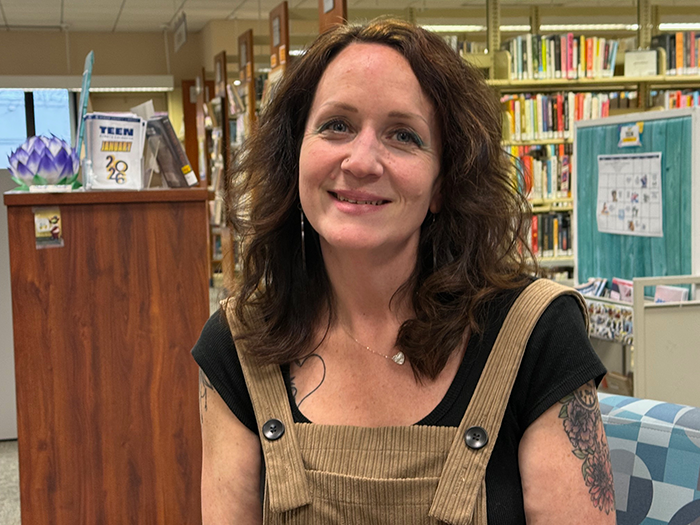
A Nonprofit Born From Personal Loss
Helping Assist with Melis grew organically, rooted in relationships and need rather than formal planning. Loutas began organizing small efforts: haircuts for people experiencing homelessness, food deliveries, and other quiet acts of service carried out by volunteers who shared her belief that dignity matters.
She officially established the nonprofit last year, but the work itself had been unfolding for years. Her approach was intentional. Loutas does not pay herself. Her volunteers, including licensed beauticians and barbers, also donate their time. Local businesses donate food for distribution.
“This is not a paid position,” she said. “I don’t want to be paid to help people. None of my volunteers want to be paid either. This is about heart.”
While the nonprofit provides a range of practical assistance, suicide awareness emerged as its defining focus only after tragedy struck closer than Loutas could have imagined.
In the span of two years, three local teens died by suicide. All were students in the Lacey School District. “I personally knew all of them,” Loutas said. “And when that happens, you don’t just grieve. You feel responsible to do something.”
The first was Daniel Watkins, a 17-year-old Lacey High School senior who died on Nov. 26, 2023.
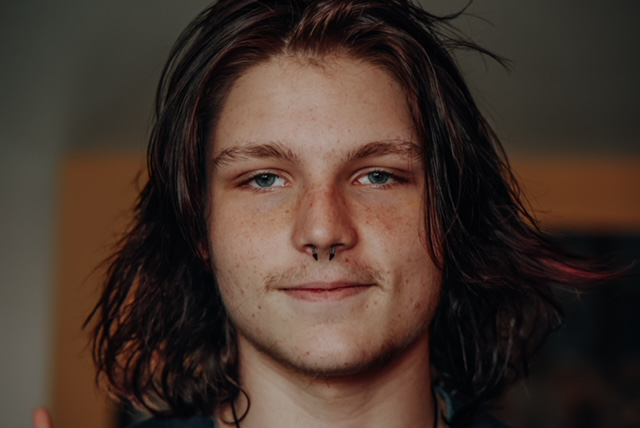
Loutas had known him since birth. She had babysat him. She knew his family and the challenges he faced growing up that shaped his sense of self-worth.
“I used to watch him as a little boy,” she said. “He was part of my life.”
On March 3, 2024, Chelsea Diehl, a middle school student, also died by suicide. She was a friend of Loutas’ daughter and had spent time in their home. While Loutas knew Chelsea’s parents casually before her death, that relationship deepened afterward.
“I became very close with her mom and dad,” she said. “You don’t move on from something like that. You carry it.”
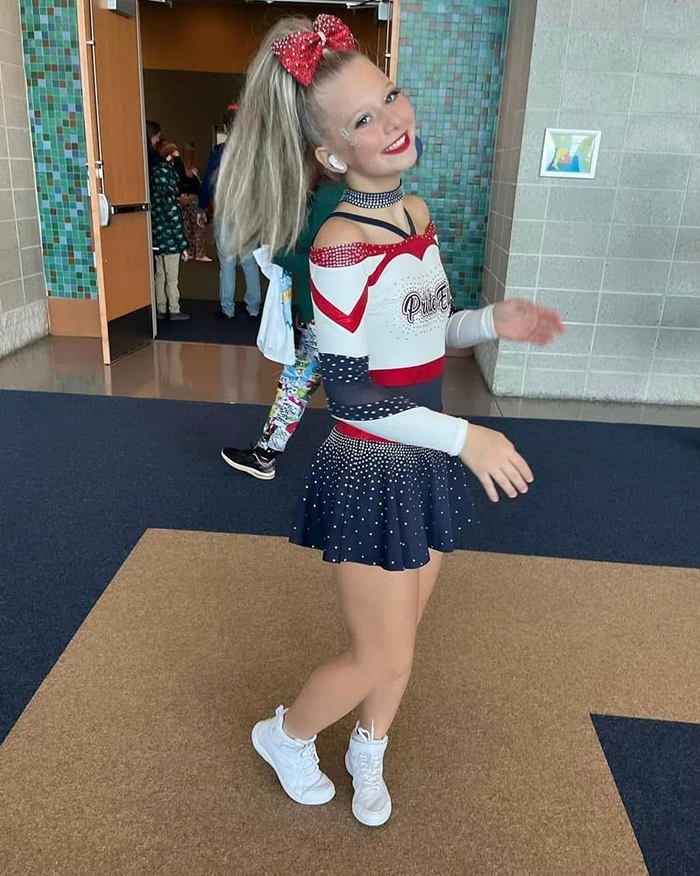
A third Lacey student died by suicide in November 2025. Out of respect for the family’s wishes, the student’s name is not being published. The grief remains too fresh.
Speaking When It’s Hard
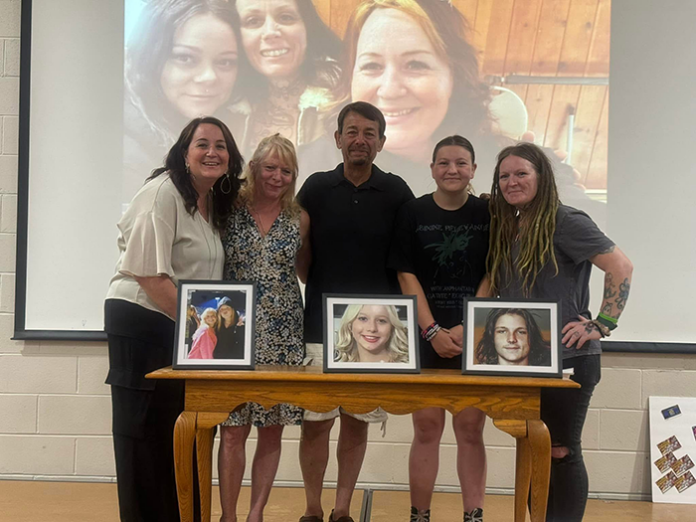
At the request of the families, Loutas spoke at funerals for two of the children. She has helped organize vigils, supports remembrance efforts, and works to ensure that each child’s life is honored.
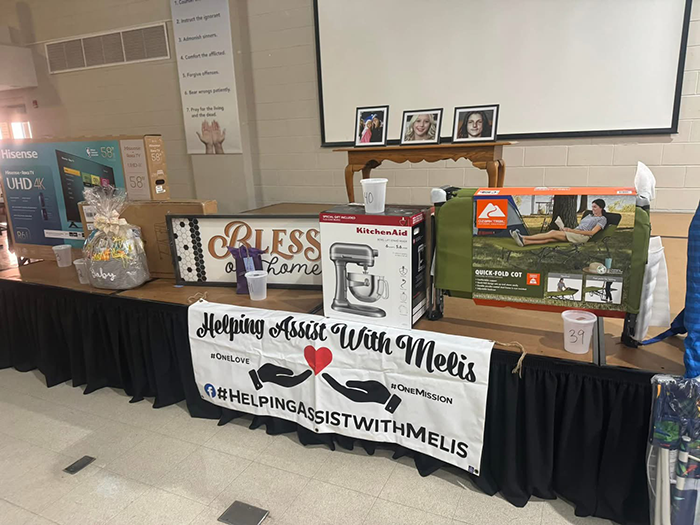
Each year, Helping Assist with Melis organizes a suicide awareness/mental health gift auction. Funds raised are directed back into the community through scholarship funds for graduating seniors at Lacey High School, established in memory of the students lost.
“In the last two years, we raised about $10,000,” Loutas said. “That money went back to the families and into scholarships in their children’s names.”
She does not describe the work as healing. Instead, she calls it necessary. “This isn’t something you get over,” Loutas said. “It’s something you respond to.”
In conversations with teens, parents, and community members, Loutas returns to the same themes: connection, presence, and time. “I really believe that even a five-minute conversation can save someone’s life,” she said.
Her message to young people is direct but gentle. “Everything in life is temporary,” she said. “But suicide is permanent. And the pain it leaves behind lasts forever.”
A National Crisis With Local Faces
The tragedies in Lacey reflect a broader national crisis.
According to federal data, suicide ranked as the 11th leading cause of death in the United States in 2023, claiming more than 49,300 lives. It was the second leading cause of death for individuals ages 10 to 34.
That year, 481 children ages 10 to 14 died by suicide nationwide. Among young adults ages 15 to 24, the number rose to 5,936.
New Jersey data mirrors the concern. The most recent New Jersey Student Health Survey, conducted in 2021, found that 20 percent of high school students reported that they had seriously considered attempting suicide in the prior year.
Loutas is not a clinician. Her instinct, instead, is rooted in connection. It is reflected in the mantra she often shares: #youareworthy.
Giving Sanctuary
On February 6, Helping Assist with Melis, in partnership with the Lacey Recreation Department, will host a Teen Social Night for students in grades 9 through 12. The free event will include music, food, activities, and access to mental health and prevention resources.
“It’s about creating a safe space,” Loutas said. “A place where kids feel welcome. Where they can just exist without pressure.”
Loutas is clear that no single event or organization can prevent every tragedy. But she believes strongly in community responsibility and early intervention.
For anyone experiencing suicidal thoughts or emotional distress, help is available through the 988 Suicide and Crisis Lifeline, which offers confidential support 24 hours a day, seven days a week by call, text, or online chat.
“We can’t fix everything,” Loutas said. “But we can show up. And sometimes, showing up is what keeps someone here.”
“If we save one life,” she said, “Then everything we’ve done matters.”