JERSEY SHORE – Local voters will choose who represents them in Congress during the November 3 election.
Every two years, one-third of the seats in the Senate and every seat in the House of Representatives are on the ballot. On the Senate side, Senator Cory Booker, Democrat, is up against Republican challenger Justin Murphy.
JerseyShoreOnline.com chose to focus on the House seats for their election coverage. This article is about New Jersey’s 2nd Congressional District, which incorporates the southern parts of Ocean County, including some of Berkeley Township, and most of the southern portion of the state.
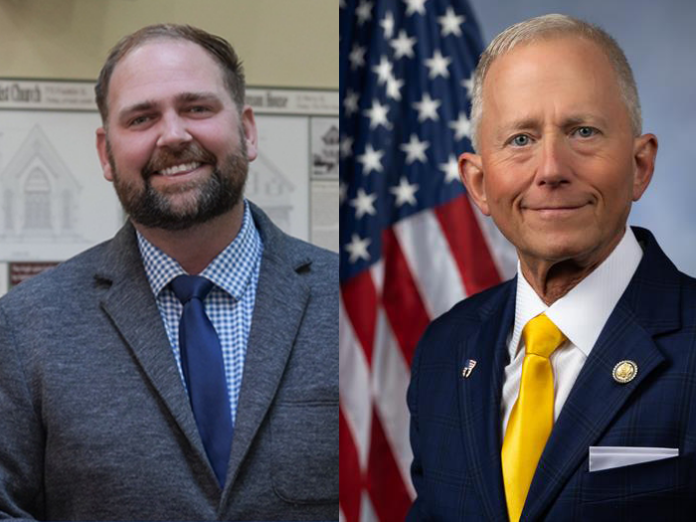
Incumbent Congressman Jefferson Van Drew, a Republican, is being challenged by Cape May Mayor Zack Mullock, a Democrat. Both candidates were asked the same questions via phone interviews. Their answers appear in alphabetical order.
Affordability
Much of the current problems people have can be summed up by a simple word: affordability. Whether it’s the cost of health care, groceries, gasoline, utilities, or taxes, it all comes down to how much money stays in the pockets of voters. Both candidates were asked the general question of how they would make life more affordable.
As mayor of Cape May, Mullock said he’s been able to keep taxes flat.
His goal to make life more affordable for Americans includes:
1. End the war in Iran
2. Restore the Affordable Care Act (ACA)
3. Make real changes to the health care system.
The gas prices would be solved by ending the war. This would also bring down the cost of diesel and other prices that are hurting farmers, which impacts the cost of food. Three companies control all the fertilizer. “Very big corporations control a lot of our food market. I think there is a potential to bring down the cost of food.”
“You can’t blame politicians for the price of gas – except in this moment,” he said. The first things to do is end the war in Iran and end the tariffs because that would cut the average person’s costs considerably.
The tariffs cost the consumer more than the corporations selling the products, he said. The federal government charges the seller, and then the seller just passes the costs on to the buyer.
The Supreme Court ruled that the tariffs that corporations were being charged were unfair and that the corporations had to be reimbursed. However, he said, the corporations didn’t give the people any relief from costs. It didn’t go back to the people in any way.
“What made the middle class? Good-paying jobs, affordable energy and affordable homes. I feel like we’re failing all three of these things,” he said. “Generational wealth comes from real estate and people’s homes. The federal government should look into programs to help young people.”
Mortgage rates are higher than 7% now. “I bought our first home under the First Time Homebuyer Program. It had a low percentage rate. We had to stay for ten years. Eventually we sold the house and went on. That’s how we started our family.”
He has a young family, with kids ages 12, 10, and 7. “We have a wonderful life. My family qualifies for ACA subsidies and that was cut.”
SNAP (Supplemental Nutrition Assistance Program) was cut in Trump’s Big Beautiful Bill, which Van Drew voted to pass.
“I find it disgusting. I find it insulting and un-American,” he said.
The 2nd Congressional district contains three of the poorest counties in the state, he said, where one-third of students are on food assistance programs. “We’re hurting the most vulnerable.”
Medicaid and Medicare were both cut by Republicans, which impacted 180,000 residents of this district. However, these cuts have been pushed off until after the midterms so that people won’t realize how much the current Congress members like Van Drew have hurt them, he said.
Social Security was cut as well. “Van Drew promised in many letters he wouldn’t cut them and he did,” he said. “A cut to Social Security is not acceptable.”
America’s role in the world stage matters on Main Street. He noted that approximately 10% of tourism in Cape May comes from Canada most years. This year it was barely 1 percent. That’s because of Trump’s unnecessary spat with Canada; Canadiens are choosing to spend their vacation money elsewhere.
Van Drew argued that the costs are tied to Democrat increases and Republicans have been working hard to bring federal spending under control.
“The cost of living went way up under Biden,” he said.
He pointed to several measures he supported that have taken steps toward affordability. For example, the child tax credit was increased; taxes on tips and overtime were cut; car loan interest payments can now be deducted.
When it comes to Social Security, the federal government was unfairly taxing payments, and penalizing police and first responders on their payouts. He has either sponsored bills or voted for legislation to protect these payments.
He noted a few times with these bills that they are not enough to solve the entire problem but they are all meaningful and immediate improvements in the people they were meant to serve.
During Trump’s first term, the president cut tax bills for a limited time, and Van Drew voted more recently to make those cuts permanent. “If we didn’t, it would have been the worst tax increase in American history.”
To cut utility costs, there needs to be more options for electricity. “I don’t like windmills,” he said, explaining that they are expensive and made by foreign companies. Solar is welcome but renewables alone won’t produce the energy we need. Politicians jumping entirely behind renewable energy is not realistic and “virtue signaling.”
The big problem, besides the Middle East, is that the U.S. has no refinery for what is called sweet crude, a high quality and efficient kind of oil.
America needs to get natural gas and diesel refineries back. Good energy policy involves not relying on other countries for our needs.
He also accused Atlantic City Electric of being greedy. “They’re not helping and they could do a lot better.”
Veteran Care
With all of the senior communities in our area, there’s also a higher than average percentage of veterans. The federal Veterans Administration has faced some criticism about how it handles – or mishandles as some would say – a vulnerable population. A new clinic in Toms River (which is outside of this congressional district) alleviated much of the problems, but there are still reports that this clinic is understaffed by the federal government. Therefore, both candidates were asked if veterans are taken care of enough, and what they could do about it. Both answered that current veteran care is not enough, but their approaches to it differed.
Mullock said the veterans are not given the care they deserve. His father and two grandparents are veterans.
The district has a high percentage of seniors. Expanding services for seniors would help veterans because often they are looking for the same services. “They ask for affordable housing and good health care and transportation to get to these health care appointments.”
“It’s shocking to me that as a country we can’t get that together,” he said. “It’s such a small ask.”
When asked where he’d get the money to pay for these services, he said “If we’re able to pay for the war, we need to be able to pay for them when they come home.”
“I think we need to end the Middle Eastern wars we never can get out of,” he said. “I won’t be sending south Jersey’s youth to war without a really good reason.”
Van Drew said his office has fielded calls from vets saying they haven’t been treated right by the VA or a care facility, sharing a story about a vet who was brought to a facility in another state and when his treatment was done, they let him out without a way to get home. Fortunately, there was a whistleblower who tipped them off.
“We can always do better,” he said, noting that Ocean County and the local townships do a lot.
He was chosen as a VFW Legislator of the Year when he was a state senator and twice as a member of Congress.
“I have a particular connection with veterans,” he said, choosing to work as a dentist in VA hospitals. It’s more than medical, you need to treat their “mind, body and soul.”
The Congressional district is larger than the state of Delaware, and he said he’s been pushing to get more community care in the area. He’s heard about how veterans can’t get what they need from what’s currently available.
“When there are no homeless vets, when there are no vets without health care, then maybe we’ll get close to where we need to be,” he said.
Being Accessible To Residents
People are frustrated with the way things are now, and want a direct line to their elected officials. This newspaper spoke to both candidates about how to be accessible to residents.
Mullock said he knows how important availability and transparency are. After he became mayor, his administration put the entire meeting packet online, and the meetings are livestreamed. If a resident has a question that officials don’t know the answer to, they say they don’t know the answer and they will get back to you.
“Our Congress on both sides of the aisle need to do a better job communicating,” he said, noting that Van Drew doesn’t do town hall meetings and fellow Democrat Donald Norcross doesn’t do them either.
“I want to hear from people,” he said, explaining that sometimes they provide solutions to problems that people in government might not realize.
Van Drew said his office receives thousands of e-mails every day. In addition, some people meet in person. He’ll pick a few emails and respond to them with a phone call.
“Don’t hang up, it’s really me,” he’ll say, since people expect a telemarketer or scam. “Nobody thinks a congressman is going to call them up.”
These phone calls are productive. “I’ve learned a lot. They really want to talk and love to exchange ideas,” he said.
He spoke about doing the grocery shopping so that he could meet people in the stores. “It’s fun.”
“I’d love to have a town hall to have a good discussion with people. I learn a lot from people,” he said.
The problem, he explained, is that some people are using it as political theater, knowing that it’ll make for a good video online. “Some people are blatantly political and just want to scream at you,” he said.
What’s more productive, is to get a large group of people together – even if they don’t like him – to discuss issues.
When an audience is chanting curses, or throwing stuff at you, “stop saying it’s a town hall meeting.”
“My opponent is trying to say I’m not accessible. You can say I’m too conservative, or I want the borders closed too tight, but you can’t say I’m not around.”
For 27 years, since earlier in his political career when he was mayor of Dennis Township, he’s had big barbecues on the Friday after Labor Day. It’s grown to be up to 5,000 people and they have to have them at a venue. “There are lines to talk to me. I’m out there,” he said. “I love people and I love trying to help them.”
There is a debate between both candidates scheduled for October 22 hosted by Stockton University.