MANCHESTER – Surf and Stream Campground was once a tucked-away community where neighbors looked out for one another and life felt manageable, even for those hanging on by a thread.
Nearly three years after residents were forced out when Ocean County bought the property for open space, the emotional and financial fallout has not eased. More than 70 former tenants are parties to a lawsuit in Superior Court, fighting over what happened and how the displacement reshaped their lives
Their accounts do not read like legal claims. They read like survival stories.
How It All Began
Residents say the County was misled in thinking that Surf and Stream was only a seasonal campground. Families lived there year-round, received their mail there, and even listed the address with employers. School buses stopped at the entrance each morning, cars filled the sites through winter, and some families had lived on the same lots for decades. Matthew Higgins, 44, was among them.
“My family has been there longer than anyone I know,” said Higgins, whose brother was also displaced. “I lived there on and off growing up, but I started living there year-round in 2012 and stayed until it closed.”
Once the County completed the purchase, demolition plans proceeded and residents were told they had to leave. According to the lawsuit, that directive triggered relocation assistance obligations under state law. Former tenants say those obligations were ignored, leaving them on their own as they scrambled to find housing during one of the region’s worst affordability crises.
Marie Cicalo ran the office at Surf and Stream and remembered the fear spreading from one trailer to the next. She took it upon herself to help in the only way she could. Before losing her position, she spent days photocopying leases, rent receipts, and any document that might later prove a resident’s tenancy.
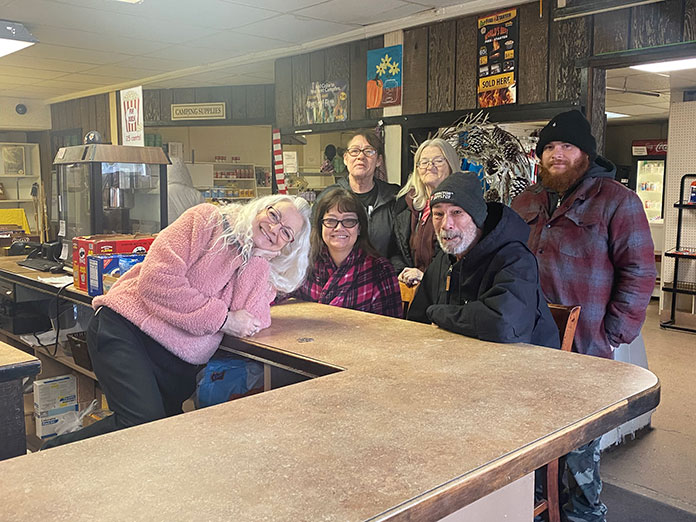
“I copied every file I could,” she said. “People were going to need paperwork, and I was afraid no one else would protect them.”
Her instincts proved right. Many residents later discovered that agencies, landlords, and assistance programs required extensive documentation. Without Marie’s copies, several would not have had proof at all.
Still, the paperwork did little to prevent the financial hardship that followed. Residents described paying as much as $75 per housing application, although the applications rarely led to anything more than a spot on an extensive waiting list.
“They threw us out like we were vermin,” shared Higgins. “Here I was a disabled person, going from apartment complex to another with good credit. I can’t tell you the thousands I wasted, and time and effort desperately trying to find a place to go.”
Sixty-eight-year-old John Renouf, who has suffered multiple heart attacks, was unable to move his trailer before the shutdown. “I lived in my car for about two or three weeks,” he said, before staying in his brother’s basement. His applications were repeatedly denied.
“They tell me I have eviction and abandonment charges on me,” he said. “They tell me they can’t rent to me.”
Kaitlyn Ludlam, 36, moved to Surf and Stream in 2019 with her three children. She ran a cleaning business but lacked the traditional pay stubs many agencies require. Residents were expected to leave by late October 2022, but Ludlam remained until December 1 when the power lines to her trailer were cut.
Ludlum spent her entire tax return on motel rooms while bouncing between friends’ homes. During that period, her boyfriend died of heart failure at only 36. Her children initially remained in the Manchester School District under homeless protections, then transferred to Toms River when temporary housing was found.
The single mother’s rental subsidy ends this month. “I have been working as many hours as possible so I can have $2,400 for rent,” she said. Her current work includes cleaning homes, harvesting produce, and boxing baked goods. She recently earned her CDL in hopes of finding a more stable job. “If I have to work fifty hours a week and another overnight job to make ends meet, I am going to do it.”

Hardworking Lives Upended Twice
Dawn Gray, and her husband Jim Ackerman, both 55, moved to the campground in 2019 after the Beachwood home they had owned for fifteen years went into foreclosure. Ackerman, a flooring installer, survived liver cancer and a transplant eight years ago but could no longer work. Despite hardship letters and medical documentation, the family said their mortgage company pushed the foreclosure through quickly.
After leaving Surf and Stream, they moved their trailer to a park in New Gretna where the rent was initially affordable. Within a month, new owners doubled the rent and ordered residents out for utility upgrades. Forced out again, Gray and Ackerman moved their trailer into the nearby woods, where they lived until November 2024.
Gray also suffered the loss of her sister, 58-year-old Lorraine McHugh, who had been diabetic and a recent amputee. McHugh also lived at Surf and Stream and died after suffering cardiac arrest while staying in the woods. They were not the only family who sought refuge in the outdoors and subsequently lost loved ones.

Where The Case Stands
The lawsuit argues that Ocean County failed to provide required relocation assistance, including written notices of rights, help finding safe replacement housing, and moving support.
Attorney Kevin Starkey, who represents the former residents, said the legal requirements are clear and the County did not meet them. Ocean County denies wrongdoing. County Counsel Laura Benson declined to comment, stating that it would be inappropriate to comment on pending litigation.
Cicalo, who collected documents and quietly tried to protect every resident she could, summed up the collective experience. “These people have been through more than anyone understands,” she said. “They deserve justice, and they deserve to be heard.”
Whether the courts deliver that justice remains uncertain. What is clear is that the families of Surf and Stream still carry the weight of a displacement that upended their lives, and the hope that someone will finally acknowledge what they lost.