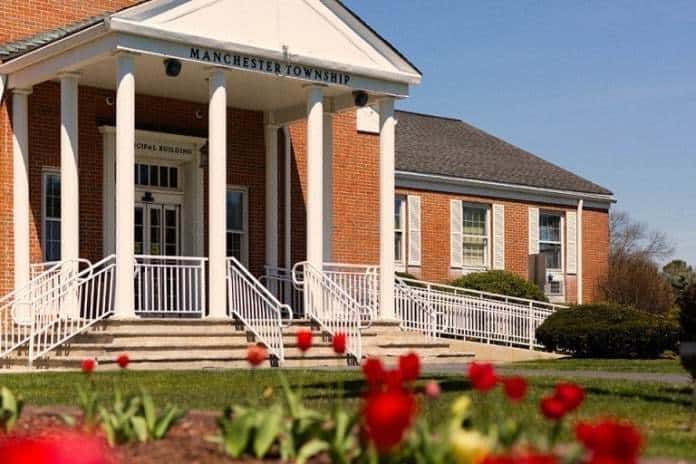
MANCHESTER – Officials and members of the public learned more about zoning and development goals during a recent presentation on the 2025 Master Plan Reexamination Report.
The master plan determines what every piece of land in town is zoned for. It is a document that sets forth development goals so that officials can determine how they want the future of their town to look.
Council President Roxy Conniff explained there would be no action taken on the report during the Township Council meeting when it was presented. “We will be taking public comment tonight.”
Township Engineer Mark Rohmeyer from Morgan Engineering made the presentation. He explained that every town has to look at their master plan every 10 years to determine if any plans or regulations need to be changed.
Rohmeyer said the purpose of the report was to examine the master plan looking at zoning and land use to determine if they meet the development goals and objectives of the community and to provide recommendations that will address and propose changes.
The most recent reexamination of the master plan was on August 7, 2017. “Therefore we are due no later than August 2027 and this administration has been proactive in assembling a sub-committee to accomplish this significant effort,” he said.
He noted that several meetings of that sub-committee were held that included the mayor, members of council, the police chief, members of the planning board, staff from the planning department, zoning department, public works and taxation.
“We’ve worked alongside the subcommittee and brought up different topics, concerns and visions on how to improve the township from a planning perspective,” Rohmeyer added. “We looked back to the 2017 report to see if those comments were still applicable.” Some examples of updates included affordable housing requirements, finished projects, and open space purchases.
Stormwater management and land preservation were also examined. “The next step was to discuss any new planning goals that will help better shape the future. We recommended encouraging renewable energy uses such as solar and wind…and updating the zoning districts,” Rohmeyer added.
He said the plan includes encouraging commercial business growth “by reducing certain areas of the townhouse overlay in the existing commercial zone.” He gave an example of this “in the Garden Apartment overlay and also townhouse development overlay.”
An overlay – or overlay zoning district – in municipal development allows a special, additional layer of zoning rules on top of existing (“base”) zoning districts. It allows more variety in what can be built in a certain spot.
“We have also rezoned certain groups of properties that have sat vacant to allow for additional permitted uses, such as along Route 530. That is not in a retirement community and therefore, we found to be more appropriate for it to be in the WHT Zone to allow for other uses,” he noted.
Other areas were deemed for redevelopment, which is when the construction already on a piece of land is not fulfilling its true potential. Redevelopment allows developers more financial options on expensive projects, while giving the town leaders more control in what goes there.
The plan recommends the Council put ordinances in place to improve stormwater quality and for all new construction to provide privately owned recharge stormwater basins. Rohmeyer said, “this requirement is considered relatively minor but it will have a large impact on the overall drainage and flooding.”
He also said the township needed to maintain Sustainable Jersey certification “which will continue to allow the township to take advantage of this program and future grant money.”
Sustainable Jersey is a nonprofit organization and national leader in the local sustainability movement. The program includes certification awards to municipalities and schools that have documented meeting a set of rigorous standards.
“This was a carefully thought-out report,” the engineer concluded saying it is considered to be a “guidance document .” The township can take steps in the future to create specific ordinances to enact certain visions that are incorporated in the Master Plan Reexaminations document.
Whiting resident and longtime Township Environmental Commission member Karen Argenti was the lone member of the public to comment on the report. She said that it was incomplete.
Argenti said, “the 2011 Master Plan doesn’t say anything about redevelopment even though the town has been discussing this and has been acting on this for years. It does appear as a recommendation as part of the housing development in the 2017 re-examination report that was due to the redevelopment plan for the Heritage Minerals property. That was almost 10 years ago.”
“Since then, nothing has changed. Do you remember the CAFRA hearing on Heritage Minerals? If you don’t you should take a look,” she told officials.
CAFRA stands for Coastal Area Facilities Review Act. Passed in 1973, it regulates development along New Jersey’s coast from Middlesex to Salem counties to protect environmentally sensitive areas. It is administered by the New Jersey Department of Environmental Protection and requires permits for residential, commercial, and public projects in designated zones.
She asked why all the areas of redevelopment had no housing element. “How do you explain that? Do we really want to include this? Do you want housing in commercial industrial business areas?”
Argenti also noted that the 2025 reexamination report “does the opposite – it takes residential and makes it into commercial, industrial or business. Why?”
She said the report ignores the 2020 Natural Resources Inventory (NRI) that the Environmental Commission did. “It does no good if you didn’t view it and what it says about our natural resources for the last five years. This report only reviews documents up to 2027; the NRI is not there. You forgot to put it on the list.”
She added that the report was flawed and failed to “review the cumulative impacts due to redevelopment, the potential impacts of extra imperviousness caused by new development. These major changes have a large impact on our quality of life, our natural resources and our infrastructure. They do not – as the report concludes – meet policies, goals and objectives of the previous master plan.”
Argenti told the mayor and council that “we need an update to the 14-year-old 2011 Master Plan due to the potential for large impacts in the current report. We urge an environmental impact statement prior to any vote.”
She also asked what this plan will cost the town in taxes, cost estimates of any new development and more stormwater management. She also said she felt the report represented “a lot of spot zoning. You really need to hire a town planner to help you do all this because so far you aren’t getting anywhere except cutting down more trees.”