HOWELL – Several residents spoke at Township Council meetings with concerns they had over sober living homes that are operating in and around the Rueben Court area. The council adopted an ordinance during its recent August meeting regarding these sober living homes.
One thing that the updated ordinance does is attempt to define what a sober living home is. According to the new ordinance, a sober living home is a recovery home that is a rooming or boarding house that has been issued a “F” License by the New Jersey Department of Community Affairs pursuant to N.J.A.C. 5:27-1.1 et seq. It does not operate as a single housekeeping unit. The New Jersey Administrative Code defines these cooperative sober living residences (CSLR) as “a residential setting that serves solely as a home for individuals who are recovering from drug or alcohol addiction and is intended to provide an environment where the residents can support each other’s sobriety and recovery.”
In addition to defining what a sober living home is, the ordinance states certain requirements for these homes. One of these new requirements regards an issue brought up at the last Township Council meeting. Howell’s new adopted ordinance states that these sober living homes cannot have an occupancy greater than 10 people, excluding an operator who must live in the house and have the authority to exert control over the residence and set rules for it. The issue of occupancy came up at the last meeting, where residents of nearby homes raised concerns that the state mandated limit of 10 residents in each sober living home was not being followed.
The last thing the new ordinance does is set requirements that owners must meet before beginning operation. One of the first requirements is that each sober living home must have a Class F license to operate a cooperative sober living residence from the New Jersey Department of Community Affairs. Sober living homes that do not have this license are prohibited by the township in the new ordinance.
The second and third requirements set it so that CSLR facilities have a minimum distance that they must be from each other and schools. The distance between each other states that they must be 300 feet away from any intersection that has another facility 300 feet away from it, 300 feet away along the frontage of any street, and 600 feet away along the frontage of any avenue or terrace.
It also states that these facilities must be at least 1,000 feet away from any drug free school zone. These requirements bear a resemblance to several sober living home laws that the state of New Jersey already has on the books
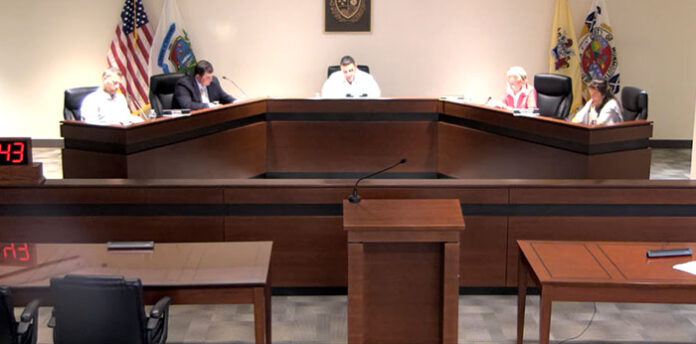
The Town Council held a public comment section on the ordinance before it was passed with a unanimous vote. One resident, Inderdeep Kaur, spoke up during this time to say that while this ordinance is a step in the right direction, action still needs to be taken.
The group of concerned residents who brought this issue to light at the town council meetings is receiving conflicting info from the town and the state about who has the authority to shut down the homes operating around the Reuben Court area. The town claims that it is under state jurisdiction while the state claims the opposite, according to Kaur.
In addition, Kaur mentioned that dangerous behavior coming from a home on Reuben court has increased in the past month, with several residents of the home allegedly taking pictures and videos of neighbors while making their neighbors feel unsafe and harassed. In addition, Kaur mentioned an incident that was caught on camera of one of these residents hitting a car belonging to one of their neighbors and leaving the scene without notifying the owners.