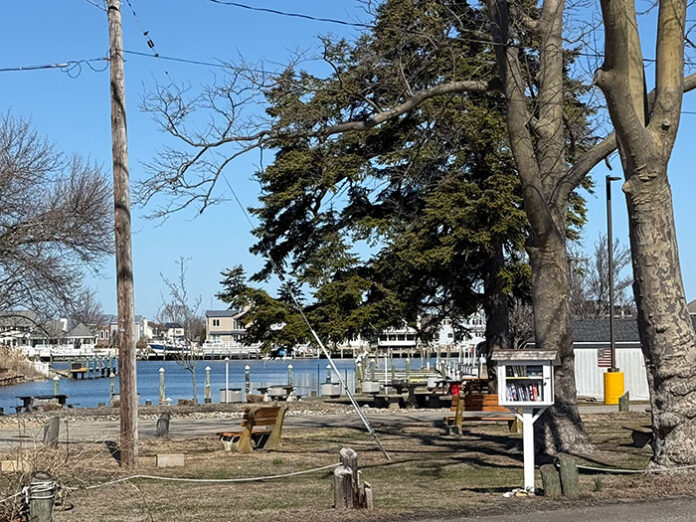
LACEY – A letter sent in mid-June to hundreds of waterfront homeowners in Lacey Township has reignited alarm and uncertainty over who truly owns the land beneath their docks.
The correspondence from attorney Harry Levin, representing the Lacey Elks Lodge, proposes that residents purchase submerged property rights – rights the Elks say they’ve held since the 1990s.
The correspondence follows a Lacey Board of Adjustment decision in April approving a subdivision of 362 lots-302 in lagoons, 37 on the river, and 23 with both – to clarify ownership and allow the Elks to sell the rights to adjacent property owners.
“It is the express intent of the Elks to transfer to each of you the rights granted to them for the River Riparian Rights and/or the Lagoon Bed Rights in front of your upland property,” wrote Levin. “In this way, you will have the ability to not only acquire the rights, but ‘merge’ them with your upland property.”
Levin explained that each homeowner has the right of first refusal to purchase the rights, which would be conveyed via a quitclaim deed. He warned that failure to respond within 30 days – or to complete the purchase within an additional 30 days – could result in the rights being sold to a third party.
Costs range from $2,100 for lagoon lots with up to 59 feet of waterfront to $4,000 for properties on the river or with both river and lagoon frontage.
According to the correspondence, the Elks have the ability to sell the rights to any buyer if the property owner decides against the acquisition. An investor would then control the rights and determine the terms of use.

Subdivision Approval And Its Purpose
The April 14 special meeting of the Lacey Board of Adjustment saw unanimous approval of the Elks’ subdivision application, which was presented as a way to resolve long-standing title ambiguities related to the underwater land behind hundreds of waterfront homes.
At that meeting, Levin explained that former developer Charles Pearl conveyed the lagoon and riverbed rights to the Elks in 1996. Many homeowners, he said, mistakenly believed their purchases included those rights.
“What we want to do… is consolidate or merge that ownership,” said Levin. “So when the property is sold, the new person coming in gets the whole enchilada.”
He emphasized that there are no riparian rights in man-made lagoons under New Jersey law, only in navigable waters like the Forked River. However, the issue at hand was not the water itself, but the land beneath it.
When asked if accommodation would be made for those unable to afford the purchase, Levin told the board that something would be worked out as far as arranging for the acquisition cost when the homeowner sold their property. However, the letter sent out weeks ago makes no mention of that consideration.
In a follow-up interview, Levin admitted he had intentionally excluded deferred payment options in the letter. “I was told by a number of people that everybody’s going to say they can’t afford it,” he said. “That was going to muck up the whole works.”
That doesn’t appear to mean the offer still isn’t on the table – particularly since it was represented as available in the zoning board meeting.

Public Pushback
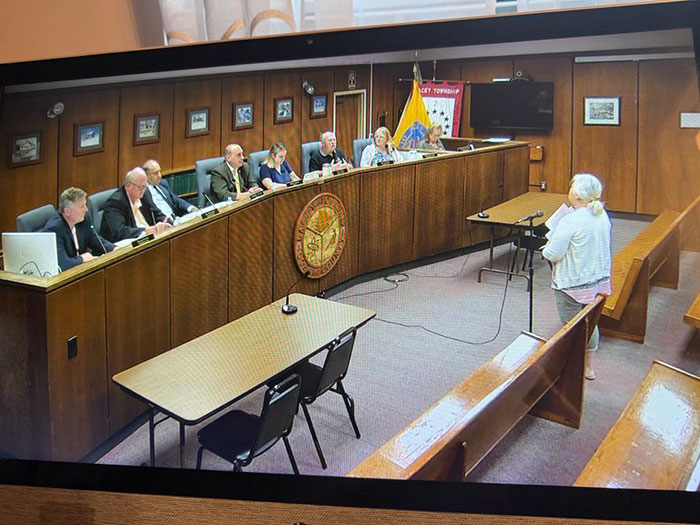
During the June 12 Township Committee meeting, resident Nina Mendelson voiced frustration over the process and what she described as a rushed push for quitclaim deeds. She expressed her preference for a warranty deed – one that guarantees clear title from the seller.
“I’ve lived here 15 years and use the lagoon to dock my boat during the summer,” Mendelson said. “For them to turn around and say, ‘you’re trespassing, and if you don’t buy it, we’re going to sell it to a third party,’ it’s just wrong.”
She also expressed concern about potential tax increases, adding that homeowners already pay waterfront taxes despite lacking deeded rights to the submerged land.
Mendelson said a group of affected residents have hired a forensic title company to investigate ownership claims.
Deputy Mayor Steven Kennis and Committeeman Robert Laureigh, who also sit on the Board of Adjustment, acknowledged their discomfort. They consider the Elks good neighbors – while also understanding the expense to homeowners.
“All we did was change it from six lots to 362,” said Laureigh. “Nothing else changed. The Elks now own, when all is said and done, say 360 lots versus six.”
Kennis added, “There were a number of conditions placed on the resolution that were more favorable to the property owners than the applicant.”
Those conditions included:
-A requirement that the new lots only be transferred to adjacent upland owners.
-A deed restriction in the transfers to the upland owners restricting against the transfer of the merged lot independent of the transfer of the adjacent land.
-A commitment to offer each homeowner a right of first refusal.
-A potential “due on sale” clause to allow payment upon the sale of a home for those facing financial hardship.
The board also required the Elks to secure a review and letter of no interest from the NJ Department of Environmental Protection Bureau of Tidelands Management.
Officials: It’s A Private Matter
Committeeman Tim McDonald, who said he first heard of the plan six years ago while serving as mayor, recalled warning the Elks that pursuing the subdivision would be “a public relations disaster.”
“This is basically a private issue between the Elks and the homeowners,” Laureigh said. “We’re not a title company, we’re not an insurance company, we’re not real estate attorneys. We’re land use.”
Township Attorney Chris Connors elaborated further, noting the quitclaim deed merely transfers whatever rights the Elks may have – and leaves it to the buyer to determine their actual value.
“The board did a great service to the people along the lagoons,” Connors said. “I’m not sure what service the Elks did.”
He pointed out that failure to own the underwater land could limit a property owner’s ability to build docks, walkways, or even replace bulkheads. It could also complicate state approvals for dredging, which sometimes require consent from the riparian rights holder.
“If a third party ends up owning it, they can charge you fees or withhold permission entirely,” Connors warned.
What Comes Next?
“Deputy Mayor Kennis, Administrator (Veronica) Laureigh, Township Attorney Christopher Connors and I met with three of the concerned residents and their counsel on June 30,” Mayor Peter Curatolo said. “By all accounts, all parties agreed that this meeting was both productive and amicable. I will be drafting and sending a letter to the Elks attorney, Mr. Levin for certain clarifications regarding timelines specified in his letter to the affected homeowners and we will move on from there but I have every confidence that resident concerns have been addressed and that the Township of Lacey has acted in accordance with the law while advocating for both the Elks as well as concerned homeowners. At this point, this is a real estate transaction between two entities, and there is very little the Township is able to do.”
For now, homeowners must decide whether to purchase the rights being offered – or risk a third party doing so instead. The forensic title investigation funded by concerned residents may clarify questions surrounding the Elks’ ownership claims.
But the broader implications remain murky, with neighbors caught between potential real estate limitations and a costly fix for a problem they didn’t know they had.
As Laureigh bluntly put it: “This is neighbor fighting neighbor. And that’s what makes this so terrible.”