JERSEY SHORE – The cost of electricity increased by 40 percent as demand spiked in the region.
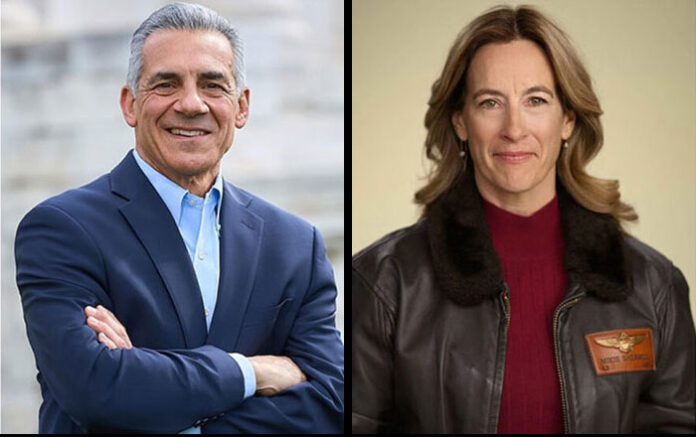
This is an issue that affects everyone, so our reporter reached out to gubernatorial candidates – Republican Jack Ciattarelli and Democrat Mikie Sherrill – in separate phone interviews to discuss their plans to address the cost of electricity.
This is the second of three articles. The first article was about school funding, published last week. The final article will be an open forum for the candidates to discuss what’s important to them.
Background
The state is part of the PJM grid, which connects power to 13 states and the District of Columbia. It regularly holds a capacity auction where power generators in the region bid on how much power they can provide and at what price. What happens in New Jersey impacts other areas of the grid, and vice versa.
During a recent meeting of the Senate Environment and Energy Committee, and the Assembly Environment, Natural Resources, and Solid Waste Committee, discussions were held about the quickly increasing costs.
Christine Guhl-Sudovy, president of the Board of Public Utilities which oversees electricity, natural gas, and other energy sources, said that of the 32 gigawatts of electricity needed in coming years, 30 of it is needed by data centers. Even if they are not in New Jersey, they are on the PJM grid, and therefore, New Jerseyans will be impacted by it.
According to the U.S. Department of Energy, data centers consume 10 to 50 times the amount of electricity of a commercial building of the same size. These buildings house the computers focusing on technology such as artificial intelligence.
Jack Ciattarelli
Ciattarelli said that when Governor Phil Murphy took office, New Jersey was an electricity exporter. Now, we need to import it. It’s more costly to bring electricity in than to make it here.
Solar and wind generation have been key points of Murphy’s plan, because renewable energy is the fastest to set up and electricity is needed now. Republicans have generally criticized this as being too little, too late.
While there are options to put solar on warehouses, Ciattarelli said, “wind would never be able to meet the state’s energy needs.”
He also noted that five coal-burning plants and the Oyster Creek Nuclear Station shut down during Murphy’s tenure.
This is an often-repeated statement by Republicans this election cycle. These plants didn’t get shut down by Murphy, they shut down due to economic factors. Oyster Creek, for example, was the oldest operating nuclear plant when it closed.
When our reporter asked for clarification with these points, Ciattarelli pointed out that Murphy had plenty of time to see that these plants were shutting down. Instead of making a plan to replace them, he focused on wind and solar. This caused local towns to figure out how to fill the hole that a large ratable and employer left behind, without help from the state.
The state administration should have made sure the infrastructure was here to meet the demand and they failed, he said.
New Jersey is losing ground to states like Pennsylvania that are taking the steps that we should have, he said.
Mikie Sherrill
“I want to declare a state of emergency on Day One,” Sherrill said. This would freeze rate hikes while she negotiated better rates from the electric companies. She said she already has communication with the companies that indicates they are willing to negotiate.
When an electric company raises rates, they usually justify it by explaining expensive projects they just completed. She was asked by this reporter how this would impact these companies since the cost of generating electricity goes up, and a freeze could cost the energy companies greatly – a cost they would pass on to ratepayers when the freeze ends.
She answered that there are funds available through the BPU to defray that cost.
“I refuse to kick that can down the road,” she said.
When it comes to power companies, “they have made over a billion in profits, so I think there’s a way to provide some affordability” for rate payers.
In the long term, she wants more electricity to be generated in-state so that New Jersey isn’t dependent on the companies elsewhere. She said “various groups saw this coming and didn’t prepare.”
Solar, battery storage, and more efficient gas production are on her radar.
Locals are interested in having a small modular reactor built in Oyster Creek. When this reporter interviewed Murphy last year, he was hesitant on endorsing this, wanting to see it in practice elsewhere first.
“There’s a learning curve” with any new technology, she said, but she’s not worried about it. “I come from the Navy. They’ve been using small nuclear reactors since the ‘60s” in the form of nuclear-powered submarines.
“There’s another rate hike on the horizon, and I don’t want to put it on the backs of ratepayers,” she said. “You talk to seniors and they’re having trouble making ends meet.”