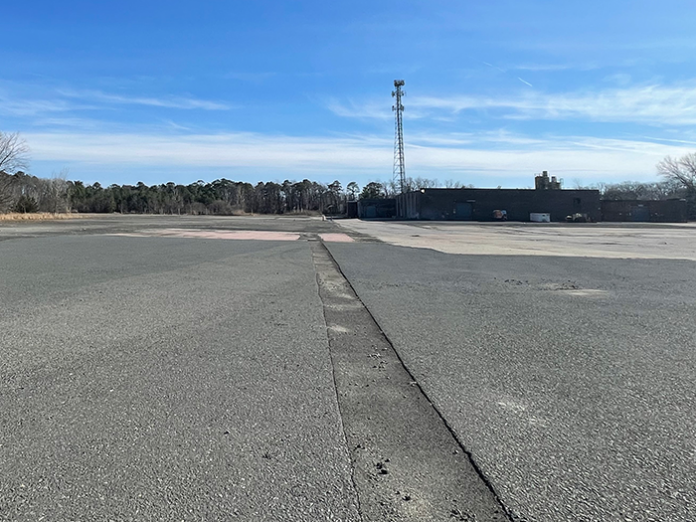
BRICK – As part of the township’s Affordable Housing and Fair Share Plan settlement, 20 percent of a proposed 264-unit housing complex for Burnt Tavern Road would be set aside for affordable housing, resulting in 53 units.
Any new developments exceeding five units must set aside 20 percent for affordable housing to meet constitutional Mount Laurel obligations, which require every municipality in the state to provide a “realistic opportunity” for its fair share of affordable housing.
In attendance at a recent Township Council meeting was Township Planner Tara Paxton, who explained the planning aspects of the settlement, and Township Affordable Housing Attorney Robin La Bue, who explained the legal aspects.
Paxton said that affordable housing is not Section 8 housing. Section 8 refers to a federally-funded program for low and very low-income households by providing rental subsidies directly to landlords.
“That is a federal program that has absolutely nothing to do with the state-mandated New Jersey Affordable Housing regulation,” Paxton said.
Affordable Housing obligations can be met in a variety of ways – and has been met in Brick – through 40-year deed-restricted multi-family rentals, single family homeowner, group homes, assisted living facilities, nursing homes and special needs or supportive housing.
You have to have income to qualify for affordable housing, she said. For example, a family of four who makes $107,680 would qualify for a moderate-income affordable housing unit.
For residents already living in Brick, 55 percent of one-person households would qualify for affordable housing. For two and three person township households, 35 percent would qualify for affordable housing. For four, five and six person households in town, 29.6 percent would qualify, she said.
Affordable Housing regulations are specific to making sure that the municipalities are not practicing exclusionary zoning, and is more of a land use regulation than anything else, Paxton explained.
Brick falls into Region 4 geographically, which includes Mercer, Monmouth and Ocean Counties. Affordable Housing has assigned a number to Region 4, indicating how many units of affordable housing in which it is deficient, Paxton said.
“In Region 4, each municipality has to practice inclusionary zoning; that means we have to prove that we have regulations in effect that don’t discriminate for low and moderate income residents to live here in our town,” she said.
The township has developed a Fair Share Plan and a housing element that identifies how much affordable housing Brick already has since the first round began in 1987.
Now in the fourth round, the state uses three factors to consider the municipality’s affordable housing obligation: the number of residents who live at the low- and moderate-income level, the number of jobs that are available in town, and the amount of vacant land, Paxton said.
The number assigned for Round 4 – 360 more affordable units to Brick – was much higher than Paxton anticipated. Brick already has 1,120 affordable units, she said.
“So that means 80 per cent more than 360 [units] which would be our full development build-out. That’s 1,800 new units that the state of New Jersey was saying that Brick should accommodate,” Paxton said, since the affordable units are 20 percent of the gross.
Through mediation, La Bue said Brick’s obligation was reduced from 360 to 322 units.
Attorney La Bue said the obligation and the number of units for affordable housing is going to exist whether three ordinances, which would allow for the Burnt Tavern complex, get passed or not.
Brick has participated in the first three rounds of affordable housing obligations, which has given the township “immunity” from builder’s remedy lawsuits and control over the type and location of the units.
“If the township decides ‘We don’t want to participate anymore, this is a state mandate and we shouldn’t have to abide by this,’ then the builders can go directly to the court and say ‘Brick Township has decided they’re not going to participate, but I want to build these units.’”
If a builder owns a piece of property and wants to construct 200-unit apartment buildings (which would net 40 affordable housing units) for which the property is not zoned, the court would approve it, the attorney said.