BERKELEY – The tourists have gone home, but the beach was filled with students learning about the unique ecosystem – and taking those lessons home with them.
Every year, Clean Ocean Action meets busloads of kids at Island Beach State Park for a student summit. They learn lessons from environmentalists in the field – as well as peers who are just a little older than them.
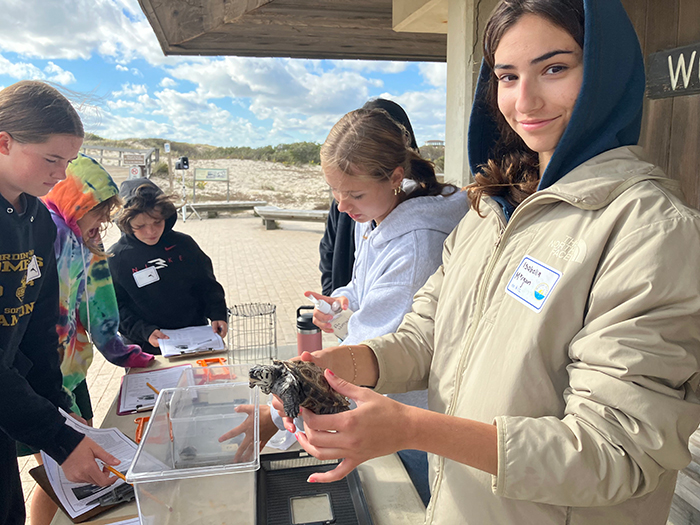
They went to stations around the interpretive center. The Marine Academy of Technology and Environmental Science students were able to talk to the kids on their level about important lessons like how litter impacts wildlife.
Clean Ocean Action has been leading this for 35 years, said Kristen Grazioso, Education and Volunteer Manager.
“It connects them with the coastal ecosystem,” she said. It also forms connections with each other. Peer-to-peer teaching is effective because the younger students are eager to learn from the older ones – and the MATES students have an enthusiasm for the subject matter that is infectious.

Students came from the Bay Head School, Bordentown Regional Middle School, Christ the King School in Haddonfield, Hugh J. Boyd Jr. Elementary School in Seaside Heights, Lavallette Elementary, Manchester Middle School, Memorial Middle School in Point Pleasant, Sacred Heart School in Camden, Saint Peters School in Point Pleasant Beach, and Westfield Friends School in Cinnaminson.
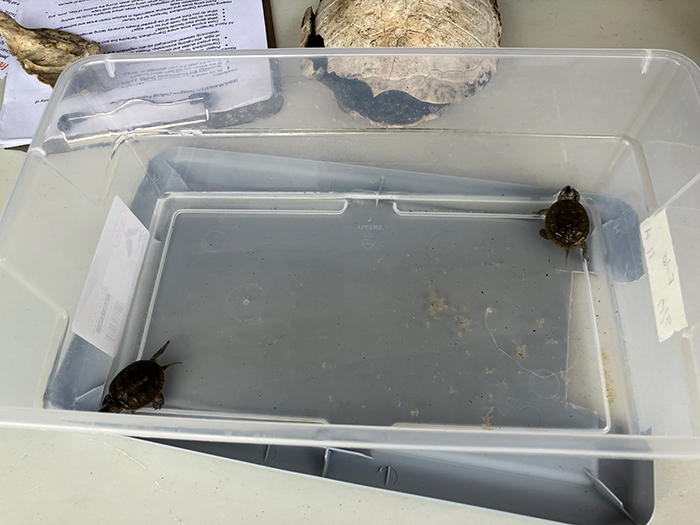
They got to meet tiny terrapins, and inspect the remnants of marine life. Throughout the day, they filled out answers in a workbook with questions about such things as horseshoe crabs and the watershed.

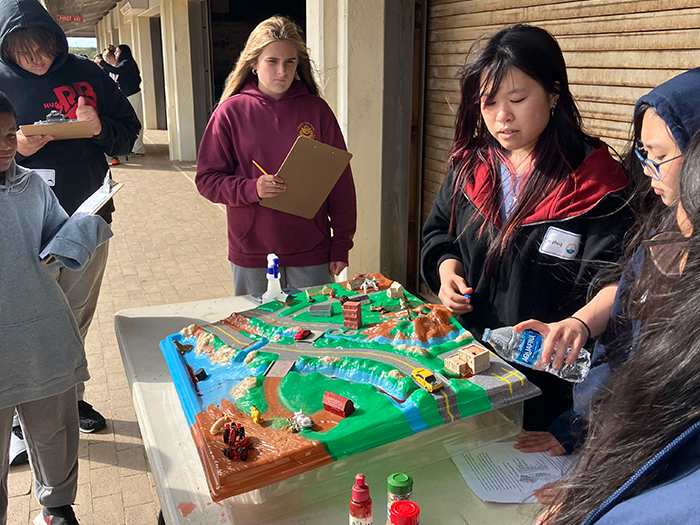
Some of the topics are relevant even if you’re not near a beach. Nonpoint source pollution means that litter will get washed toward bodies of water by the rain. A model of a town was made, and when water was poured on it, gravity brought it right to environmentally sensitive areas.
What makes the student summit unique is that there are partnerships with a number of environmental organizations. These groups are in the field daily and can bring fresh perspective on important matters.
The Jacques Cousteau National Estuarine Research Reserve taught kids how to sein. Deby Ives held a program on water quality. Jenkinson’s Aquarium led the students on a scavenger hunt for mollusks and crustaceans.
Clean Ocean Action took the kids on a nature walk where they could identify shells. They also held a beach sweep clean-up. As the students put trash in buckets, seagulls were close by, looking for breakfast.
Save Our Whales produced a mammal stranding activity. The Barnegat Bay Partnership presented beach profiling. The New Logic Marine Science Camp taught kids how to fish. Oceanography professor Kelly Flanagan had kids search for invasive microplastics.
“There’s only so much you can learn in a classroom,” said Evan Leong, communications and marketing director for Clean Ocean Action. Hands-on learning puts it in perspective.
“We hope they bring some of this back and do work their communities,” he said.