STAFFORD – Some had lived in their homes for decades. Some were retired and living on fixed incomes. Others had already challenged their new property assessments and came away frustrated with a process that left them with more questions than answers.
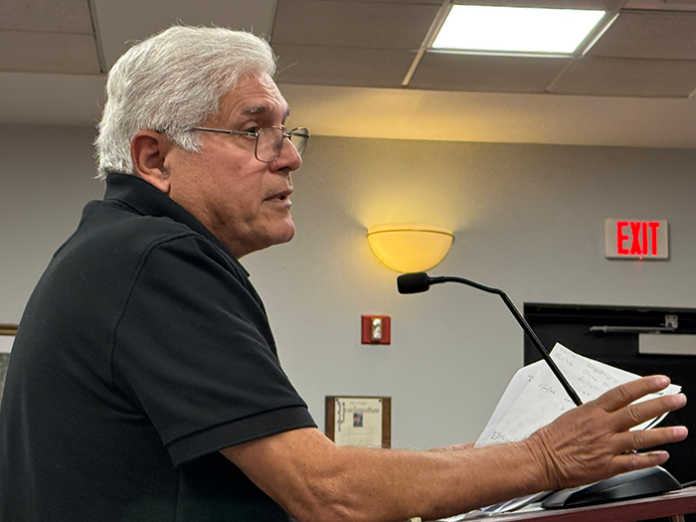
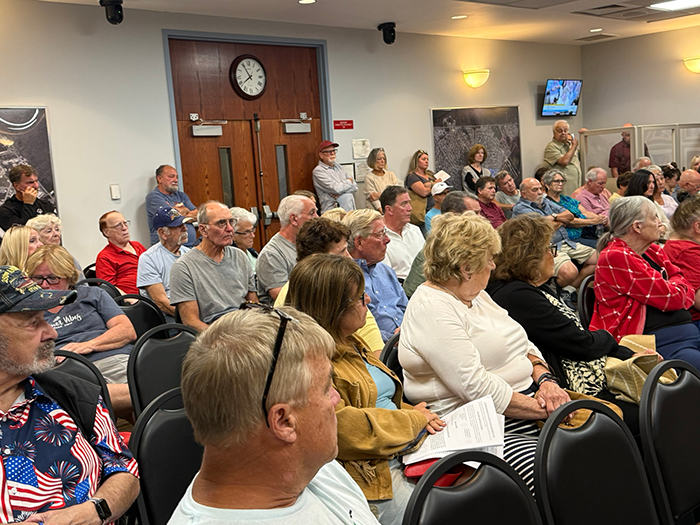
They filled the seats and stood along the walls at Stafford Township’s September 15 council meeting, where rising property tax bills dominated public comment. Residents questioned assessments that had climbed sharply following the reassessment and described tax increases becoming increasingly difficult to absorb.
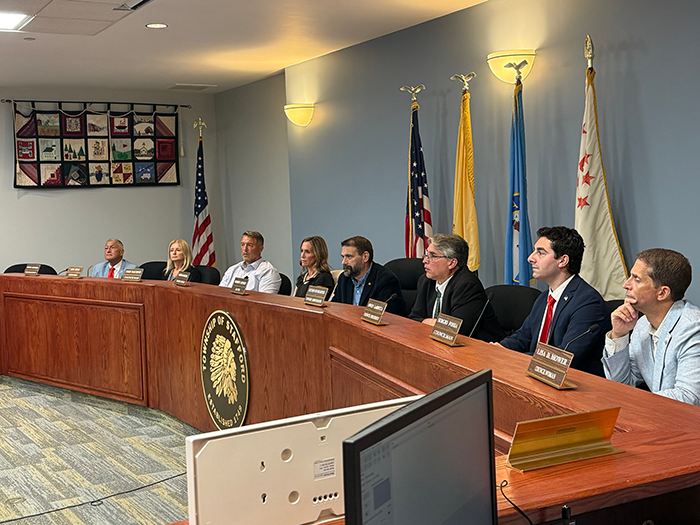
Township Administrator Matt von der Hayden spent much of the discussion explaining that the bill mailed by Stafford includes taxes collected for the township, county and two school districts. By law, a town collects the taxes and then doles the money out to the schools and other entities. A two-sided fact sheet handout broke down the 2026 tax bill, comparing this year’s tax levies with 2025.
For many residents, however, the discussion was less about percentages and assessments than finding the money to pay the next bill.
A Home Since 1965
Jackie Terefenko, a Morris Boulevard resident, told the governing body she has lived in her home since 1965. Her husband, a Marine veteran, has died, and she now lives on Social Security.
“All of our taxes went sky high, and I want to know what you’re going to do about it,” Terefenko said. “As a senior citizen living in my home since 1965, I can’t afford this.”
Terefenko said she did not know where to turn or what programs might be available. Von der Hayden offered to help connect her with the state Division of Taxation and asked whether she had picked up the fact sheet distributed at the meeting.
What Went Up
The township’s handout shows the combined tax levy increased from approximately $118.7 million in 2025 to $134.1 million in 2026, an increase of about $15.4 million, or 12.96 percent.
The Stafford School District had the largest percentage increase. Its levy rose from approximately $37.1 million to $44.1 million, an increase of just over $7 million, or 18.95 percent.
The Southern Regional School District levy attributable to Stafford increased from approximately $10.3 million to just over $11 million, an increase of $714,772, or about 6.92 percent.
The Ocean County portion increased from about $27.3 million to nearly $31 million, up 13.54 percent.
Stafford Township’s municipal levy increased from approximately $44 million to $47.9 million, or 8.97 percent.
According to the handout, the average 2026 residential property tax bill is $9,088.38. Approximately 41.08 percent goes to school taxes, 35.76 percent to municipal taxes and 23.16 percent to county taxes.
“We’re People”
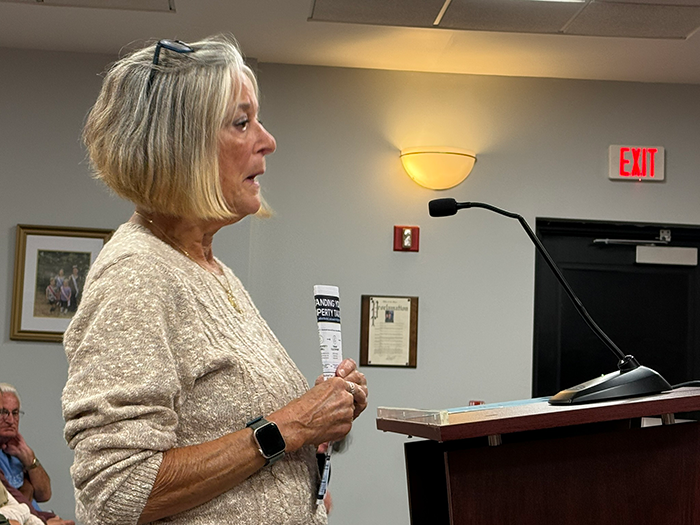
The numbers offered little comfort to Sharon Underwood, who said she has owned her George Drive home since 1976. She asked how many others in the room were living on fixed incomes and had expected the homes they had owned for years to be where they would spend their retirement.
Underwood said her quarterly tax payment had increased from approximately $2,100 to $3,600.
“Where am I going to get that extra $500 a month to pay this?” she asked. “I think you’re losing the whole personal aspect of this. We’re people.”
Underwood said her home had been raised following Superstorm Sandy but had not otherwise undergone improvements she believed would account for its current assessment. “These are homes that we just assumed we were going to retire into, and you’re taking that away from us,” she told officials.
Von der Hayden explained that assessments are based on market value, regardless of whether an owner plans to sell. Underwood responded, “I’m not selling my house. My house is not worth $795,000 until I sell it, and I’m not selling it.”
Why Assessments Changed
Stafford reports the average residential assessment for 2026 at $643,653. Township figures also show how far assessments had moved from current market values. Stafford’s assessment ratio was 100 percent in 2018 but had fallen to 55.89 percent by 2025.
“The last reassessment was done in 2018,” von der Hayden told residents. He said the widening difference between assessments and market values was why it was necessary.
The state orders towns to revalue their properties if there’s too much of a disparity.
An assessment that doubled does not necessarily mean the homeowner’s taxes doubled. The reassessment redistributes the tax burden based on updated property values, so an individual bill depends in part on how much that property changed in value compared with properties township-wide. At the same time, the combined levies of the four taxing entities increased nearly $15.4 million.
Questions About Appeals
Joe Asmar of Evelyn Drive told council members he understood the reason for the reassessment but questioned whether homeowners had a “level playing field” when challenging their new values.
Asmar said his property record contained errors, including two kitchens when he has one, three bathrooms instead of two and two bedrooms instead of three. He also questioned comparable properties used to evaluate his home, saying residents had been instructed to use sales within a particular period while information he later received from the assessor’s office included properties outside that period.
“I understand the reason for the assessment,” Asmar said, but questioned a process that could leave a property owner feeling it had not been fair.
Another resident described paying for an appraisal only to have her assessment remain unchanged. She questioned the comparable sales used in her case and the limited time she had to decide whether to pursue the matter further.
Von der Hayden stressed that assessment appeals are heard by the Ocean County Board of Taxation, not the Township Council.
Stafford’s website directs property owners to information from the Ocean County Board of Taxation, which makes an important distinction. The tax bill itself cannot be appealed; the property’s assessed value can be.
The existing assessment is presumed correct, leaving the property owner responsible for presenting evidence supporting a different value. The county identifies recent comparable sales as among the strongest evidence and recommends three to five sales of similar properties.
The explanations offered residents a clearer picture of why their bills had changed and where the money was going. But for many of the homeowners, the concern was not what their houses might bring on the real estate market. It was whether rising taxes would make it harder to remain in the homes where they had expected to grow old.