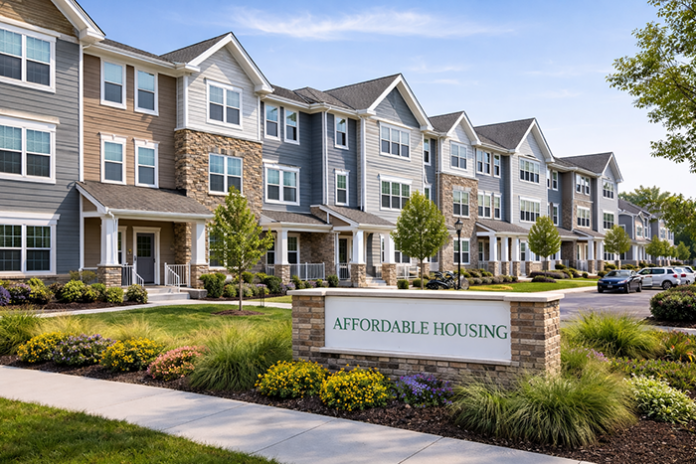
BRICK – The governing body voted in favor of three ordinances that would bring the township into compliance with affordable housing mandates, but the vote was split narrowly along party lines.
Council Vice President Derrick T. Ambrosino said the ordinances “are the result of quite a bit of work over the last 18 months,” by the Land Use Committee, headed by Township Planner Tara Paxton, Township Engineer Elissa Commins, the Affordable Housing Council and many others.
The first ordinance changes the township code to allow the township to comply with affordable housing requirements set by the NJ Superior Court.
More importantly, the ordinance allows the township to “achieve immunity,” he said.
Ambrosino was referring to the so-called “Builders Remedy.” Townships are not required to participate in affordable housing mandates, but if they do not have a certified affordable housing plan filed, a builder can sue, and the town loses some of the ability to plan where and how affordable housing will be developed. In this case, the “Builders Remedy” lawsuit is the only way of enforcing affordable housing because there is no other means of enforcement.
“Brick Township has met its burden to demonstrate compliance certification of the Brick Township Housing Element and Fair Share Plan,” Ambrosino said.

The ordinances address Round 4 of the affordable housing obligations are “fair, reasonable, and adequately protect the interests of low and moderate income residents of the municipality,” he said. Round 4 of the affordable housing obligations will last from 2025 until 2035.
The township’s special adjudicator has said that the plan should be approved by the State’s Mount Laurel Court, which mandates that every municipality provide a plan for affordable housing and prohibit exclusionary zoning. Included in the settlement agreement is the renovation of 149 housing units and the construction of 322 units.
The second ordinance would create a middle income housing overlay zone, consisting of about 72 acres spread over 50 parcels and mostly located along major thoroughfares in the township.
“This zoning was initially proposed in such a way that it was not clear that the desired affordable unit yield would be obtained,” Ambrosino said.
As a result, the township revised the requirements for the proposed zone to increase the density from an average of six units per acre to 10 units per acre, which would allow for 720 units of which 144 would be affordable.
The third ordinance allows for the construction of an inclusionary residential development at 975 Burnt Tavern Road, consisting of 264 residential units with 53 set aside as affordable units.
The plan would include a commercial component facing Burnt Tavern Road. The site would be added to the township’s existing site specific affordable housing zone.
The vote for the three ordinances was split among party lines with the four Democrats voting in favor and the three Republicans voting against them.
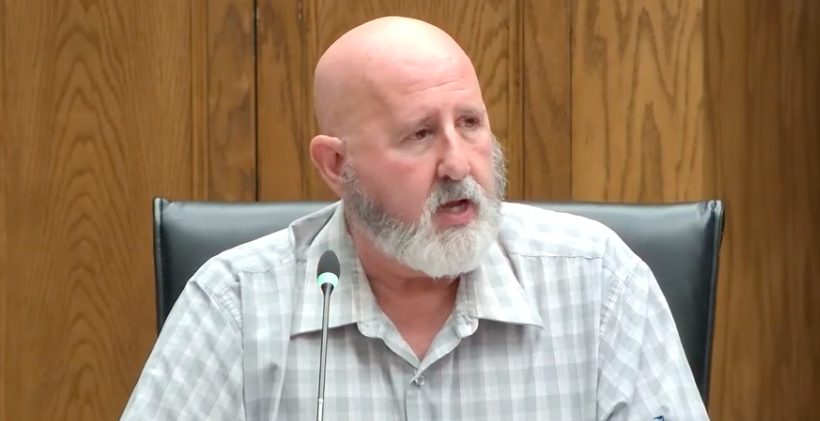
Councilwoman Lisa Reina, a newly elected Republican, said she was elected on issues including overdevelopment and density in the township.
She said she understands that rejecting the ordinances for increased density per acreage could lead to pressure for even higher density, but nonetheless said she could not vote for the plan.
“This statement is not directed at anyone here or the hard work that’s been done,” she said. “Rather, it is directed at a system that increasingly asks local governments to govern under threat rather than on principle.”
She said that local zoning and land use boards exist because local communities are best equipped to determine what is best for their communities.
“This authority should not be reduced by a choice between giving something now, or being forced to accept something worse later,” Reina said.
Her fellow newly-elected Republican Councilman Gregory J. Cohen agreed.
“The biggest complaint that we’ve gotten in this township is overcrowding, continuous traffic. If we do not push back against the State of New Jersey, they’re going to be running this town, not this council,” he said.
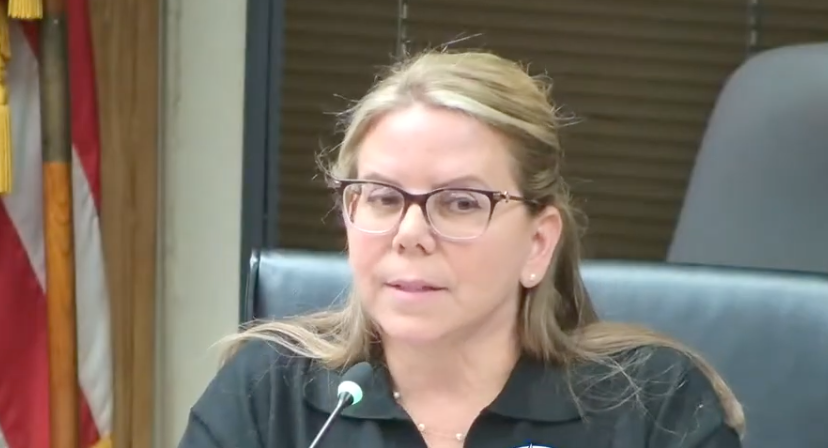
Council Vice President Ambrosino, a Democrat who voted in favor of the ordinances, said he agrees with what his fellow Republican council members are advocating.
“I very much fear that the logic that they have come to is merely counterproductive,” he said. “I agree folks have the perception that there is overdevelopment in town; everybody doesn’t like traffic.
“I’d ask both of the council people that have spoken if they can state what the population growth has been over the past 20 years in the township of Brick,” he said.
According to the US census, the population has remained relatively stable with minor fluctuations, hovering between 73,000 and 79,000 over the last two decades.
The next council meeting will be held on Tuesday, March 10 at 7 p.m.