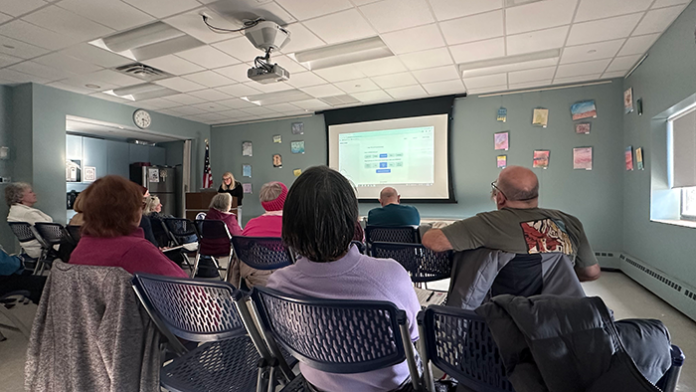
BRICK – Seniors learned how to spot artificial intelligence and disinformation at a talk hosted by the local library.
Sarah Spellman, a volunteer for AARP, said she introduces elderly communities to the world of technology and how to protect themselves from scams.
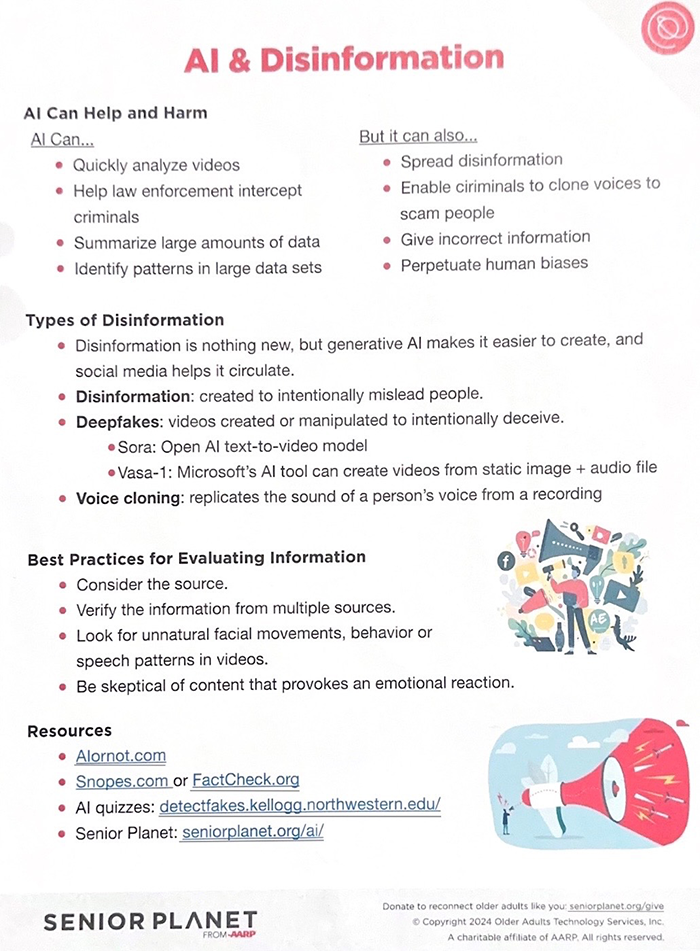
The most important part of Spellman’s presentation was her advice on detecting AI and avoiding scams. For deepfakes (fake images), look out for things that look too airbrushed. For example, a person’s undereye often looks much brighter, their hair appears blurred, etc. Pay close attention to a person’s body – AI often struggles to create the correct number of fingers and toes. Their muscle lines may not look entirely connected. If it’s an image of nature, pay attention to the lines on trees, the flower petals, or if the grass appears airbrushed.
For voice cloning, fake voices are often much smoother than normal. A person’s natural accent may be distorted, there will be limited to no sounds of breathing, and they may sound more confident – they won’t hesitate or stumble on their words.
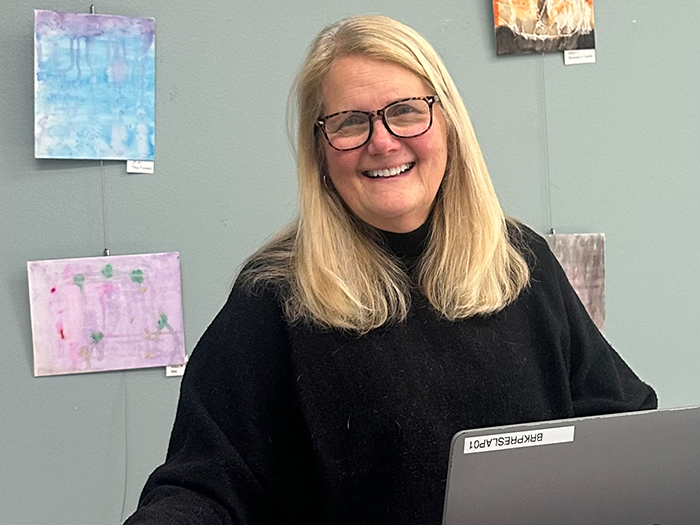
She focused on the disinformation spread by AI and the ever-increasing risks. She also highlighted the important difference between misinformation – the accidental spread of untruths, and disinformation – the purposeful spread of untruths.
AI is everywhere now, especially online. It’s become easily accessible by scammers, who are quick to use a person’s voice as a way to mask their own identity and convince you to send them money, she explained.
AARP offers scam alerts, which helps people stay up to date on the current scams in your area. More information can be found on AARP’s official website, AARP.org, and there’s no membership required.
Spellman urged people not to think AI is entirely evil, though. While scammers may be using AI, so can the police. Departments could use this advanced technology for things like facial recognition in crowded areas or searching the internet for information on a suspect.
It can help with small tasks like quick questions – just stay mindful of the answers, as AI “learns” information by recognizing patterns online, and the internet is full of its own misinformation and human errors.
She explained that you should be mindful of content that is designed to elicit an emotional reaction. Always remember to fact check your sources; if you see something online and believe it’s worth sharing, it’s worth fact checking. If you can find a fact on multiple platforms, it’s more likely to be true.
Spellman recommends using verified, non-partisan websites when fact checking information. Her two favorite examples are Snopes.com or FactCheck.org.